Andonstar AD210 Review (2026): Big Screen, No PC Link
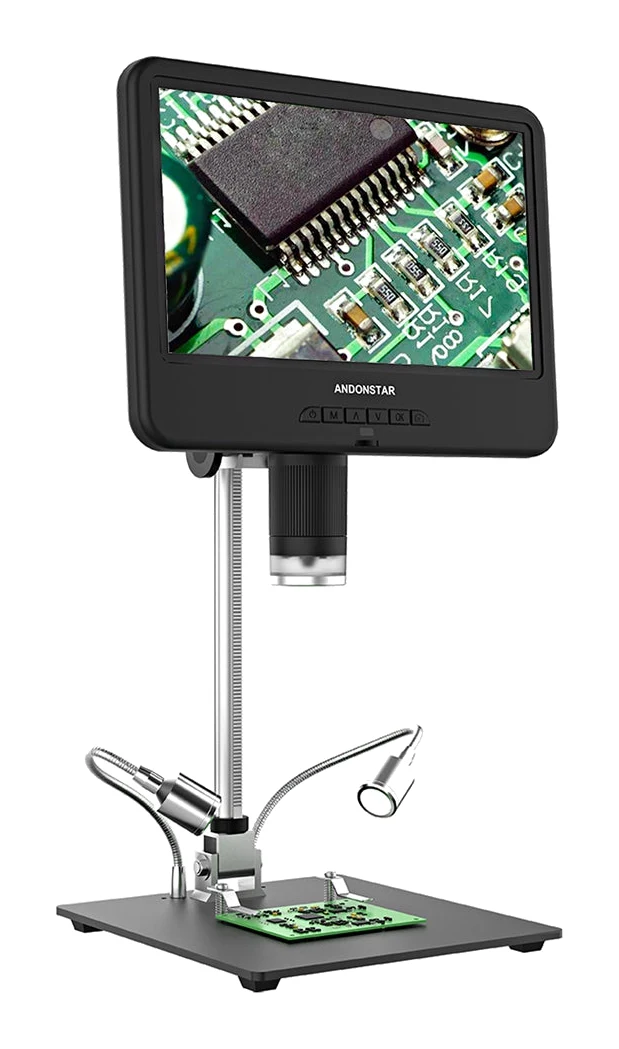
The Andonstar AD210 is a standalone digital microscope built around a big 10.1-inch screen. Here is what the specs and expert reviews say about coins, slides and light soldering.
Research-based · We earn from qualifying purchases
Our verdict
The Andonstar AD210 suits hobbyists who want a big, easy-to-use screen for coins, slides and light SMD soldering, with the essentials included in the box. Skip it if you need PC connectivity or a sturdier build for demanding daily use.
The good
- Large 10.1-inch IPS screen with wide 178° viewing angle for group viewing
- Adjustable stand with 1cm to 26cm working distance gives ample clearance
- Three lighting modes, including a bottom light stage for slides
- Infrared remote lets you capture and zoom without causing camera shake
- Bundled SD card, reader and slide kit make it ready to use
+2 more
- Infrared remote lets you capture and zoom without causing camera shake
- Bundled SD card, reader and slide kit make it ready to use
The bad
- No PC support, so you can't use it as a computer-connected camera
- Video is capped at 1080P and 30 frames per second
- PCB clips mount in only one fixed position
- Plastic housing and remote feel thin and flimsy
+1 more
- Plastic housing and remote feel thin and flimsy
If you want to look closely at coins, slides or a circuit board without squinting through an eyepiece, a screen-based digital microscope is the easy route. This Andonstar AD210 review looks at one of the more approachable ones. It is a standalone unit with its own 10.1-inch display, a metal stand and the accessories needed to start straight away. It sits in the mid-range part of the market and is aimed at hobbyists rather than lab users.
The pitch is simple. You put the subject on the base plate, look at the large screen, and save photos or video to an SD card. Nothing needs to be connected to a computer, which is convenient for some people and a dealbreaker for others. This review is based on manufacturer specs and what independent experts report, not on hands-on testing.
Andonstar AD210: specs at a glance
From the manufacturer- Storage
- Micro-SD card, up to 32G
- Frame rate
- Max 30f/s
- PC support
- No
- Stand size
- 18cm*20cm*32cm
- Screen size
- 10.1 inch IPS
- Image sensor
- 2 Mega Pixels HD Sensor
- Light source
- Two fill lights and built-in LEDs
- Power source
- USB 5V DC
- Magnification
- 5X-260X
- Viewing angle
- 178°
- Video resolution
- FHD 1920x1080 30FPS
- Working distance
- 1cm to 26cm
- Package size/weight
- 30*26*15cm/1.85kg
- Max photo resolution
- 12M (4032x3024)
Key features
- Large 10.1-inch IPS screen with 178° viewing angle, so several people can view at once
- 1080P video and up to 12MP photo capture saved straight to SD card
- Sturdy metal stand, up to 12.6 inches tall, with 1cm to 26cm adjustable working distance
- Three lighting modes: top ring LEDs, flexible side lights and a bottom light stage for slides
- Infrared remote for photos, video, zoom and colour changes without touching the scope (avoids camera shake)
- Bundled 32GB SD card, card reader and prepared slide kit
- Roomy base plate that fits larger PCBs, suited to coin inspection and light SMD soldering
What the Andonstar AD210 is
The AD210 is an all-in-one digital microscope. The camera, screen, lighting and stand come as a single package. Andonstar lists a 2 Mega Pixels HD Sensor, magnification from 5X-260X, and a 10.1 inch IPS screen. It records FHD 1920x1080 video at 30FPS and can capture photos up to 12M (4032x3024).
It is built for people who want a comfortable, shared view of small things. That includes coin collectors, people looking at prepared slides, and hobbyists doing light SMD soldering. Andonstar's own feature list points to exactly those uses, and the bundled slide kit and roomy base plate back that up.
Andonstar AD210 review: design and build
The stand and working distance
The stand is metal, and Andonstar describes it as sturdy. It reaches up to 12.6 inches tall and gives an adjustable working distance of 1cm to 26cm. That range matters in practice. A short distance suits flat objects like coins and slides. The generous upper end leaves room to get tools, tweezers or a soldering iron under the lens. The 1cm to 26cm working distance gives ample clearance.
The stand size is listed as 18cm20cm32cm, so it needs a proper bench or desk space rather than a shelf corner. The packaged weight is 1.85kg. The base plate is described as roomy enough for larger PCBs, which helps when you are inspecting or reworking boards rather than just looking at small parts.
Plastic and the remote
The metal stand is not the whole story. A common criticism from reviewers is that the plastic housing and the remote feel thin and flimsy. If you need a sturdier build for demanding daily use, that criticism deserves weight.
Reviewers also point out that the PCB clips mount in only one fixed position. If you work with boards of awkward shapes, you may find that limiting.
Screen and viewing experience
The 10.1-inch IPS screen is the headline feature. Because it has a 178° viewing angle, the image stays readable from the side. That makes it practical for a family member, a student or a club member looking over your shoulder. The large screen and wide viewing angle are among the AD210's main strengths.
A screen this size also removes the eyepiece posture problem. You can sit back and watch the screen while you work. That is particularly helpful during soldering, where you want to see your hands and the joint together.
The sensor is 2 Mega Pixels, but still photos go up to 12MP. Video tops out at 1080P and 30 frames per second, and that cap is a listed drawback.
Lighting: three modes for different subjects
The AD210 offers lighting options for different subjects. It has three modes:
- Top ring LEDs for general illumination of the subject from above.
- Flexible side lights that let you angle the light, which helps with surface detail on things like coins.
- A bottom light stage for slides, where light passing through the sample matters.
The spec sheet lists the light source as two fill lights and built-in LEDs. The bottom light stage is designed for slides, and a prepared slide kit is included in the box. Different subjects need different lighting, and having all three modes on one unit means you are not improvising with a desk lamp.
Capture, storage and the remote
Photos and video save straight to a Micro-SD card. The spec lists support up to 32G, and a 32GB SD card comes in the box along with a card reader. That makes the first session simple: capture, pop the card out and move files to a computer with the reader.
The infrared remote handles photos, video, zoom and colour changes, so you do not have to touch the scope. That avoids camera shake, which gets exaggerated at high magnification, where even a light touch can blur the image. The remote's main benefit is capturing and zooming without shake, though the remote itself is criticised as feeling thin and flimsy.
The important limitation is that the spec sheet says PC support: No. You cannot use the AD210 as a computer-connected camera. Power is USB 5V DC. A common criticism from reviewers is the lack of PC support, so confirm you do not need it before buying.
What experts like and what they criticise
The praise is consistent and mostly about ease of use:
- The large 10.1-inch IPS screen with its wide viewing angle for group viewing.
- The adjustable working distance that leaves ample clearance.
- The three lighting modes, including the slide light stage.
- The remote, which lets you capture and zoom without shake.
- The included SD card, reader and slide kit, which make it ready to use.
The criticism is just as consistent:
- No PC support.
- Video capped at 1080P and 30 frames per second.
- PCB clips that mount in only one fixed position.
- A plastic housing and remote that feel thin and flimsy.
None of these are hidden surprises. The product does what a standalone scope should and leaves out what a computer-connected scope would offer. The question is whether those omissions matter to you.
Who should buy the AD210, and who should skip it
It suits you if you are a hobbyist who inspects coins, looks at slides or does light SMD soldering and wants a big, comfortable screen. It also suits households or classrooms where several people want to look at once. Buyers who like a ready-to-go package will appreciate the bundled card, reader and slide kit.
Skip it if you need to connect to a computer for software, streaming or documentation. Skip it too if you want video above 1080P or 30 frames per second. And skip it if you need a sturdier build for demanding daily use, since the plastic housing and remote are criticised as feeling thin and flimsy. Anyone who works with oddly shaped boards should also consider the fixed PCB clip position.
How it fits in its category
The AD210 is a standalone microscope with a built-in screen, which keeps setup simple but means no PC support. The AD210 sits firmly on the simple side. You get an all-in-one tool with minimal setup, and in return you give up PC features. Within that approach, the large screen, tall stand and range of lighting modes are the main things in its favour.
Verdict
The Andonstar AD210 is a practical, easy-to-live-with microscope for hobby work. Its large IPS screen, generous working distance, three lighting modes and shake-free remote cover the things most casual users care about, and the box includes what you need to start. The drawbacks are real but narrow: no PC connection, video limited to 1080P at 30 frames per second, one-position PCB clips, and plastic parts that feel thin. If your needs match coins, slides and light soldering, it is a sensible mid-range choice. If you need computer connectivity or a tougher build, look elsewhere.
Related buying guides
Not sure about the Andonstar AD210? Consider these
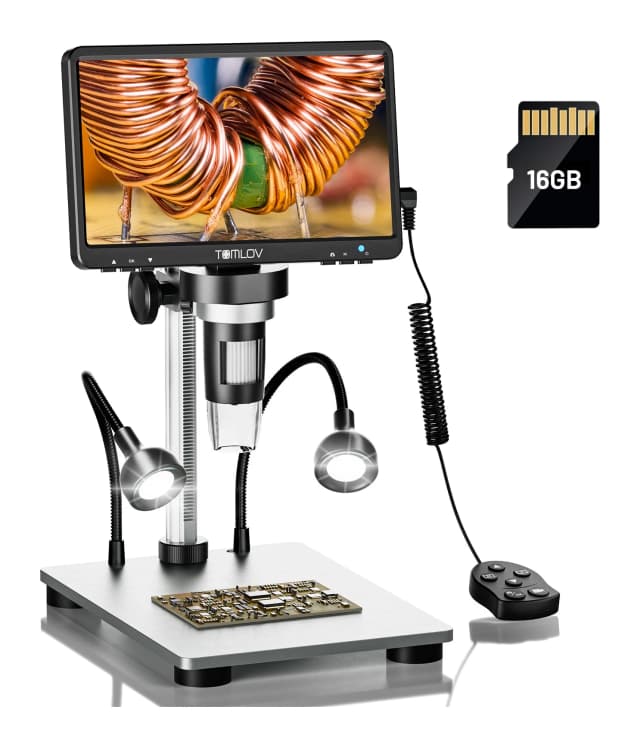
- Best BudgetTOMLOV DM9 7" LCD Digital MicroscopeWhy we picked it →
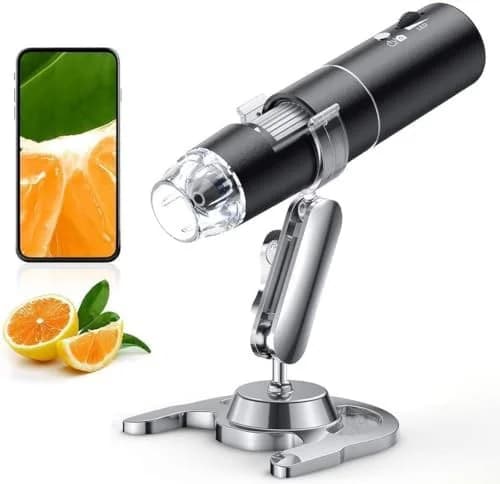
- Best ValueSkybasic Wireless Digital Microscope 50X-1000XWhy we picked it →
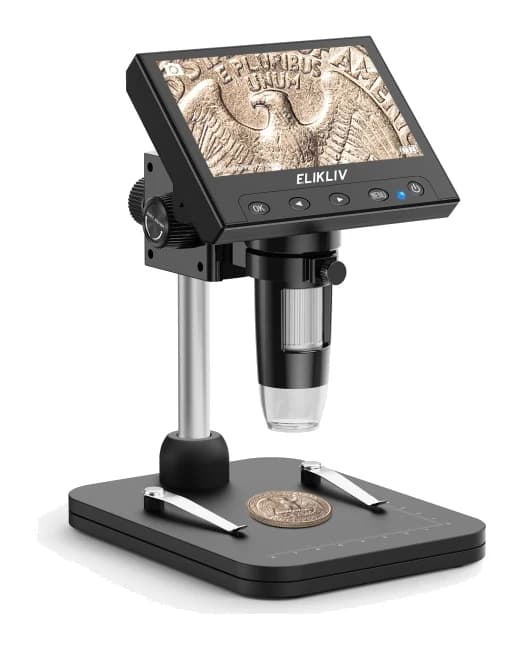
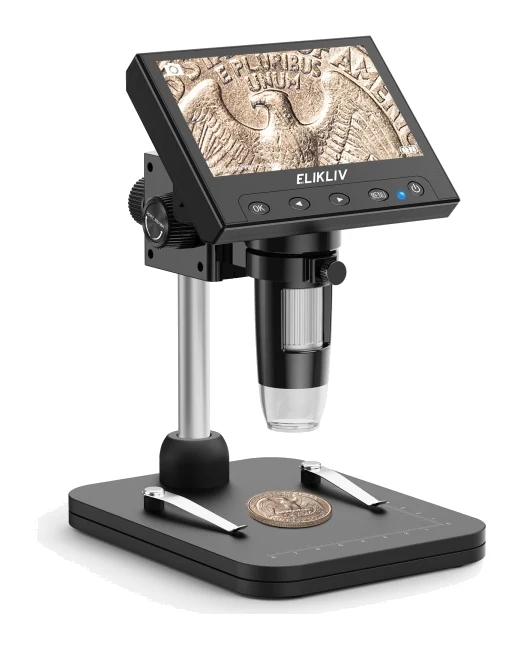
- Also GreatElikliv EDM4Why we picked it →
Frequently asked questions
Is the Andonstar AD210 worth it?
For hobbyists who want a large screen for coins, slides and light SMD soldering, reviewers see it as a practical, ready-to-use option. It is less compelling if you need PC connectivity, video above 1080P, or a sturdier build.
Does the Andonstar AD210 work with a computer?
No. The spec sheet lists PC support as No, so it cannot act as a computer-connected camera. It captures photos and video to a Micro-SD card instead, and you move files over using the included card reader.
What magnification does the Andonstar AD210 have?
Andonstar lists a magnification range of 5X-260X. The adjustable working distance runs from 1cm to 26cm, which gives room for both close inspection and working with tools underneath the lens.
What video and photo quality does the AD210 offer?
It records FHD 1920x1080 video at 30FPS and takes photos up to 12MP. Reviewers note that video is capped at 1080P and 30 frames per second.
Is the Andonstar AD210 good for soldering?
It is suited to light SMD soldering. The stand gives clearance of up to 26cm working distance and the base plate fits larger PCBs. A common criticism is that the PCB clips mount in only one fixed position.
What comes in the box with the AD210?
Andonstar bundles a 32GB SD card, a card reader and a prepared slide kit. The infrared remote is also part of the package, and power is supplied over USB 5V DC.
Sources
Specs are taken from the manufacturers' official pages; expert recommendations from the publications below.
- Andonstar AD210: andonstarmicroscope.com, microcenter.com, elektormagazine.com, aliexpress.com
Related reviews & guides
Best Digital Microscopes in 2026: Coins, PCBs & Soldering
Five digital microscopes compared on screen, magnification, lighting and recording, from a big-screen bench pick to a three-lens kit for electronics and biology.
Published Oct 30, 2026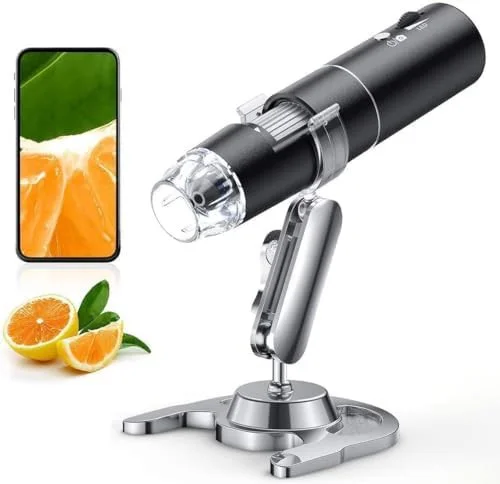
Skybasic Wireless Microscope Review (2026): Easy Pairing
A look at the Skybasic Wireless Digital Microscope 50X-1000X: easy phone pairing, good lighting and flexible viewing, set against an optimistic zoom claim and a laggy wireless feed.
Published Nov 6, 2026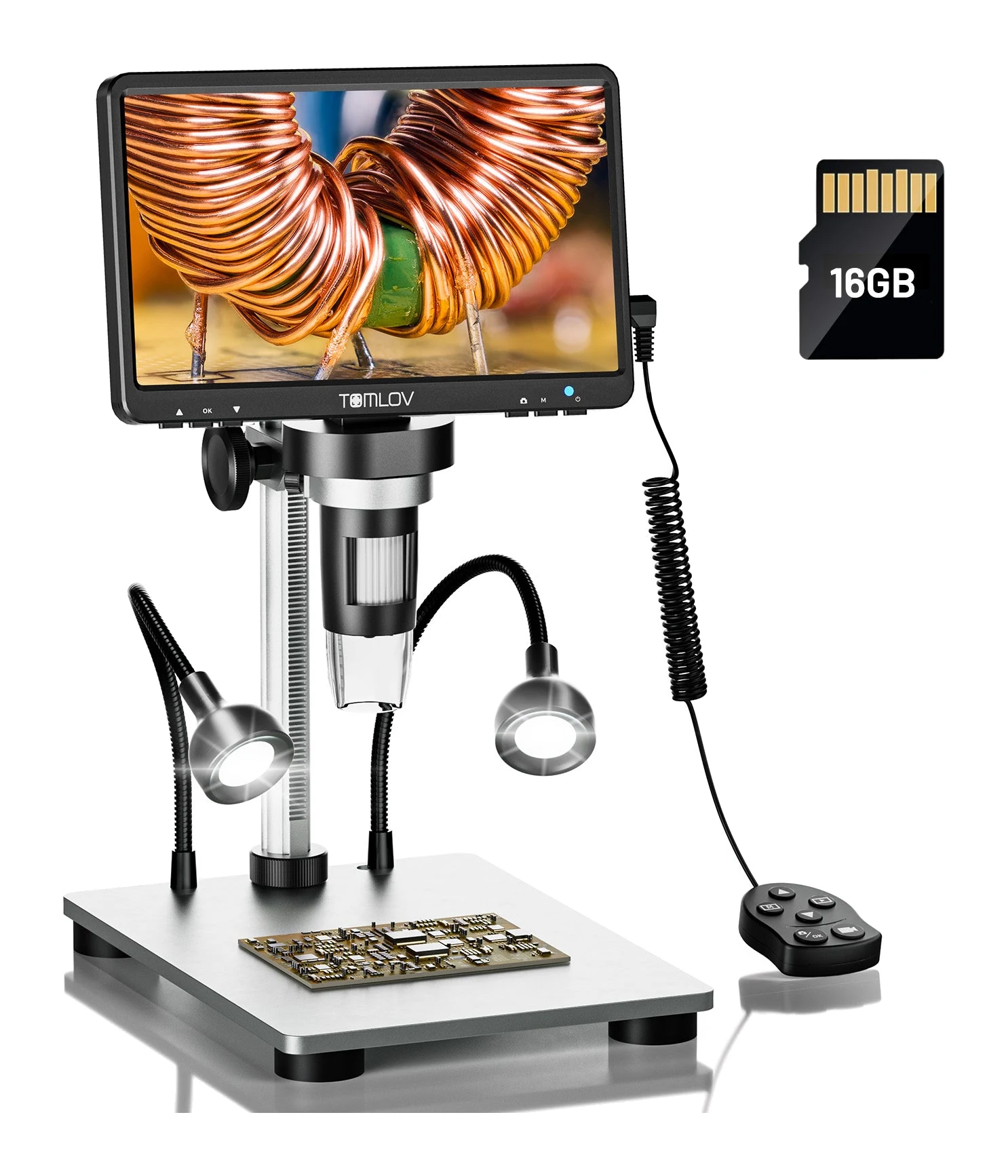
TOMLOV DM9 7" LCD Microscope Review (2026): Solder & Coins
A look at the TOMLOV DM9, a screen-based digital microscope for soldering, circuit boards and coin viewing, based on its specs and what independent reviewers report.
Published Nov 8, 2026