Samsung HW-Q800F Review (2026): Atmos Without Rear Speakers
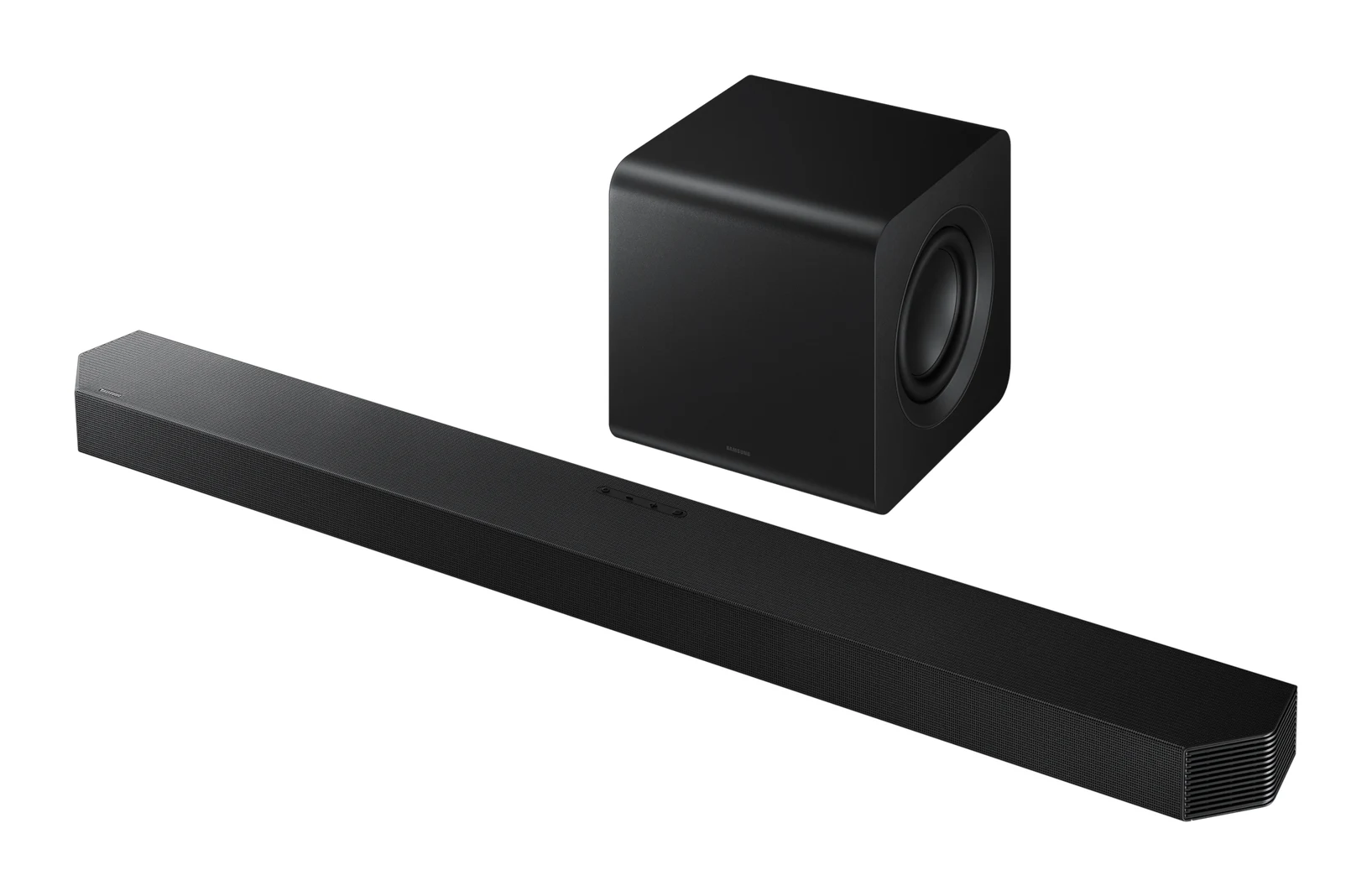
Our Samsung HW-Q800F review looks at a mid-range 5.1.2 Dolby Atmos soundbar built around Samsung TVs, covering its bass, dialogue, streaming and limits.
Research-based · We earn from qualifying purchases
Our verdict
The HW-Q800F suits Samsung TV owners who want immersive Dolby Atmos, clear dialogue and strong bass without rear speakers or complex setup. Gamers needing 4K 120Hz passthrough, or anyone wanting true rear surround out of the box, should look elsewhere or add the optional rear kit.
The good
- True 5.1.2 sound with up-firing speakers for convincing Dolby Atmos height
- Deep, impactful bass from a compact wireless subwoofer
- Very clear dialogue, helped by Active Voice Amplifier Pro
- Q-Symphony plays TV and soundbar speakers together on compatible Samsung TVs
- Wi-Fi streaming via AirPlay, Chromecast, Spotify Connect and Tidal Connect
+2 more
- Q-Symphony plays TV and soundbar speakers together on compatible Samsung TVs
- Wi-Fi streaming via AirPlay, Chromecast, Spotify Connect and Tidal Connect
The bad
- HDMI passthrough tops out at 4K 60Hz, a limit for gamers
- No rear speakers included, so true surround is limited
- Only one HDMI input and one HDMI output
- Treble can sound a bit sharp at high volume
+1 more
- Treble can sound a bit sharp at high volume
This Samsung HW-Q800F review is for anyone who wants their TV to sound bigger without running cables to speakers around the room. The HW-Q800F is a mid-range Dolby Atmos soundbar with a wireless subwoofer. It is clearly designed with Samsung TV owners in mind, though it is not limited to them. This review is based on Samsung's specifications and on what independent experts report, not on our own hands-on testing.
Samsung HW-Q800F: specs at a glance
From the manufacturer- HDMI
- 1 in, 1 out (eARC), CEC
- Channels
- 5.1.2
- Speakers
- 11
- Wireless
- Wi-Fi, Bluetooth 5.3
- Total power
- 400W
- Other inputs
- 1 optical
- Audio formats
- Dolby Atmos, Dolby TrueHD, Dolby Digital Plus, DTS:X
- Rear speakers
- Not included (optional SWA-9500S kit is compatible)
- Subwoofer drivers
- 6.5-inch active unit + 8-inch passive radiator
- Video passthrough
- 4K 60Hz, HDR10+
- Included accessories
- Remote, wall mount bracket
- Soundbar dimensions (WxHxD)
- 1110.7 x 60.4 x 120.0 mm
- Subwoofer dimensions (WxHxD)
- 249.0 x 251.8 x 249.0 mm
- Weight (soundbar / subwoofer)
- 5.1 kg / 7.2 kg
- Operating power consumption (main)
- 39 W
Key features
- True 5.1.2ch sound from side- and up-firing speakers for overhead effects without rear speakers
- Wireless Dolby Atmos over Wi-Fi with compatible Samsung TVs, plus DTS:X support
- Q-Symphony plays the TV speakers and soundbar together on compatible Samsung TVs
- SpaceFit Sound Pro tunes the sound to your room
- Active Voice Amplifier Pro and Adaptive Sound for clearer dialogue
- Game Mode Pro for wider, more positional game audio
- Compact wireless subwoofer with a 6.5-inch active driver and 8-inch passive radiator
- Streaming via AirPlay, Chromecast, Spotify Connect, Tidal Connect and SmartThings app control
What the HW-Q800F is trying to do
The pitch is immersive sound from a single bar plus a sub. Samsung describes true 5.1.2ch sound, and the "2" refers to side- and up-firing speakers that create overhead effects without rear speakers. Across the bar there are 11 speakers and a total power figure of 400W. Add Wi-Fi streaming and a set of room-tuning tools and you have a soundbar aimed at people who want a clear step up from TV speakers without a full home-theatre build.
Samsung positions it for owners of its own TVs wanting easy, immersive Atmos with powerful bass. Much of the feature list is tied to that pairing, so it is worth being clear on what that means in practice.
Design and build
The soundbar measures 1110.7 x 60.4 x 120.0 mm and weighs 5.1 kg. The subwoofer measures 249.0 x 251.8 x 249.0 mm and weighs 7.2 kg. A wall mount bracket and a remote come in the box, so you can mount the bar on the wall or set it in front of the TV without buying anything extra.
The subwoofer is described as compact, and it is wireless, which matters for placement. You can put it where it sounds best or where it fits, rather than where a cable can reach. Inside is a 6.5-inch active driver paired with an 8-inch passive radiator. This is a common way to get deep low-frequency output from a small cabinet, and reviewers single out the bass as a strength.
Operating power consumption for the main unit is listed at 39 W. That is a reference figure rather than a deciding factor, but it is useful if you leave a soundbar running for long listening sessions.
Features and what they mean day to day
Atmos height without rear speakers
The up-firing speakers are the centrepiece. The bar supports Dolby Atmos, Dolby TrueHD, Dolby Digital Plus and DTS:X, so it handles the main surround and object-based formats you will meet on streaming services and discs. Reviewers praise the convincing Atmos height from the up-firing speakers. In practice that means effects such as rain, aircraft or ambient detail are meant to come from above, not just from the front.
On compatible Samsung TVs, Atmos can also be sent wirelessly over Wi-Fi, so you do not have to rely on a cable for the best format. With other TVs you will use the wired connections instead (see the connectivity section).
Q-Symphony
Q-Symphony plays the TV's own speakers and the soundbar together on compatible Samsung TVs. Instead of muting the TV, you use its speakers as additional drivers. Reviewers list this among the HW-Q800F's strengths. It is a perk tied to compatible Samsung sets, so it matters most if you already own one or plan to buy one.
Room tuning and dialogue
SpaceFit Sound Pro tunes the sound to your room, which is useful if the soundbar sits in an awkward spot or the room is far from an ideal shape. For speech, Active Voice Amplifier Pro and Adaptive Sound work to make dialogue clearer. Very clear dialogue is one of the most consistent points of praise from reviewers, and for many buyers that is the main reason to replace TV speakers.
Game Mode Pro
Game Mode Pro aims for wider, more positional game audio. It is a welcome extra, but the HDMI limits (covered below) matter more to gamers than this feature does.
Streaming and control
The streaming options are broad. The bar supports AirPlay, Chromecast, Spotify Connect and Tidal Connect, and you can control it through the SmartThings app. Wi-Fi streaming of this kind means you can play music directly to the bar, without a phone connected over Bluetooth. Bluetooth 5.3 is there as well when you want a simple connection.
Sound, connectivity and setup
What the specs suggest about sound
The combination of a dedicated up-firing channel pair, a 400W total power figure and a subwoofer with both an active driver and a passive radiator points to a bar that favours scale and impact. Reviewers say the same: deep, impactful bass from a compact wireless sub, clear speech and convincing height effects.
The main sonic criticism is that treble can sound a bit sharp at high volume. If you tend to listen loudly, that is worth knowing, and the room-tuning and Adaptive Sound tools may help you find a balance. We cannot say how much they help in every room.
Surround without rear speakers
A common criticism is that no rear speakers are included, so true surround is limited. The side- and up-firing speakers create a wide, tall soundstage, but they do not replace speakers behind you. If you want that, the optional SWA-9500S rear speaker kit is compatible. It is an upgrade path rather than a requirement, and it lets you start simple and add rear channels later.
Ports and video passthrough
The connection panel is modest: one HDMI input, one HDMI output with eARC and CEC, and one optical input. That is plenty for a TV-first setup, where most sources plug into the TV and audio returns to the bar over eARC. It is tight if you want to connect several devices directly to the soundbar.
Video passthrough supports 4K 60Hz and HDR10+. Reviewers flag the 4K 60Hz ceiling as a limit for gamers. If you want your console or PC to run through the soundbar at higher refresh rates, this is the spec to weigh most carefully. If you would rather keep the bar for audio only, with the TV handling video, the limit matters less.
What experts like and what they criticise
The reviewer consensus is consistent, and it matches the spec sheet.
Praise:
- Convincing Dolby Atmos height from the up-firing speakers.
- Deep, impactful bass from a compact wireless subwoofer.
- Very clear dialogue, helped by Active Voice Amplifier Pro.
- Q-Symphony working with compatible Samsung TVs.
- Wide Wi-Fi streaming support via AirPlay, Chromecast, Spotify Connect and Tidal Connect.
Criticism:
- HDMI passthrough tops out at 4K 60Hz.
- No rear speakers in the box.
- Only one HDMI input and one HDMI output.
- Treble can sound a bit sharp at high volume.
The HDMI limits and the lack of rear speakers deserve weight in your decision. They are not footnotes. We found no published expert scores or buying-guide counts for this model, so we cannot cite an average here. The assessment rests on the spec sheet and the points reviewers agree on.
Who should buy it
The HW-Q800F makes most sense if:
- You own a compatible Samsung TV and want Q-Symphony and wireless Atmos over Wi-Fi.
- Dialogue clarity is a priority, for example if you watch a lot of speech-heavy content.
- You want strong bass without a bulky subwoofer.
- You like the idea of starting with a bar and sub and adding rear speakers later through the optional kit.
- You stream music and want AirPlay, Chromecast, Spotify Connect or Tidal Connect built in.
Who should skip it
Look elsewhere, or plan for extras, if:
- You are a gamer who needs passthrough beyond 4K 60Hz.
- You want proper rear surround out of the box.
- You need several HDMI inputs on the soundbar itself.
- You do not have a compatible Samsung TV and were counting on Q-Symphony or wireless Atmos. The bar still has HDMI eARC and an optical input, but some of its headline features would go unused.
- You listen at high volume and are sensitive to bright treble.
How it fits in its category
The HW-Q800F is a mid-range soundbar. It aims to give you height effects, a real subwoofer and smart features in a package that is easy to set up. The compromises (a single HDMI input, 4K 60Hz passthrough and no rear speakers) are what you accept for that simplicity. If you want to compare it against other soundbars, check how they handle HDMI passthrough, rear channels and TV-brand-specific features.
Verdict
The Samsung HW-Q800F is a focused, sensible soundbar for people who want an easy upgrade over TV speakers. Its strengths are Atmos height, powerful bass from a compact sub, clear dialogue and flexible streaming. Samsung TV owners get the most from it. Its limits are real: 4K 60Hz passthrough, one HDMI input and output, no rear speakers included, and treble that can turn sharp at high volume. If those do not touch your setup, it is a strong mid-range option to shortlist. If they do, consider the optional rear kit or a different bar.
Related buying guides
- Sonos Arc Ultra Review (2026): Big Bass, Slim Bar
- Sonos Beam (Gen 2) Review (2026): Compact Bar, Big Sound
- Sony HT-S100F Review (2026): Simple Dialogue Upgrade
- Polk MagniFi Mini AX Review (2026): Big Bass, Small Bar
- Best AV Receivers for Home Theater 2026: Atmos & Gaming
- Best Budget Wireless Earbuds 2026: ANC Without the Premium
- Best Party Speakers 2026: From Backyard to Big Crowds
Not sure about the Samsung HW-Q800F? Consider these
- Best OverallSony HT-S100FWhy we picked it →

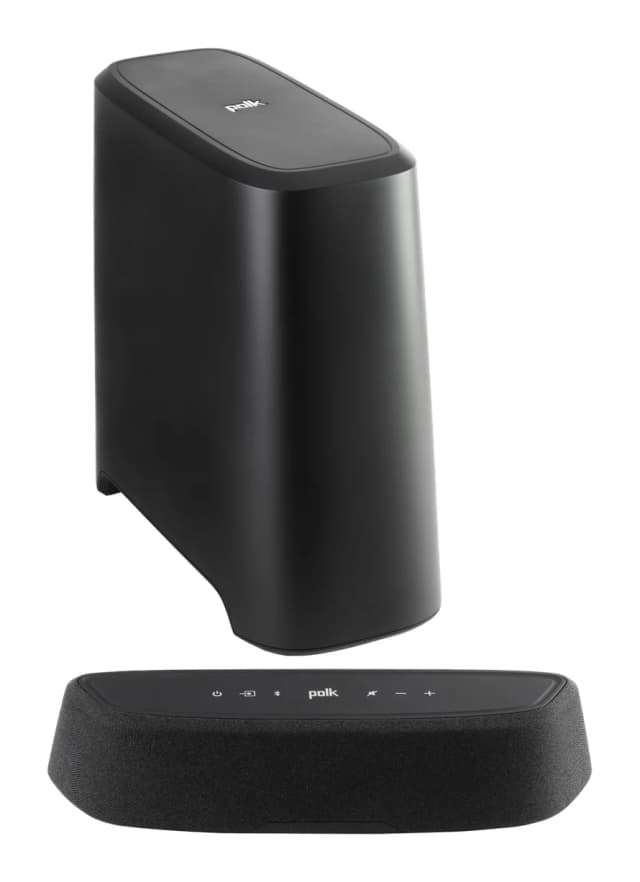
- Best ValuePolk MagniFi Mini AXWhy we picked it →
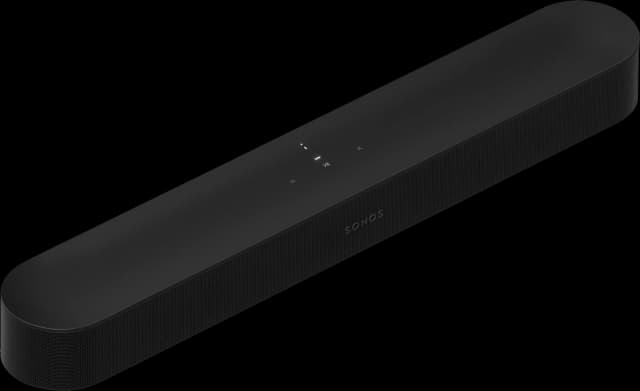
- Best BudgetSonos Beam (Gen 2)Why we picked it →
Frequently asked questions
Is the Samsung HW-Q800F worth it?
It is a good fit if you want immersive Dolby Atmos, clear dialogue and strong bass from a bar and compact wireless sub, especially with a compatible Samsung TV. It is less suitable for gamers who need more than 4K 60Hz passthrough or anyone who wants rear speakers included.
Does the Samsung HW-Q800F support Dolby Atmos and DTS:X?
Yes. It supports Dolby Atmos and DTS:X, along with Dolby TrueHD and Dolby Digital Plus. It uses side- and up-firing speakers to create overhead effects in a 5.1.2 layout without rear speakers.
Does the HW-Q800F come with rear speakers?
No. Rear speakers are not included, though the optional SWA-9500S rear speaker kit is compatible if you want to add true rear surround later.
Does the Samsung HW-Q800F support 4K 120Hz?
No. Its video passthrough is listed as 4K 60Hz with HDR10+, which reviewers note is a limit for gamers.
What is Q-Symphony on the HW-Q800F?
Q-Symphony plays the TV's speakers and the soundbar together on compatible Samsung TVs. It adds the TV's speakers to the soundbar's output instead of muting them.
Can I stream music to the HW-Q800F?
Yes. It supports AirPlay, Chromecast, Spotify Connect and Tidal Connect over Wi-Fi, has Bluetooth 5.3, and can be controlled with the SmartThings app.
Sources
Specs are taken from the manufacturers' official pages; expert recommendations from the publications below.
- Samsung HW-Q800F: samsung.com, techradar.com, architeg-prints.com, audio-review.com
Related reviews & guides

Best Soundbars in 2026 for Clearer TV Dialogue and Bass
Five of the best soundbars for 2026, from a simple Sony bar to a Samsung 5.1.2 system with a wireless subwoofer, compared on manufacturer specs and expert recommendations.
Published Oct 11, 2026
Sonos Beam (Gen 2) Review (2026): Compact Bar, Big Sound
A compact Dolby Atmos soundbar with HDMI eARC, room tuning and a path to full surround. We look at what the Sonos Beam (Gen 2) offers and where it falls short.
Published Oct 28, 2026
Sonos Arc Ultra Review (2026): Big Bass, Slim Bar
A single-bar Dolby Atmos soundbar with a Sound Motion woofer, adjustable speech enhancement and simple eARC setup. Here is who it suits and where it falls short.
Published Oct 19, 2026