Andonstar AD210 vs TOMLOV DM9 (2026): Screen vs Bench
The Andonstar AD210 offers a 10.1-inch screen and wide working distance for less; the TOMLOV DM9 adds an aluminum stand and PC connection for bench electronics work.
Head-to-head comparison · Research-based · Affiliate links
We earn a commission from qualifying purchases made through our links, at no extra cost to you. It never decides our picks. As an Amazon Associate I earn from qualifying purchases. How we make money
Andonstar AD210 vs TOMLOV DM9 7" LCD Digital Microscope: which one should you buy?
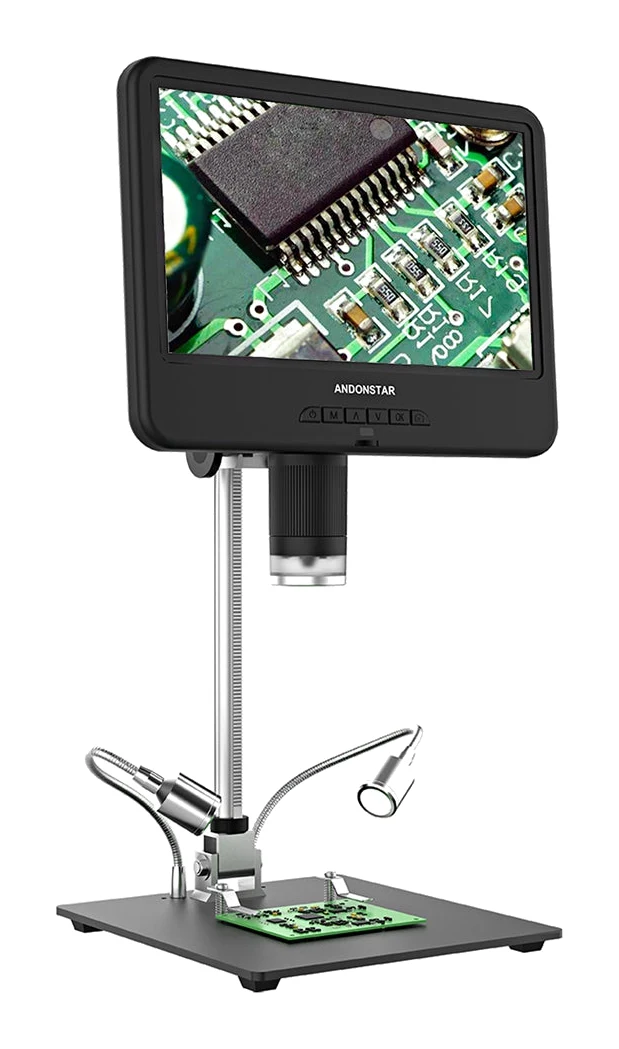
Best for: Budget buyers sharing a big screen for coins and slides
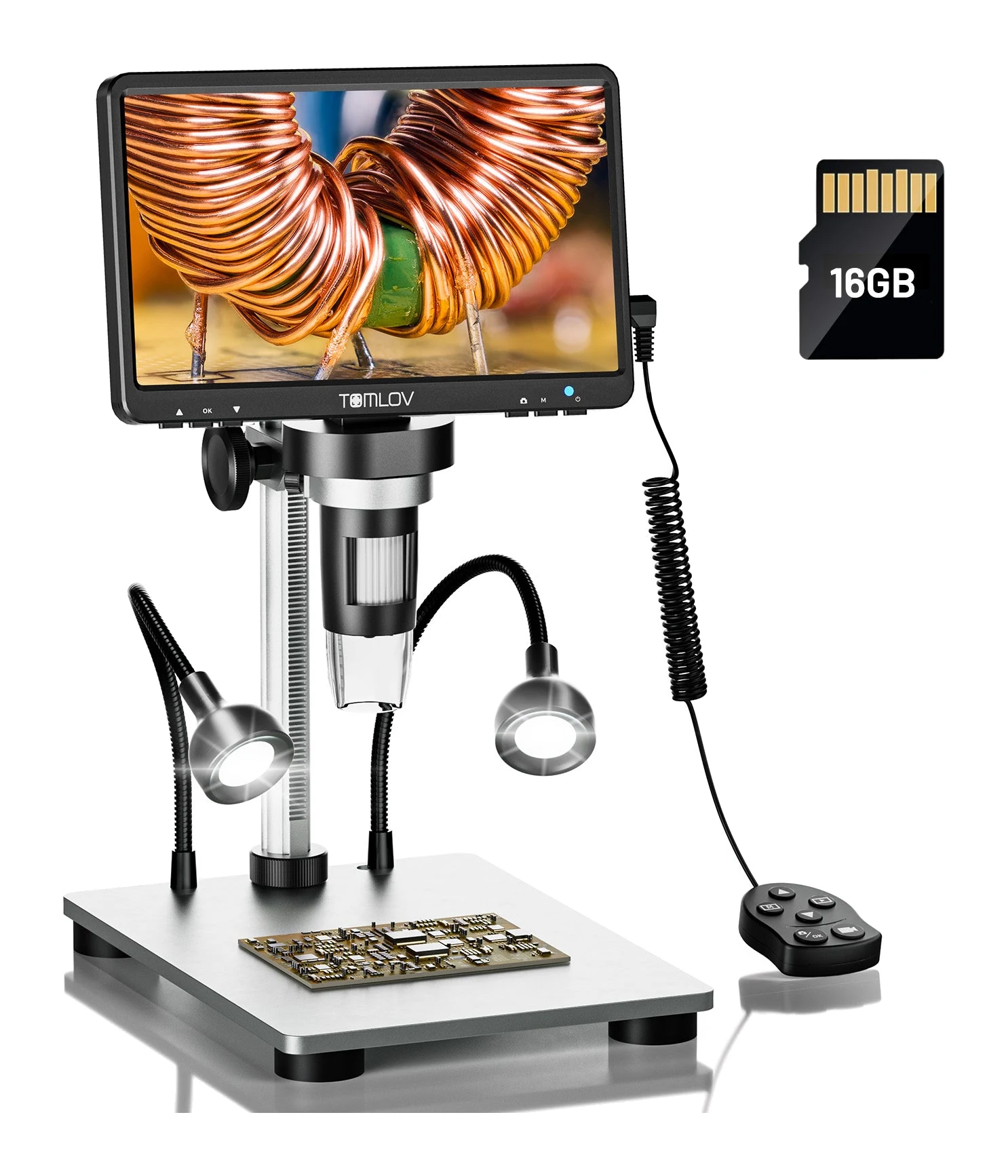
Best for: Bench soldering and PCB work needing PC connectivity
For most buyers, the Andonstar AD210 is the better pick in the Andonstar AD210 vs TOMLOV DM9 7" LCD digital microscope matchup: it has the bigger screen, the wider working distance and an IR remote, and it is the budget option. The TOMLOV DM9 is the better choice if your work is mostly bench electronics and you want a sturdy aluminum stand, gooseneck lighting and a USB link to a Windows or Mac computer, and you accept paying the premium for a smaller screen.
Both are standalone microscopes with a built-in LCD, both record 1080P video and 12MP photos to a memory card, and neither has HDMI output. The differences are in screen size, stand design, lighting and connectivity, so that is how this comparison is organized.
Andonstar AD210 vs TOMLOV DM9 7" LCD Digital Microscope: screen and viewing
The AD210 has a 10.1-inch IPS LCD (800x1280) with a 178° viewing angle. That makes it easy for several people to look at the same image, which is why reviewers praise it for sharing. It suits classroom use, a hobby table with friends or family, or a coin collector who wants a large view without an eyepiece.
The DM9 has a 7-inch rotatable LCD. The screen turns through 90°, which reviewers say reduces neck and eye strain when you work for long stretches. The maker doesn't list a resolution or panel type for the screen. Reviewers do note the DM9 has a smaller screen than the Andonstar.
Edge: Andonstar AD210 for sharing and general viewing. TOMLOV DM9 if a tilting screen matters more to you than size.
Working distance, stand and magnification
This is where the two differ most. The AD210 lists a working distance of 1cm to 26cm on an adjustable metal stand, with a 2cm minimum focus range. The stand measures 18cm20cm32cm. Reviewers praise the working-distance range, and the AD210 lists magnification of 5X-260X.
The DM9 lists a working distance of 3.6 in and a single-lens system on an aluminum alloy base, stand and holder. Reviewers say the aluminum build keeps soldering and PCB work stable. They also report that the stand's height travel is too short for large coins without a riser, that the light base can tip, and that build quality varies between units. The DM9 is listed at 2.13 lb, which fits the "fixed bench" role.
On magnification, the DM9 headlines 1200X (some retailer listings say 50X-1200X, with actual magnification depending on focus range). Reviewers call that claim overstated for real-world use. The AD210's 5X-260X is far lower on paper, but reviewers also say its true maximum magnification is unclear and its manual is thin. Treat both numbers as marketing ceilings and judge each by its working range and screen instead.
Edge: Andonstar AD210 for flexibility and room to work. TOMLOV DM9 for stability on a fixed bench, with the caveats about the tipping light base and coin height.
Lighting
The AD210 has three lighting zones: 8 LEDs around the lens, 2 auxiliary LEDs at the stand base, and a bottom light stage. The manual lists a bottom light stage, and a biological slide kit is bundled (per retailer and manual listings). Lighting is controlled from the IR remote.
The DM9 has 8 built-in LED lights plus two flexible gooseneck LED lights. Reviewers say this combination cuts shadows and glare. It also comes with a light barrier (diffuser) for reflective subjects such as coins. The maker doesn't list a bottom light stage for the DM9, so transmitted-light slide viewing isn't something its specs promise.
Edge: Andonstar AD210 for slides and general use. TOMLOV DM9 for directional light on PCBs and a diffuser for shiny coins.
Connectivity, capture and controls
Both record 1080P video and 12MP photos to a memory card. The AD210 is listed at video 1920x1080 at 30FPS (max 30f/s) and photos up to 4032x3024. Its Micro-SD support goes up to 32G on the maker page, and some listings bundle a 32GB card. The DM9's resolution figures come from retailer listings, and its manufacturer page says a 16GB card is included, though some retailers say 32GB.
The key split is the computer connection. The AD210 lists "PC support: No" and has no HDMI output, a limitation reviewers repeat. The DM9 connects to Windows or Mac by USB cable for a larger view, though a retailer FAQ confirms it has no HDMI output either. If you want to view or capture on a monitor, only the DM9 offers a route.
For controls, the AD210 comes with an IR remote for hands-free zoom, capture and light control. The DM9 has a wired remote for capture. Reviewers say the AD210's remote and display housing feel thin and plasticky, so the extra convenience comes with some build-quality trade-offs.
Edge: TOMLOV DM9 if PC connectivity matters. Andonstar AD210 if you want hands-free control from the IR remote.
Soldering and PCB work
The AD210 includes PCB clips, but reviewers say they mount in one fixed position, which limits real soldering use. It suits coins, hobbyists and classroom sharing better than serious PCB soldering. The DM9 is aimed squarely at this job, with its aluminum stand, gooseneck lights and USB link. Its working distance of 3.6 in is shorter than the Andonstar's, so judge it against the way you work.
What experts say
The only published expert score in this matchup is for the TOMLOV DM9: Electronikz gave it 8.8 out of 10. Reviewers praise its rotatable 7-inch LCD, sturdy aluminum-alloy base and stand, the 8 built-in LEDs plus two gooseneck lights, the USB connection to Windows or Mac, and the included diffuser for coins. Their criticisms are an overstated 1200X magnification claim, stand height travel that is too short for large coins without a riser, a light base that can tip with build quality that varies between units, and a smaller screen and shorter working distance than the Andonstar.
The Andonstar AD210 has no score from a named review that we can cite, so the comparison rests on what reviewers say in general. They praise the large 10.1-inch IPS screen with its wide viewing angle, 1080P video and 12MP photo recording to SD card, the three lighting zones, the 1cm to 26cm working distance with an adjustable metal stand, and the IR remote. They criticize the fixed-position PCB clips, the thin and plasticky display housing and remote, the lack of HDMI output and PC connection, and a thin manual with unclear true maximum magnification.
Because only one product has a published score, don't read the 8.8 as a win over the Andonstar. It tells you the DM9 is well regarded for its intended bench role.
Choose the Andonstar AD210 if…
Best for: Budget buyers sharing a big screen for coins and slides
Choose the Andonstar AD210 over the TOMLOV if you want a bigger screen, a wider working distance and a hands-free IR remote at a budget price. It suits coin collectors, hobbyists and classroom sharing better than serious PCB soldering.
Read our full Andonstar AD210 review →- Weight
- 1.85kg
- Display
- 10.1 inch IPS LCD, 800x1280, 178° viewing angle
- Resolution
- Video FHD 1920x1080 30FPS; photo max 12M (4032x3024)
- Storage
- Micro-SD up to 32G on the maker page; the 32GB card is bundled in some listings
- Connectivity
- Micro-SD card storage; PC support: No; no HDMI output
- Light source
- 8 LEDs around lens + 2 auxiliary LEDs at stand base; bottom light stage
Reasons to buy
- Large 10.1-inch IPS screen with wide viewing angle, easy to share
- Records 1080P video and 12MP photos to SD card
- Three lighting zones: lens ring, side lights and bottom light stage
- Wide 1cm to 26cm working distance with adjustable metal stand
- IR remote for hands-free zoom, capture and light control
Reasons to avoid
- PCB clips mount in one fixed position, limiting real soldering use
- Display housing and remote feel thin and plasticky
- No HDMI output and no PC connection
- Thin manual and unclear true maximum magnification
- Elektor Magazine
- 10.0
- Microscope Club
- 9.0
Pick the AD210 if you want the larger 10.1-inch screen, the wide 1cm to 26cm working distance and hands-free IR remote control at the budget price. It suits coin collectors, slide viewers, hobbyists and classrooms where several people look at one screen. Accept that it has no PC connection or HDMI output, its PCB clips are fixed in one position, and the plastic parts feel thin.
Choose the TOMLOV DM9 if…
TOMLOV DM9 7" LCD Digital Microscope
Best for: Bench soldering and PCB work needing PC connectivity
Choose the TOMLOV DM9 over the Andonstar if you want a sturdier aluminum bench setup with PC connectivity and gooseneck lighting for soldering and PCB work. It makes sense for fixed-bench electronics use, though you pay a premium for a smaller screen.
Read our full TOMLOV DM9 7" LCD Digital Microscope review →- Weight
- 2.13 lb
- Display
- 7-inch rotatable LCD
- Resolution
- 1080P FHD video, 12MP photos
- Storage
- 16GB memory card included; some retailer listings say 32GB
- Connectivity
- USB cable to PC (Windows/Mac); no HDMI output
- Light source
- 8 built-in LED lights + 2 gooseneck LED lights
Reasons to buy
- Rotatable 7-inch LCD reduces neck and eye strain
- Sturdy aluminum-alloy base and stand keep soldering and PCB work stable
- 8 built-in LEDs plus two gooseneck lights cut shadows and glare
- USB connection to Windows or Mac for a larger view
- Included diffuser helps with reflective subjects like coins
Reasons to avoid
- 1200X magnification claim is overstated for real-world use
- Stand height travel is too short for large coins without a riser
- Light base can tip and build quality varies between units
- Smaller screen and shorter working distance than the Andonstar
- Electronikz
- 8.8
- chemprofessor.com
- 8.5
- bestchoice.com
- 8.9
Pick the DM9 if your work is mostly bench electronics and you want an aluminum-alloy stand, two gooseneck lights and a USB connection to a Windows or Mac computer. The rotatable screen also helps over long sessions. Be ready for the premium price, a smaller 7-inch screen, a 3.6 in working distance, and the stand-height and tipping issues reviewers mention.
Compare our picks side by side
The specs most of our picks share, from each maker’s spec page (— = not published). Expert score = the average of published expert reviews, which rate each product for its price. Scroll sideways on small screens.
| Spec | Andonstar AD210 | TOMLOV DM9 7" LCD Digital Microscope |
|---|---|---|
| Best for | Our Pick | The Alternative |
| Expert score | 9.5 | 8.7 |
| Price vs. these picks | Lower | Higher |
| Weight | 1.85kg | 2.13 lb |
| Display | 10.1 inch IPS LCD, 800x1280, 178° viewing angle | 7-inch rotatable LCD |
| Resolution | Video FHD 1920x1080 30FPS; photo max 12M (4032x3024) | 1080P FHD video, 12MP photos |
| Storage | Micro-SD up to 32G on the maker page; the 32GB card is bundled in some listings | 16GB memory card included; some retailer listings say 32GB |
| Connectivity | Micro-SD card storage; PC support: No; no HDMI output | USB cable to PC (Windows/Mac); no HDMI output |
| Light source | 8 LEDs around lens + 2 auxiliary LEDs at stand base; bottom light stage | 8 built-in LED lights + 2 gooseneck LED lights |
| Magnification | 5X-260X | 1200X |
| Working distance | 1cm to 26cm | 3.6 in |
| Where to buy | View on Amazon | View on Amazon |
The verdict
For most people, the Andonstar AD210 is the better buy: more screen, more room under the lens and a remote, all for less. The TOMLOV DM9 is the specialist. If you need a steadier aluminum bench setup with PC connectivity for PCB work, it is worth the premium, but don't pay for its 1200X headline figure.
Ready to buy?
 Our PickAndonstar AD210View on Amazon
 The AlternativeTOMLOV DM9 7" LCD Digital MicroscopeView on Amazon
Frequently asked questions
Is the Andonstar AD210 better than the TOMLOV DM9?
For most buyers, yes. The Andonstar AD210 has a larger 10.1-inch screen, a 1cm to 26cm working distance and an IR remote, and it is the budget option. The TOMLOV DM9 is better for fixed-bench soldering and PCB work that needs a PC connection.
Which has the bigger screen, the AD210 or the DM9?
The Andonstar AD210 does. It has a 10.1-inch IPS screen, while the TOMLOV DM9 has a 7-inch LCD that rotates through 90°. Reviewers also note the DM9's screen is smaller.
Can the AD210 or DM9 connect to a PC?
Only the TOMLOV DM9 can. It connects by USB cable to Windows or Mac. The Andonstar AD210 lists PC support as No, and neither microscope has HDMI output.
Which microscope is better for soldering?
The TOMLOV DM9 is better suited to soldering and PCB work. Reviewers praise its aluminum-alloy stand and gooseneck lighting. Reviewers say the Andonstar AD210's PCB clips mount in one fixed position, which limits real soldering use.
Which is better for coins?
It depends on the coin size and how you light it. The TOMLOV DM9 includes a diffuser for reflective subjects such as coins, but reviewers say its stand is too short for large coins without a riser. The Andonstar AD210 has a wider working distance and a bigger screen, and is listed as suiting coins.
Is the TOMLOV DM9's 1200X magnification real?
Reviewers say it is overstated for real-world use. Some retailer listings give 50X-1200X, and actual magnification depends on focus range. The Andonstar AD210 lists 5X-260X, but reviewers say its true maximum magnification is also unclear.
Sources
Specs are taken from the manufacturers' official pages; expert recommendations from the publications below.
- Andonstar AD210: andonstarmicroscope.com, manuals.plus, golyath.co.uk, microscopeclub.com
- TOMLOV DM9 7" LCD Digital Microscope: tomlov.com, walmart.com, ebay.com, cb-electronics.com
More buying guides
TOMLOV DM9 7" LCD Microscope Review (2026): Solder & Coins
A look at the TOMLOV DM9, a screen-based digital microscope for soldering, circuit boards and coin viewing, based on its specs and what independent reviewers report.
Published Nov 8, 2026Andonstar AD210 Review (2026): Big Screen, No PC Link
The Andonstar AD210 is a standalone digital microscope built around a big 10.1-inch screen. Here is what the specs and expert reviews say about coins, slides and light soldering.
Published Nov 8, 2026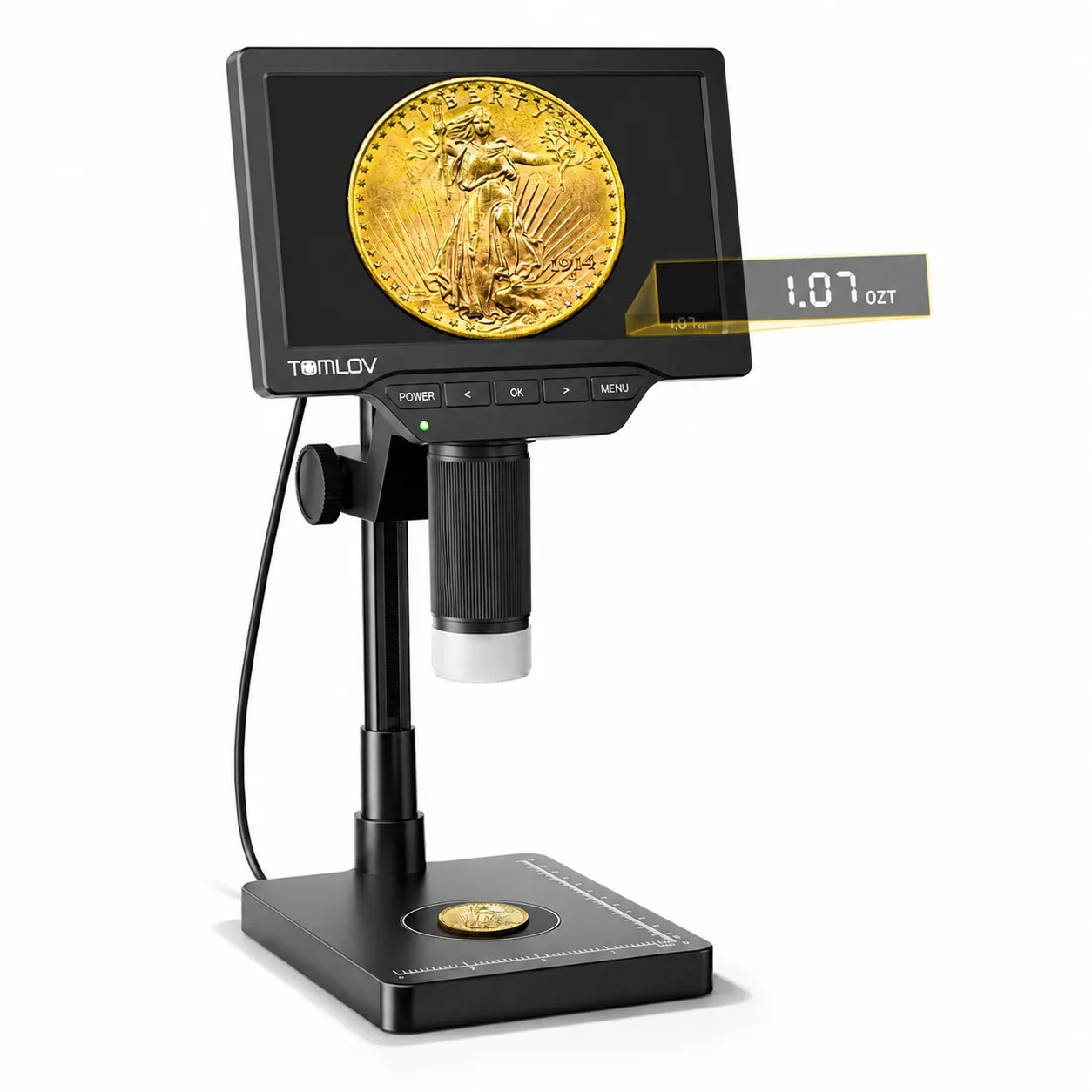
TOMLOV DM4W Max Review (2026): Coin Scope With a Scale
A coin microscope with a built-in scale, a 7-inch screen and USB output to a bigger display. Here is who the TOMLOV DM4W Max suits, and where its limits are.
Published Oct 29, 2026