CyberPower CP1500PFCLCD Review (2026): PC-Ready Backup
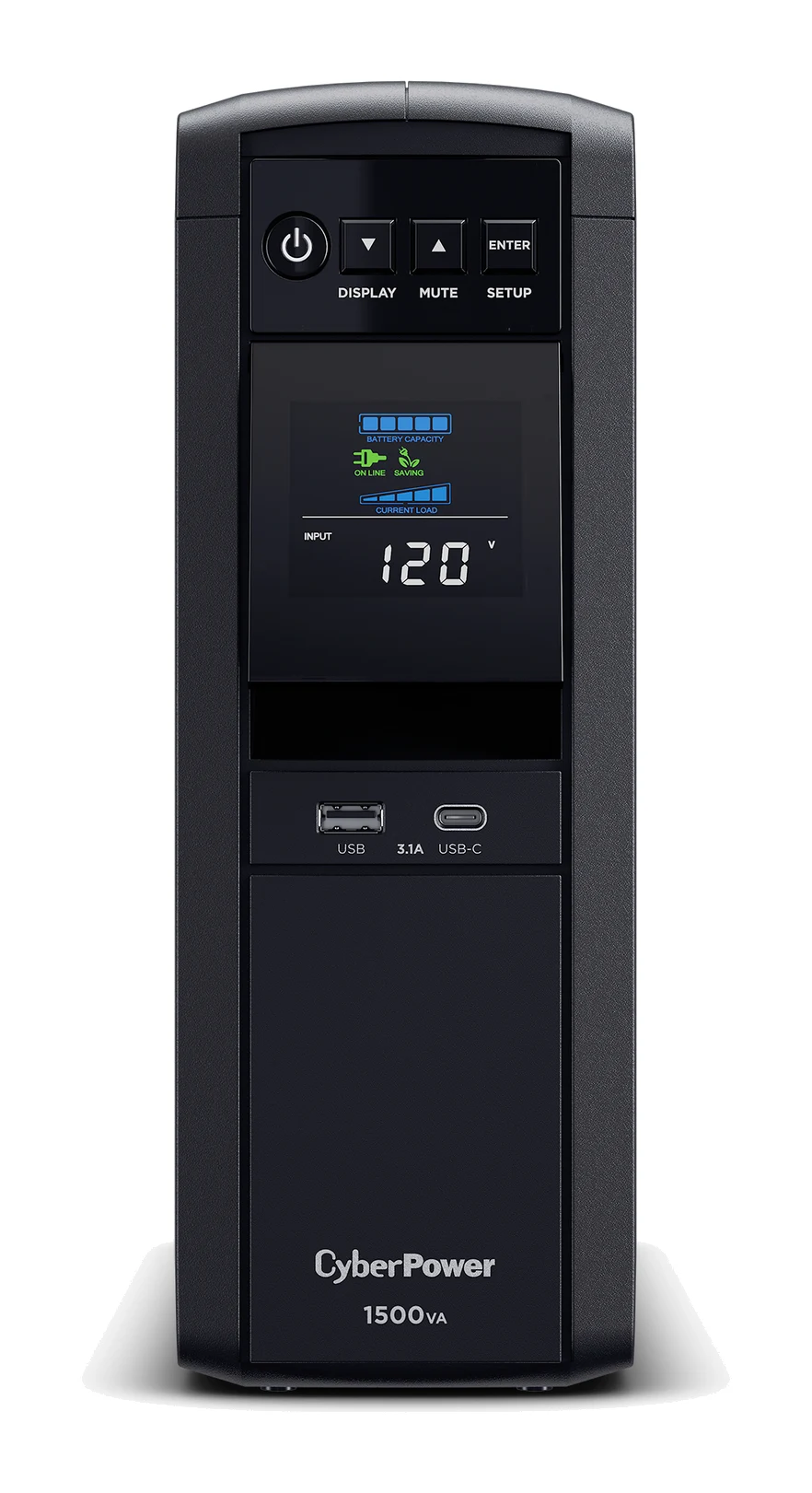
A look at the CyberPower CP1500PFCLCD: pure sine wave output, 12 outlets, a tilting colour LCD and a user-replaceable battery, with honest limits on runtime and transfer time.
Research-based · We earn from qualifying purchases
Our verdict
This is a strong pick for desktop PCs, gaming rigs and home office gear with active PFC power supplies. It offers sine wave output, plenty of outlets and solid warranty coverage at a mid-range price. Skip it if you need long runtime at heavy loads or the fastest possible switchover.
The good
- Pure sine wave output suits active PFC power supplies
- 1000W capacity with 12 outlets, split between battery and surge-only
- Tilting color LCD shows load, runtime and alerts
- User-replaceable battery cartridge keeps the unit in service longer
+1 more
- User-replaceable battery cartridge keeps the unit in service longer
The bad
- Runtime drops to about 2.5 minutes at full load
- Reviewers measured transfer time slower than the rated 4 ms
- Low-battery shutdown can trigger earlier than expected
- Heavy for its size
+1 more
- Heavy for its size
This CyberPower CP1500PFCLCD PFC Sinewave UPS review looks at a line-interactive battery backup built for desktop PCs and home office gear. The name tells you most of the story: PFC Sinewave means it outputs a pure sine wave, which is what power supplies with active power factor correction are designed to run from. If you have a modern desktop, a gaming rig or a cluster of office equipment on one desk, this is the kind of UPS you'd shortlist.
This review is based on the manufacturer's specs and what independent experts report. It is not hands-on testing.
CyberPower CP1500PFCLCD PFC Sinewave UPS: specs at a glance
From the manufacturer- Battery
- Sealed lead-acid, user-replaceable (RB1290X2)
- Outlets
- 12 × NEMA 5-15R (6 battery + surge, 6 surge-only)
- Capacity
- 1500VA / 1000W
- Topology
- Line Interactive
- Warranty
- 3 year
- Waveform
- Sine Wave
- Surge rating
- 1445 Joules
- Plug and cord
- NEMA 5-15P, 5 ft. cord
- Recharge time
- up to 8 Hours
- Output voltage
- 120Vac ± 5%
- USB charge ports
- 2 (1 Type-A, 1 Type-C), 3.1A shared
- On-battery frequency
- 60 Hz ± 1%
- Typical transfer time
- 4 ms
- Runtime (half / full load)
- 10 minutes / 2.5 minutes
Key features
- Pure sine wave output for active PFC power supplies
- Automatic Voltage Regulation corrects minor fluctuations without using the battery
- 12 outlets: 6 battery and surge, 6 surge-only
- Tilting multifunction color LCD shows status and alerts
- USB-A and USB-C charge ports on the front
- User-replaceable battery cartridge
- USB, relay and SNMP monitoring (optional RMCARD205), with PowerPanel Business software
Why people consider the CP1500PFCLCD
A UPS does two jobs. It keeps equipment running for a short time when the mains drops, and it smooths out the power in between. The CP1500PFCLCD is rated at 1500VA / 1000W, which puts it in the range where a desktop PC, a monitor and a few peripherals fit comfortably. It sits in the mid-range part of the market.
The main selling point is the waveform. Active PFC power supplies are designed to run from a pure sine wave, which this unit outputs, and reviewers praise that output. It is also recommended in 3 expert buying guides, and Bitdoze scores it 4.5/5.
Design and build
The CP1500PFCLCD is a floor or desk-side tower with a tilting colour LCD at the front. The tilt is a practical touch. A UPS often sits under a desk or on the floor, and the screen tilts so you can angle it toward you. The tilting color LCD is one of the unit's strengths.
On the back there are 12 NEMA 5-15R outlets, and the unit plugs into the wall with a NEMA 5-15P plug on a 5 ft. cord. Six outlets are battery-backed with surge protection, and six are surge-only. That split matters. Your PC, monitor and router belong on the battery side. Printers, chargers, speakers and other things you would not mind losing in an outage can go on the surge-only side, so they don't drain the battery.
On the front, a USB-A and a USB-C charge port share 3.1A. That is useful for topping up a phone or accessory at your desk. Because the output is shared, don't expect both ports to deliver full speed at once.
A common criticism is weight. The unit is heavy for its size. It's worth knowing before you plan to move it around or fit it into a tight spot.
Features and what they mean day to day
Pure sine wave output
The sine wave output is the reason to choose this model. It outputs a pure sine wave, which suits active PFC power supplies. For gaming PCs and workstations that is a sensible safeguard. On battery, the output frequency is held at 60 Hz ± 1%.
Automatic Voltage Regulation
Automatic Voltage Regulation (AVR) corrects minor fluctuations without switching to the battery. In practice, small sags and surges get smoothed out while the battery stays full for a real outage. Output is specified at 120Vac ± 5%. Less battery cycling can also help the battery last longer, though the published specs don't quantify that.
Surge protection
The surge rating is 1445 Joules. Both the battery-backed and the surge-only outlets are surge protected.
The colour LCD
The tilting multifunction display shows status and alerts. It shows load, runtime and alerts. Seeing how much load you're drawing is the most useful number on a UPS, because it tells you roughly how long you'll have if the power goes out.
Monitoring and software
The CP1500PFCLCD supports USB, relay and SNMP monitoring, with SNMP needing the optional RMCARD205. The PowerPanel Business software is also supported.
User-replaceable battery
The sealed lead-acid battery is a user-replaceable cartridge (RB1290X2). Backup batteries wear out, and being able to swap the cartridge rather than replace the whole unit keeps it in service longer. Reviewers list this among its strengths.
Performance, battery and transfer behaviour
Runtime
The runtime figures are where expectations need adjusting. CyberPower lists 10 minutes at half load and 2.5 minutes at full load. A UPS like this is not meant to keep a PC working through a long blackout. Its job is to give you time to save work and shut down cleanly, or to ride out a brief dropout. Runtime falls quickly as the load climbs, so a high-powered gaming rig with several monitors will not run for long. Putting non-essential gear on the surge-only outlets helps stretch what you have.
Recharging takes up to 8 Hours. If you have two outages close together, the battery may not be fully topped up for the second.
Transfer time
The typical transfer time is rated at 4 ms. That is the gap while the unit switches from mains to battery. Reviewers report measuring it slower than the rating. That is a reason to look elsewhere if you need the fastest possible switchover. The unit is a line-interactive design, not an online double-conversion one.
Low-battery shutdown
Another common complaint is that low-battery shutdown can trigger earlier than expected. In practice, plan on a bit less usable runtime than the headline numbers suggest, and leave yourself margin when setting up automatic shutdown.
What experts like and what they criticise
Reviewers consistently praise a handful of things:
- the pure sine wave output for active PFC power supplies
- the 1000W capacity and the 12-outlet layout, split between battery and surge-only
- the tilting colour LCD
- the replaceable battery cartridge
- the 3-year warranty with a Connected Equipment Guarantee
The criticisms are just as consistent. Runtime is short at full load, the real-world transfer time is slower than the rated figure, low-battery shutdown can come sooner than you'd like, and the unit is heavy for its size. None of these are surprises for a lead-acid UPS in this class, but they are the trade-offs to weigh.
Who should buy it
This UPS suits:
- Desktop PC and gaming rig owners whose power supply uses active PFC and who want sine wave output on battery.
- Home office users with a PC, monitor, router and a few peripherals who want clear status on the LCD and room to plug everything in.
- Buyers who want a longer-lived unit, thanks to the replaceable battery and the 3-year warranty.
Who should skip it
- Anyone who needs long runtime at heavy loads. At full load it lasts about 2.5 minutes, so it is a shutdown-time device, not an extended backup.
- Anyone who needs the fastest possible switchover. Reviewer measurements suggest transfer is slower than rated.
- Anyone short on space or who moves gear often. Reviewers call it heavy for its size.
How it fits in its category
Battery backups range from simple surge-and-battery boxes to online units with continuous conversion. The CP1500PFCLCD is a line-interactive UPS with sine wave output, AVR and 12 outlets, in the mid-range price tier. When comparing models, match the VA and watt rating to your actual load, check the waveform, and look at the runtime at your likely draw rather than the headline capacity.
CyberPower CP1500PFCLCD PFC Sinewave UPS review: the verdict
The CP1500PFCLCD does what a PC-focused UPS should. It offers clean sine wave output for active PFC power supplies, plenty of outlets, a clear tilting display, and a battery you can replace yourself. The 3-year warranty and Connected Equipment Guarantee add confidence. Its limits are the short runtime at heavy load, a transfer time that reviewers found slower than rated, an early low-battery cutoff and its weight. If you want protection and a graceful shutdown for a desktop or home office setup, it's a strong choice. If you need minutes of runtime at full load or the quickest possible switchover, look elsewhere.
Related buying guides
Not sure about the CyberPower CP1500PFCLCD PFC Sinewave UPS? Consider these
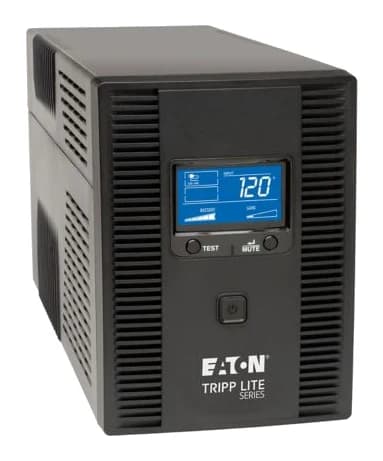
- Premium PickTripp Lite SmartPro SMART1500LCDTWhy we picked it →
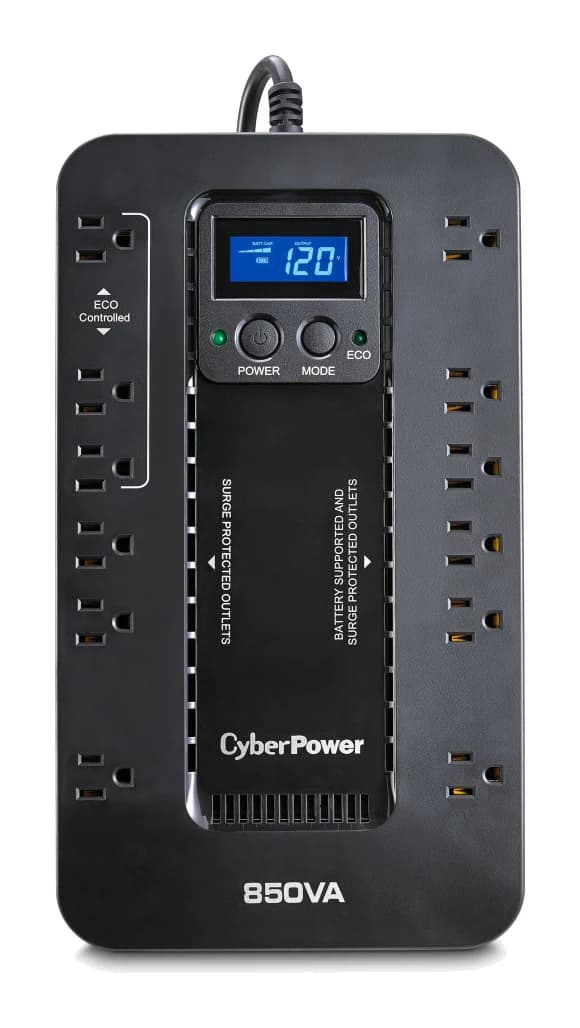
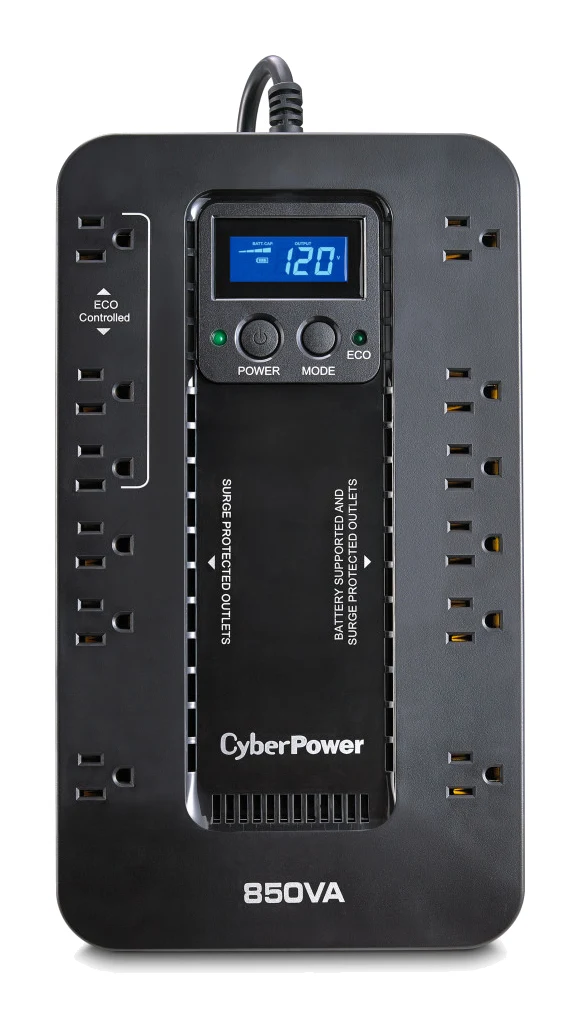
- Best BudgetCyberPower EC850LCDWhy we picked it →
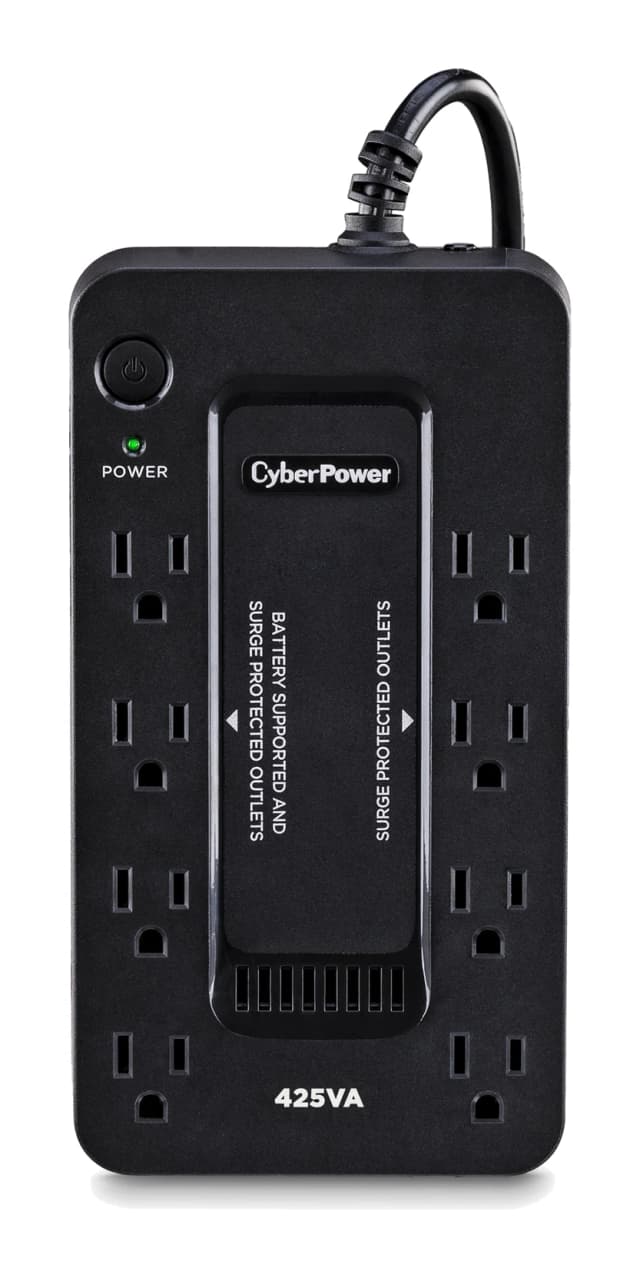
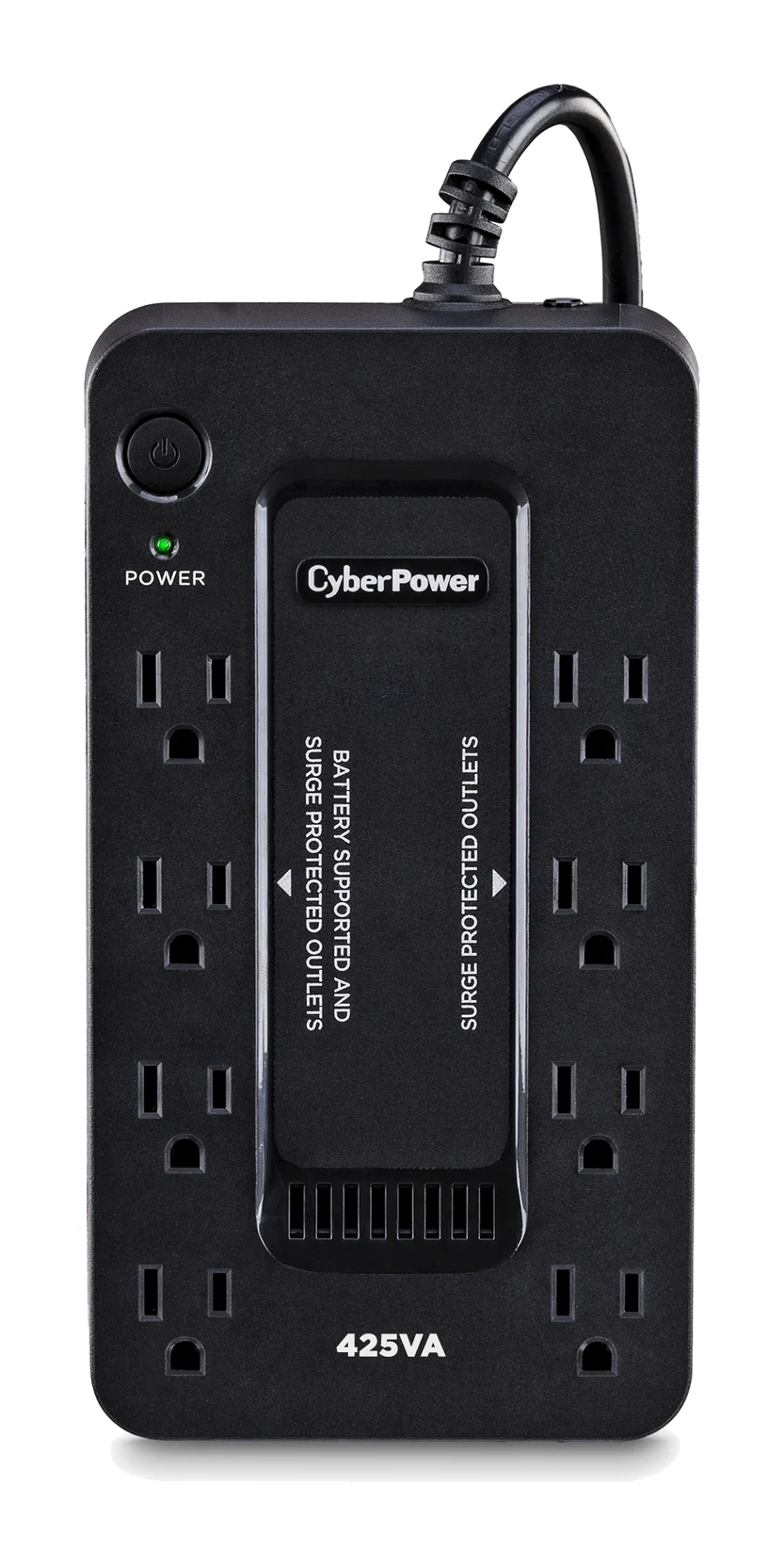
- Best ValueCyberPower ST425Why we picked it →
Frequently asked questions
Is the CyberPower CP1500PFCLCD worth it?
For desktop PCs and home office gear with active PFC power supplies, reviewers consider it a strong pick. It offers sine wave output, 12 outlets, a replaceable battery and a 3-year warranty in the mid-range part of the market. It is less suited to anyone who needs long runtime at heavy load.
Does the CP1500PFCLCD output a pure sine wave?
Yes. It is specified with a sine wave output and is designed to suit active PFC power supplies. On battery, the output frequency is 60 Hz ± 1%.
How long will the CP1500PFCLCD run my PC?
CyberPower lists 10 minutes at half load and 2.5 minutes at full load. Actual time depends on what you plug into the battery outlets, and reviewers note that low-battery shutdown can trigger earlier than expected. Treat it as time to save work and shut down.
Can I replace the battery in the CP1500PFCLCD myself?
Yes. It uses a user-replaceable sealed lead-acid battery cartridge (RB1290X2), which helps keep the unit in service longer.
How many outlets does it have, and which ones are battery-backed?
There are 12 NEMA 5-15R outlets. Six provide battery backup and surge protection, and six are surge-only. Put your PC, monitor and router on the battery side.
Does the CP1500PFCLCD have USB-C charging?
Yes. The front has two USB charge ports, one Type-A and one Type-C, which share 3.1A.
Sources
Specs are taken from the manufacturers' official pages; expert recommendations from the publications below.
- CyberPower CP1500PFCLCD PFC Sinewave UPS: cyberpowersystems.com, microcenter.com, bhphotovideo.com, newegg.com
Related reviews & guides
Best UPS Battery Backups for Computers and Wi-Fi (2026)
Five UPS battery backups compared for PCs, routers and modems, from a pure sine wave pick for gaming rigs to compact budget units for small setups.
Published Oct 22, 2026
Tripp Lite SmartPro SMART1500LCDT Review: Brownout Fixer
A line-interactive tower UPS built around voltage correction, line-wide surge protection and a clear LCD. Runtime under heavy load is short, so it works best as a safe-shutdown buffer.
Published Oct 25, 2026
Best Home Backup Batteries for Power Outages 2026: Any Size
Five home backup batteries compared on capacity, output, recharge speed and UPS switchover, with a simple way to estimate how long each will run your essentials.
Published Oct 16, 2026