Roxicosly CR1030 vs Raynic CR1009Pro (2026)
The Roxicosly CR1030 suits storm-prone homes that need a big power bank and water resistance. The Raynic CR1009Pro is the pick for shortwave listeners who want a lighter radio.
Head-to-head comparison · Research-based · Affiliate links
We earn a commission from qualifying purchases made through our links, at no extra cost to you. It never decides our picks. As an Amazon Associate I earn from qualifying purchases. How we make money
Roxicosly CR1030 vs Raynic CR1009Pro: which one should you buy?
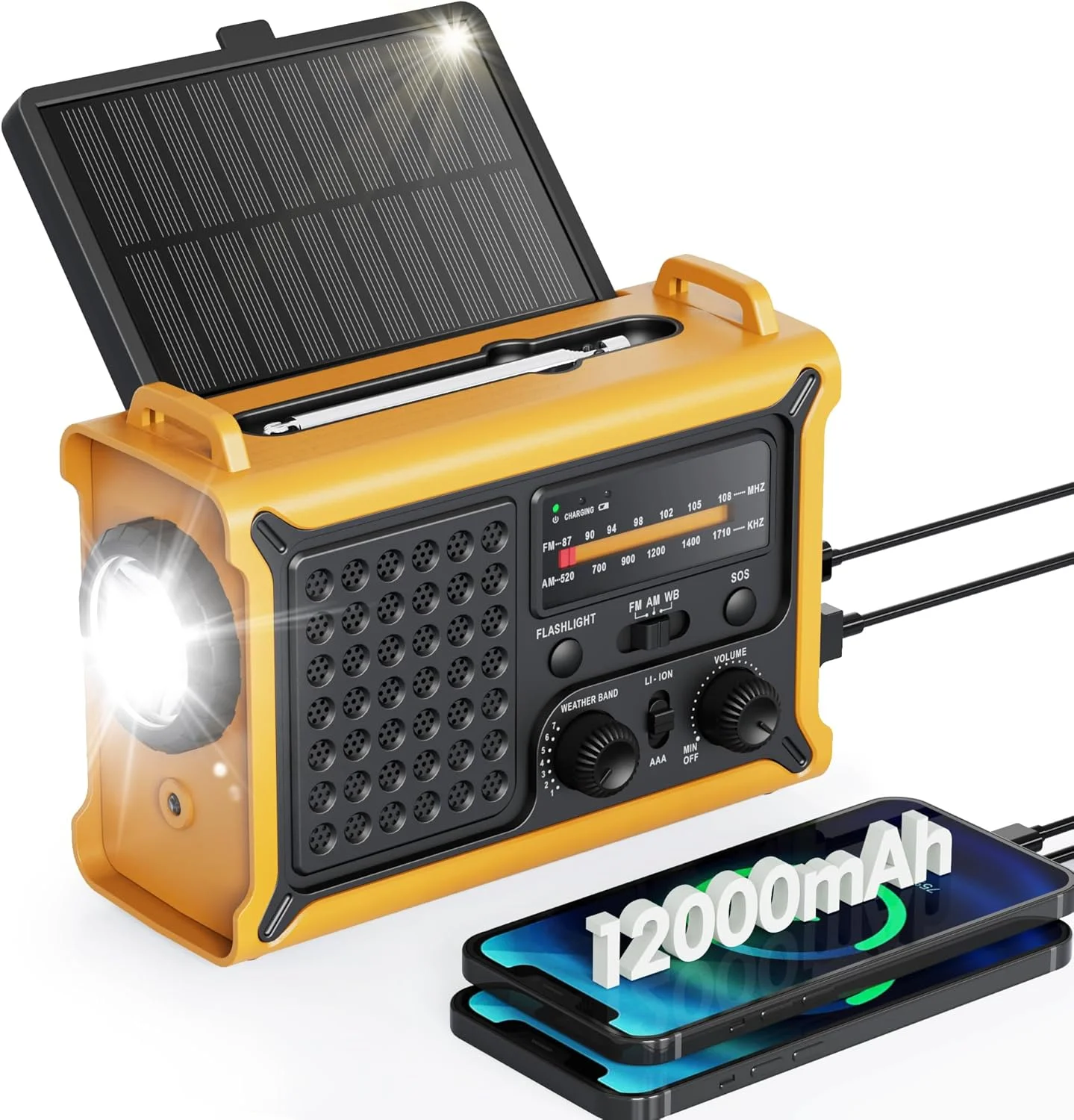
Best for: Storm-prone households wanting a rugged, high-capacity power bank radio
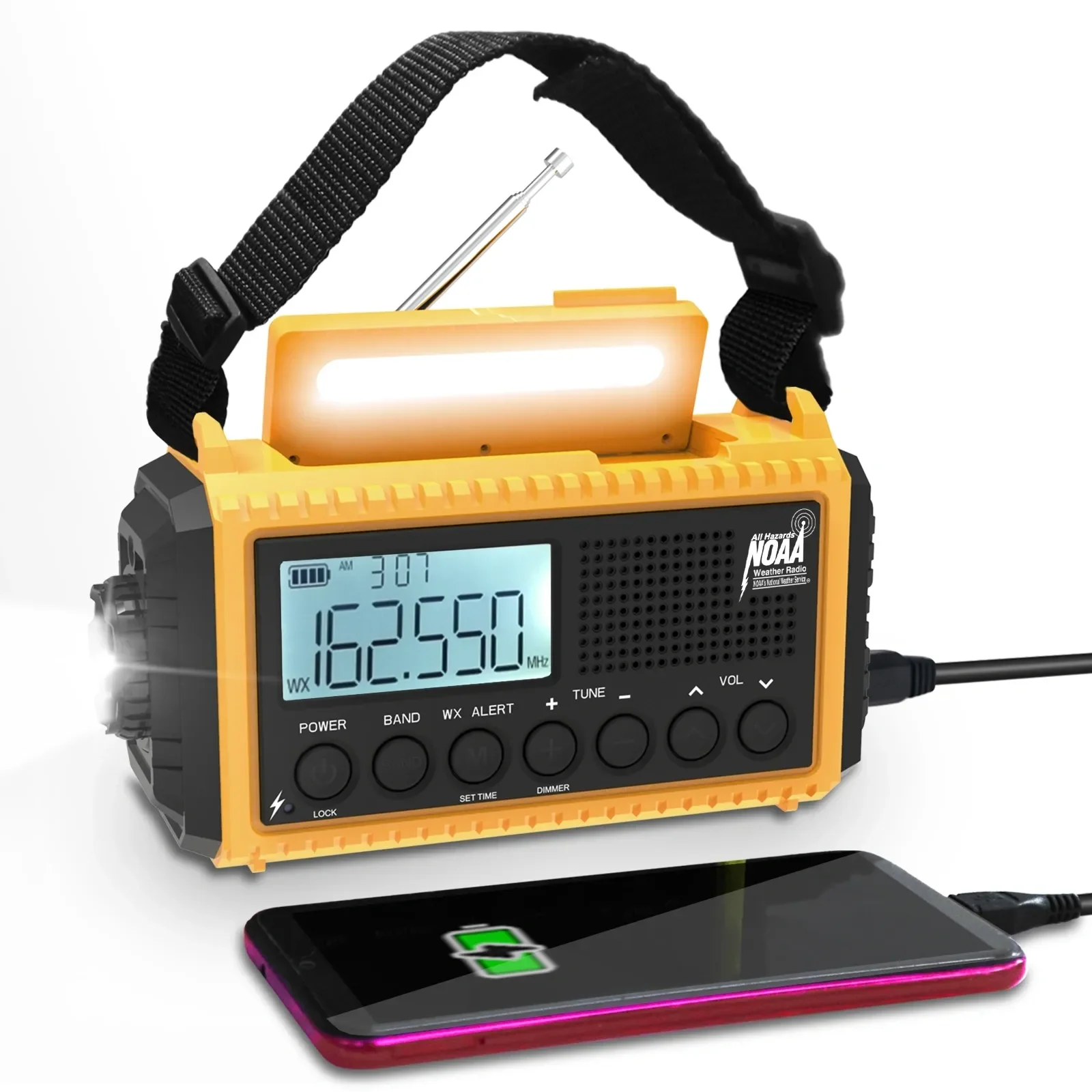
Best for: Shortwave listeners wanting a lighter radio with a digital display
Most buyers should pick the Roxicosly CR1030 in the Roxicosly CR1030 vs Raynic CR1009Pro matchup: it has a much larger 12000mAh battery, a big solar panel and IPX6 water resistance. The Raynic CR1009Pro is the better choice if you want shortwave, a backlit digital display and automatic NOAA scanning in a lighter body, and you'll mostly use it indoors or under shelter.
Both radios sit in the same mid-range price tier, so this comes down to what each one does differently. The Roxicosly is built around power and ruggedness. The Raynic is built around radio features and portability.
Battery and charging: Roxicosly CR1030 vs Raynic CR1009Pro
The Roxicosly CR1030 has a 12000mAh battery that doubles as a phone power bank. Reviewers say it holds up in tests and can charge a phone repeatedly. It can be powered five ways: the built-in battery, USB-C, solar, hand crank and AAA batteries. The solar panel is a large 8500mm² monocrystalline unit, and reviewers say it charges well in sun and low light.
The Raynic CR1009Pro has a smaller 5000mAh/18500mWh lithium polymer battery. It can also charge phones through its USB output. It offers six ways to power it: the built-in battery, an AC adapter, 5V USB input, hand crank, solar panel and 3 AAA batteries. The AC adapter is the extra option here, and the Roxicosly's spec list doesn't include one. The AAA batteries aren't included, which is a common complaint. Raynic doesn't list a solar panel size. For the hand crank, it says 8-15 minutes gives a phone enough power to start up.
Runtime is hard to compare cleanly. The Raynic's manufacturer listing says 18 hours of light and 12 hours of radio. For the Roxicosly, there's no official runtime figure, and reviewers' results vary widely, from about 11 hours to over 90 hours. That spread is a real caveat. Still, a battery more than twice the capacity, plus the larger panel, makes the Roxicosly the stronger choice if you want to keep phones alive through a long outage. The Raynic wins on flexibility of charging sources, thanks to its AC adapter.
Edge: Roxicosly for power-bank use and solar. Raynic if you want a wall-charging option.
Weather resistance and portability
This is where the two differ most in daily use. The Roxicosly CR1030 is rated IPX6 for water resistance. Reviewers call that rare among emergency radios, and it matters for storms, camping or a radio that lives near a window or porch.
The Raynic CR1009Pro is rated only IPX3. Reviewers describe that as fine for splashes but not for heavy rain. Keep it dry and it will do its job, but it isn't the radio to leave outside.
The tradeoff is size and weight. The Roxicosly weighs 1.82 pounds and measures 6.8 x 2.88 x 4.74 inches, and reviewers list it as heavier and bulkier. The Raynic weighs 1.2LB and measures 6.8"L x 3.7"W x 2.9"H. That's noticeably lighter, and easier to toss in a go-bag or carry around the house. The Roxicosly also comes with a braided carry strap and a USB-C cable.
Edge: Roxicosly for outdoor and storm use. Raynic for anyone who counts ounces.
Radio bands and weather alerts
Here the Raynic CR1009Pro pulls ahead on features. It covers AM/FM/SW/NOAA weather, so it includes shortwave. Its AM range is 520-1710KHz and its FM range is 87-108MHz. Reviewers praise the shortwave inclusion, though they note reception is only adequate with the included antenna. The Raynic also auto-scans for NOAA alerts when it's on or in standby. That suits a bedside or kitchen radio you leave waiting for warnings.
The Roxicosly CR1030 has AM/FM plus 7 NOAA weather bands and a 9-second NOAA alert alarm. Reviewers find AM/FM and NOAA reception clear. It has no shortwave band, which reviewers list as a drawback. Its listing doesn't mention a standby auto-scan, so if hands-off alerts are your priority, the Raynic has the documented feature.
Edge: Raynic, clearly, for shortwave and standby alerts. For plain AM/FM and NOAA, the Roxicosly does the job well.
Display, lights and extras
The Raynic has a large backlit HD LCD with digital tuning. Reviewers say this makes finding stations easy. It also has a 3.5mm headphone jack for private listening. Lighting is a 3W LED flashlight and a 2.5W reading lamp, plus an SOS alarm with siren and flashing red light.
The Roxicosly has a brighter 5W adjustable-beam flashlight and a softer 12-LED reading lamp with multiple brightness levels. It also has an SOS alarm. Roxicosly doesn't list a display type or a headphone jack, so if easy digital tuning matters to you, the Raynic is the safer bet. If you want the stronger flashlight, the Roxicosly has the higher-wattage one on paper.
Edge: Raynic for usability (display and headphones). Roxicosly for the brighter flashlight.
What experts say
Reviewers' praise for the Roxicosly CR1030 centres on its battery, solar charging and water resistance. They say the 12000mAh battery holds up in tests and can charge a phone repeatedly, that the large solar panel works well in sun and low light, and that IPX6 is rare among emergency radios. They also like the 5W flashlight and the clear AM/FM and NOAA reception. Criticisms are the missing shortwave band, the extra weight and bulk, and the wide spread in runtime results. It has been recommended in 9 expert buying guides, which is a strong showing in this matchup.
For the Raynic CR1009Pro, reviewers praise the shortwave band, the six charging methods, the NOAA auto-scan, the backlit LCD and the lighter 1.2LB body with a headphone jack. Their criticisms are the IPX3 rating, the smaller 5000mAh battery, the lack of included AAA batteries and only adequate shortwave reception with the stock antenna. It appears in 2 expert guides.
This page has no named-publication scores to cite for either radio, so the guide recommendations and the consistent points above are the best signal of where reviewers land. They lean toward the Roxicosly as the more broadly recommended radio, with the Raynic a good fit for a narrower set of buyers.
Choose Roxicosly CR1030 if…
Best for: Storm-prone households wanting a rugged, high-capacity power bank radio
Choose the Roxicosly CR1030 over the Raynic if you want a bigger power bank, a larger solar panel and real water resistance for storms and outdoor use. It suits those who don't need shortwave and can accept extra weight.
Read our full Roxicosly CR1030 review →- Battery life
- Reviewers' runtime figures vary widely (about 11 hours to over 90 hours); no official figure seen
- Water resistance
- IPX6
- Weight
- 1.82 pounds
- Dimensions
- 6.8 x 2.88 x 4.74 inches
- Display
- LCD
- Ports
- USB-C Input, USB-A Output, 3.5mm Headphone Jack
Reasons to buy
- 12000mAh battery holds up in tests and can charge a phone repeatedly
- Large 8500mm² monocrystalline solar panel charges well in sun and low light
- IPX6 water resistance, rare among emergency radios
- Bright 5W adjustable-beam flashlight plus a softer 12-LED reading lamp
- Clear AM/FM and 7 NOAA bands with a 9-second alert alarm
Reasons to avoid
- No shortwave band, only AM/FM and NOAA
- Heavier and bulkier at 1.82 pounds
- Reviewers' runtime results vary widely, from about 11 to over 90 hours
- Telescopic antenna is shorter than the Midland's
- PWICE - Best Emergency Weather Radios
- 9.6
- Thirsty Bear - Best Hand Crank Radios
- 9.4
Choose the Roxicosly if you live somewhere with storms and outages and want a radio that doubles as a serious power bank. The 12000mAh battery, the large 8500mm² solar panel and IPX6 water resistance make it the tougher, more self-sufficient option. It suits you if you can live without shortwave and don't mind the extra weight. Be aware that real-world runtime reports vary widely.
Choose Raynic CR1009Pro if…
Best for: Shortwave listeners wanting a lighter radio with a digital display
Choose the Raynic CR1009Pro over the Roxicosly if you want shortwave, a digital display and automatic standby alerts in a lighter body. It suits indoor or sheltered use, where lower water resistance and a smaller battery matter less.
Read our full Raynic CR1009Pro review →- Battery life
- 5000mAh/18500mWh Lithium Polymer
- Water resistance
- IPX3
- Weight
- 1.2LB
- Dimensions
- 6.8"L x 3.7"W x 2.9"H
- Display
- Backlit HD LCD
- Ports
- USB Output, Micro USB Input, 3.5mm Headphone Jack
Reasons to buy
- Includes shortwave alongside AM/FM and NOAA weather bands
- Six charging methods, including an AC adapter
- Auto-scans for NOAA alerts when on or in standby
- Backlit LCD with digital tuning makes finding stations easy
- Lighter at 1.2LB, with a 3.5mm headphone jack for private listening
Reasons to avoid
- Only IPX3 water resistance, so splashes are fine but heavy rain is not
- Smaller 5000mAh battery than the Roxicosly
- AAA batteries not included
- Shortwave reception is only adequate with the included antenna
- FCCJ (10 Best Hand Crank Radios)
- 9.0
- Of Zen and Computing
- 9.0
- Finding Dulcinea
- 9.0
- the-weather.com
- 9.2
- Bob Vila
- 9.0
Choose the Raynic if shortwave matters to you, or if you want a backlit digital display, automatic NOAA scanning in standby and a headphone jack. At 1.2LB it's the easier radio to carry, and it has an AC adapter option for charging. It fits indoor or sheltered use best, where IPX3 water resistance and the smaller 5000mAh battery matter less. Remember that AAA batteries aren't included.
Compare our picks side by side
The specs most of our picks share, from each maker’s spec page (— = not published). Expert score = the average of published expert reviews, which rate each product for its price. Scroll sideways on small screens.
| Spec | Roxicosly CR1030 | Raynic CR1009Pro |
|---|---|---|
| Best for | Our Pick | The Alternative |
| Expert score | 9.5 | 9.0 |
| Price vs. these picks | Middle | Middle |
| Battery life | Reviewers' runtime figures vary widely (about 11 hours to over 90 hours); no official figure seen | 5000mAh/18500mWh Lithium Polymer |
| Water resistance | IPX6 | IPX3 |
| Weight | 1.82 pounds | 1.2LB |
| Dimensions | 6.8 x 2.88 x 4.74 inches | 6.8"L x 3.7"W x 2.9"H |
| Display | LCD | Backlit HD LCD |
| Ports | USB-C Input, USB-A Output, 3.5mm Headphone Jack | USB Output, Micro USB Input, 3.5mm Headphone Jack |
| Radio bands | AM/FM/7 NOAA Bands | AM/FM/SW/NOAA weather |
| Where to buy | View on Amazon | View on Amazon |
The verdict
For most people, the Roxicosly CR1030 is the better emergency radio. It has more battery, bigger solar charging and far better water resistance, and it's the one reviewers recommend more often. The Raynic CR1009Pro is the right pick for a narrower buyer: someone who wants shortwave, an easy-to-read digital display and standby alerts in a lighter package, and who will keep it out of the rain.
Ready to buy?
 Our PickRoxicosly CR1030View on Amazon
 The AlternativeRaynic CR1009ProView on Amazon
Related buying guides
Frequently asked questions
Is the Roxicosly CR1030 better than the Raynic CR1009Pro?
For most buyers, yes. The Roxicosly CR1030 has a larger 12000mAh battery, a bigger solar panel and IPX6 water resistance, and it's recommended in more expert guides. The Raynic CR1009Pro is better if you want shortwave, a digital display and a lighter radio.
Does the Roxicosly CR1030 or Raynic CR1009Pro have shortwave?
The Raynic CR1009Pro has shortwave, with AM/FM/SW/NOAA bands, though reviewers say reception is only adequate with the included antenna. The Roxicosly CR1030 has no shortwave band, only AM/FM and 7 NOAA bands.
Which is more water resistant, the Roxicosly CR1030 or the Raynic CR1009Pro?
The Roxicosly CR1030 is more water resistant, with an IPX6 rating against the Raynic CR1009Pro's IPX3. Reviewers say the Raynic handles splashes but not heavy rain.
Which radio is better as a phone power bank?
The Roxicosly CR1030 is the better power bank, with a 12000mAh battery that reviewers say can charge a phone repeatedly. The Raynic CR1009Pro can also charge phones through its USB output, but its battery is a smaller 5000mAh/18500mWh.
Which is lighter and easier to carry?
The Raynic CR1009Pro is lighter at 1.2LB, compared with 1.82 pounds for the Roxicosly CR1030. Reviewers describe the Roxicosly as heavier and bulkier.
Do both radios have automatic NOAA weather alerts?
Both cover NOAA weather bands, and the Roxicosly CR1030 has a 9-second NOAA alert alarm. Only the Raynic CR1009Pro is listed as auto-scanning for NOAA alerts when on or in standby.
Sources
Specs are taken from the manufacturers' official pages; expert recommendations from the publications below.
- Roxicosly CR1030: vorsorgeliste.de, manuals.plus, ebay.de, thewearify.com
- Raynic CR1009Pro: raynic.com, the-weather.com
More buying guides
Roxicosly CR1030 Review (2026): Outage Kit Radio
The Roxicosly CR1030 is an emergency weather radio built around a 12000mAh battery and five ways to power it. Here is what it offers and where its bulk gets in the way.
Published Oct 26, 2026Raynic CR1009Pro Review (2026): Six Ways to Stay Powered
An emergency radio built around power redundancy, automatic NOAA alerts and a phone-charging battery. Here is what the specs and expert reviews say about the Raynic CR1009Pro.
Published Oct 25, 2026Best Emergency Weather Radios 2026: Alerts and Backup Power
Five emergency weather radios compared on alert type, power options, waterproofing and phone charging, based on manufacturer specs and expert recommendations.
Published Oct 22, 2026