ThinkRider X2Max Review (2026): Quiet, Cassette Extra
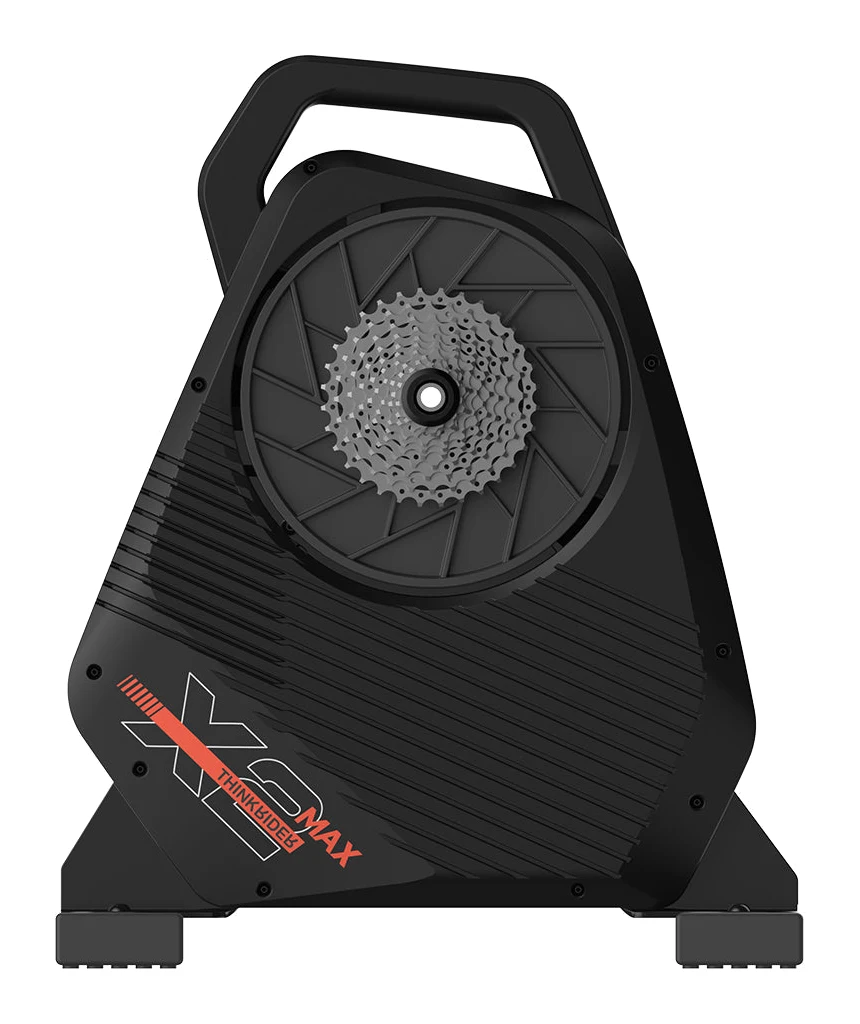
A look at the ThinkRider X2Max direct-drive smart trainer: quiet running, built-in power measurement and broad app support, with a few trade-offs to know about first.
Research-based · We earn from qualifying purchases
Our verdict
The ThinkRider X2Max is a quiet, stable direct-drive smart trainer that offers realistic climb simulation and broad app compatibility at a mid-range price. It suits budget-minded indoor cyclists who can supply their own cassette, but riders who want virtual shifting or fully trusted power data should look elsewhere.
The good
- Quiet direct-drive operation, about 58dB at 30km/h
- Smooth ERG mode and realistic climb simulation up to 18%
- Built-in power measurement up to 2000W, ±2% claimed accuracy
- BLE and ANT+ work with Zwift, Rouvy, TrainerRoad and MyWhoosh
- Sturdy frame with quick-release and thru-axle adapters for road and mountain bikes
+2 more
- BLE and ANT+ work with Zwift, Rouvy, TrainerRoad and MyWhoosh
- Sturdy frame with quick-release and thru-axle adapters for road and mountain bikes
The bad
- No cassette included, so you must buy one separately
- No Zwift virtual shifting (Cog/Click) support
- Some owners report power readings that differ from dedicated power meters
- Warranty is only 1 year, and long-term durability is unproven
+1 more
- Warranty is only 1 year, and long-term durability is unproven
This ThinkRider X2Max review looks at a direct-drive smart trainer that aims to give indoor cyclists the essentials of a connected setup at a mid-range price. It is built around electromagnetic resistance, built-in power measurement and dual-mode wireless connectivity. It is aimed at riders who want to run Zwift, Rouvy, TrainerRoad or MyWhoosh on a quiet direct-drive trainer. This review is based on ThinkRider's published specifications and what independent reviewers report, not on hands-on testing.
ThinkRider X2Max: specs at a glance
From the manufacturer- Weight
- 16 kg
- Warranty
- 1 year
- Drive type
- Direct drive
- Noise level
- 58dB at 30km/h
- Wheel sizes
- Road: 24/650c/700c; Mountain: 24"/26"/650B/29"
- Connectivity
- BLE, ANT+
- Power accuracy
- ±2%
- Resistance type
- Electromagnetic damping
- Cassette included
- No
- Input power supply
- 12V
- Frame compatibility
- 5*130/5*135 quick release; 12*142/12*148 thru-axle
- Max simulated slope
- 18%
- Max resistance power
- 2000W
- Cassette compatibility
- Shimano 8-12 speed, SRAM 8-11 speed, SRAM XDR 12 speed (XDR hub needed)
Key features
- Direct-drive electromagnetic resistance that auto-adjusts to virtual climbs up to 18%
- Built-in power measurement up to 2000W with ±2% claimed error
- BLE and ANT+ dual-mode connectivity for Zwift, Rouvy, TrainerRoad, MyWhoosh and more
- Quiet operation at about 58dB at 30km/h
- Fits road and mountain bikes with quick-release and thru-axle adapters
- I-beam triangular frame built for stability during hard efforts
- Runs unplugged (self-powered) or plugged in for more realistic drag simulation
- Carrying handle for easier transport
ThinkRider X2Max review: what it is and who it suits
The X2Max is a direct-drive trainer. You take the rear wheel off your bike and mount the frame straight onto the trainer, which takes a cassette. The drivetrain connects directly to the unit.
ThinkRider positions it for budget-minded indoor cyclists who want a quiet direct-drive trainer. That fits the picture the specs paint: strong core features, a sensible range of compatibility, and a short list of omissions. The most important omission is that no cassette is included, which affects the total cost of getting started.
Design and build
Frame and stability
The X2Max uses an I-beam triangular frame, designed for stability during hard efforts. That matters most in sprints and steep virtual climbs, when a lightweight or flexy trainer can feel like it is moving under you. Reviewers consistently describe the frame as sturdy.
The trainer weighs 16 kg. That is substantial enough to feel planted, but a carrying handle makes it easier to move between a storage spot and your riding space. If you ride in a spare room or garage and put the trainer away between sessions, the handle is a practical touch.
Bike compatibility
The X2Max is designed for both road and mountain bikes. It supports these frame standards:
- 5130 and 5135 quick release
- 12142 and 12148 thru-axle
Quick-release and thru-axle adapters cover the common standards. Wheel size support is listed as road 24/650c/700c and mountain 24"/26"/650B/29". Before you buy, check your bike's rear axle standard against that list, especially if you have a newer thru-axle frame.
The cassette question
The trainer ships without a cassette. It accepts Shimano 8-12 speed and SRAM 8-11 speed cassettes, and SRAM XDR 12 speed if you have an XDR hub. If you already have a spare cassette that matches your bike's drivetrain, this is a small inconvenience. If you don't, you will need to buy one and be able to fit it, or have a shop do it. It is the most common practical criticism of this model, so factor it into your budget and setup plans.
Features and what they mean day to day
Resistance and climb simulation
Resistance comes from electromagnetic damping. In simulation modes the trainer adjusts automatically to the gradient of virtual climbs up to 18%. In practice, when your avatar hits a ramp in Zwift or a climb in Rouvy, the trainer increases resistance without you touching anything. Reviewers praise both the realism of the climb simulation and a smooth ERG mode, where the trainer holds a target power regardless of your cadence. That is the mode structured-workout users depend on.
Maximum resistance power is listed at 2000W. Most riders will not approach that figure, but it indicates generous headroom for hard sprints and high-power intervals.
Power measurement
Power is measured by the trainer itself, up to 2000W, with a claimed error of ±2%. That means you do not need a separate power meter to train by watts. The qualifier is worth taking seriously: ±2% is a manufacturer claim, and a common criticism is that power readings can differ from those of dedicated power meters. If you already ride with a pedal- or crank-based power meter and compare the two, expect to check how they line up. If you only ever train indoors on this unit, consistency from session to session matters more than absolute agreement with another device.
Connectivity and app support
The X2Max supports both BLE and ANT+. That dual-mode setup lets it pair with phones, tablets, computers and many head units and bike computers. ThinkRider lists support for Zwift, Rouvy, TrainerRoad and MyWhoosh, and says "more" beyond those. Having both protocols is useful because it gives you options if one connection type is unreliable on your device or you want to connect to more than one thing at once.
One limitation: the trainer does not support Zwift virtual shifting (Cog/Click). If you want to change virtual gears with a handlebar controller rather than shifting your actual drivetrain, this is not the trainer for that. Riders who shift on their own bike's cassette will not notice the gap.
Powered or self-powered
You can run the X2Max unplugged, in which case it is self-powered, or plug it in using the 12V input for more realistic drag simulation. That gives you a choice: use the plugged-in mode for the most realistic feel, or ride unplugged when there is no convenient socket.
Performance and noise
Noise is a key consideration for indoor riders, and the X2Max is rated at about 58dB at 30km/h. Reviewers highlight the quiet operation as one of its better qualities. For anyone riding in an apartment, early in the morning or in a shared home, a quieter trainer can make the difference between riding regularly and avoiding the setup. The figure is a rating at a given speed, so actual noise will vary with your bike, drivetrain condition and room, and drivetrain sound will still be part of what you hear.
Beyond noise, the performance story is about consistency and realism. Smooth resistance changes in ERG mode and gradual adjustment on climbs are what make a trainer feel less like a machine and more like a road. The specs and reviewer feedback both point to the X2Max being competent at this.
What experts like and what they criticise
Reviewers praise a clear set of strengths:
- Quiet direct-drive running, around 58dB at 30km/h.
- Smooth ERG mode and realistic climb simulation up to 18%.
- Built-in power measurement up to 2000W.
- Broad app compatibility over BLE and ANT+.
- A sturdy frame and adapters for road and mountain bikes.
The criticisms are just as consistent:
- No cassette is included, so you have to source your own.
- No Zwift virtual shifting (Cog/Click) support.
- Power readings can differ from dedicated power meters.
- The warranty is 1 year, and long-term durability is unproven.
The last point deserves emphasis. A one-year warranty on a product with moving parts and electronics is not long, and there is no track record yet to show how it holds up with heavy, repeated use. If you plan to ride several times a week for years, weigh that against the price advantage.
Who should buy it, and who should skip it
Buy it if:
- You want a quiet direct-drive trainer without moving to the top of the market.
- You use Zwift, Rouvy, TrainerRoad or MyWhoosh and want automatic resistance control.
- You have a spare compatible cassette, or are happy to buy one.
- You want to use one trainer with either a road bike or a mountain bike.
Skip it if:
- You want Zwift virtual shifting with Cog or Click.
- You need power data you can trust as a match for a dedicated power meter.
- You want a long warranty for peace of mind.
- You want a trainer that is ready to ride out of the box with no extra purchases.
How it fits in its category
Smart trainers fall broadly into wheel-on and direct-drive designs. The X2Max is a direct-drive trainer. It is priced in the mid-range part of the market. Its strengths are the core riding experience: quiet running, climb simulation, power measurement and wireless compatibility. Its compromises are in extras and reassurance: no cassette in the box, no virtual shifting and a short warranty. When comparing it against other direct-drive trainers, check these same points: what is included, what the accuracy claim covers, which apps are supported and how long the warranty lasts.
Verdict
The ThinkRider X2Max is a quiet, stable direct-drive smart trainer that covers the fundamentals of connected indoor cycling well. Climb simulation up to 18%, ERG mode, built-in power measurement and BLE plus ANT+ support mean it works with the platforms most indoor riders use. The trade-offs are clear: you provide the cassette, you give up virtual shifting, power readings are not guaranteed to match a dedicated meter, and the one-year warranty leaves durability an open question. For budget-minded riders who mainly want a quiet, realistic and well-connected trainer, it is a sensible option. For riders who need virtual shifting or fully trusted power data, it is better to look elsewhere.
Related buying guides
Not sure about the ThinkRider X2Max? Consider these
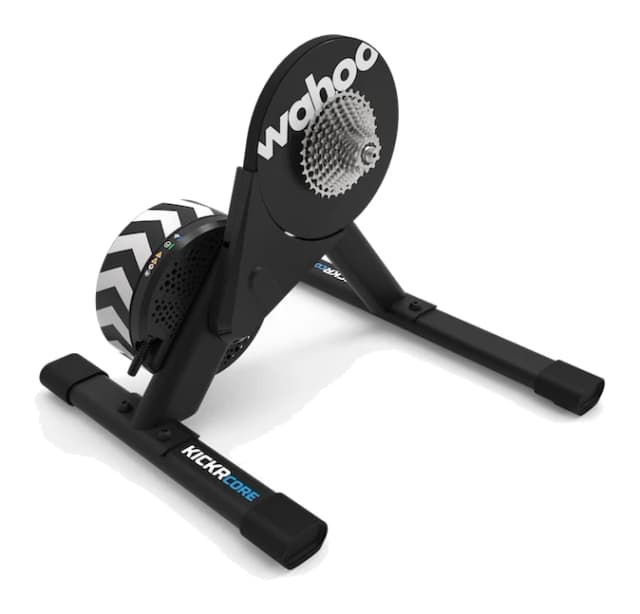
- Best OverallWahoo KICKR Core 2Why we picked it →
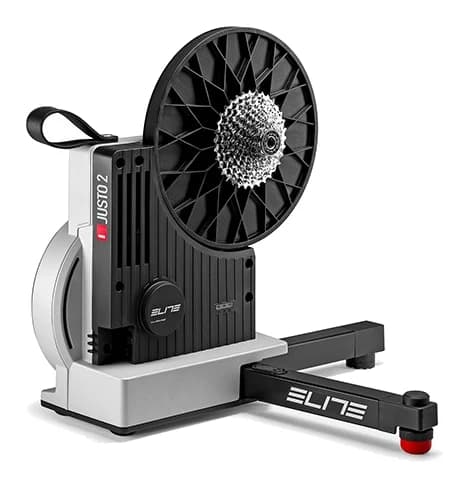
- Premium PickElite Justo 2Why we picked it →
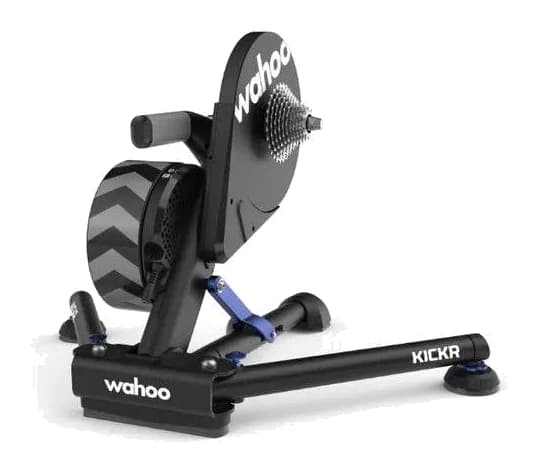
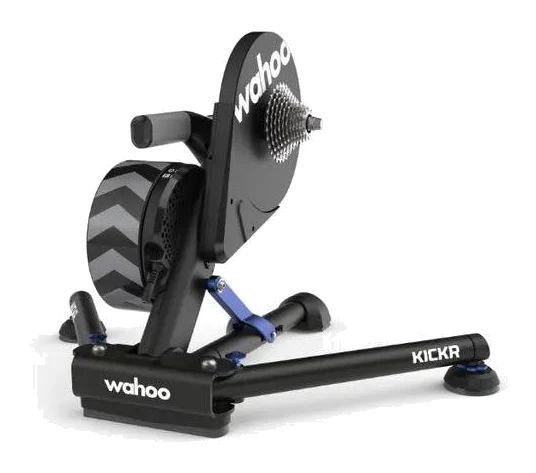
- Best BudgetWahoo KICKR V6Why we picked it →
Frequently asked questions
Is the ThinkRider X2Max worth it?
It is a good fit if you want a quiet direct-drive smart trainer in the mid-range part of the market and already have, or are willing to buy, a cassette. Reviewers praise its quiet running, ERG mode, climb simulation and app support. The drawbacks are no virtual shifting, power readings that can differ from dedicated power meters, and a 1 year warranty.
Does the ThinkRider X2Max come with a cassette?
No. The cassette is not included, so you need to supply your own. It is compatible with Shimano 8-12 speed, SRAM 8-11 speed and SRAM XDR 12 speed cassettes, though XDR requires an XDR hub.
Does the ThinkRider X2Max work with Zwift?
Yes. It connects over BLE and ANT+ and is listed as compatible with Zwift, Rouvy, TrainerRoad and MyWhoosh, among others. It does not support Zwift virtual shifting (Cog/Click).
How loud is the ThinkRider X2Max?
ThinkRider rates it at about 58dB at 30km/h, and reviewers praise its quiet direct-drive operation. Real-world noise will also depend on your bike's drivetrain and your room.
Does the ThinkRider X2Max need to be plugged in?
No. It can run unplugged, as it is self-powered, or be plugged in using a 12V supply for more realistic drag simulation.
Will the ThinkRider X2Max fit my bike?
It supports 5*130/5*135 quick release and 12*142/12*148 thru-axle frames, for both road and mountain bikes. Check your rear axle standard and wheel size against those listings before buying.
Sources
Specs are taken from the manufacturers' official pages; expert recommendations from the publications below.
- ThinkRider X2Max: thinkrider.com, bismillahoffers.com, naturevalleybicyclefestival.com, manuals.plus
Related reviews & guides
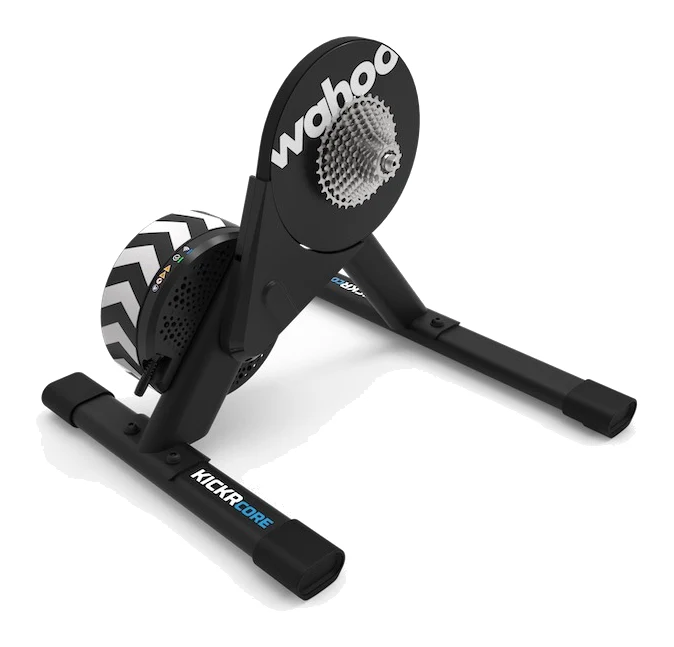
Best Smart Bike Trainers for 2026: Accurate and Quiet
Five smart trainers compared on accuracy, noise, gradient, connectivity and expert recommendations, from a budget-tier option to premium models.
Published Oct 25, 2026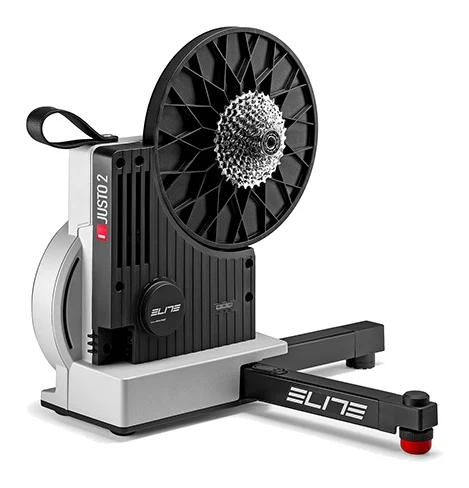
Elite Justo 2 Review (2026): Quiet, Accurate, Ready to Ride
A look at the Elite Justo 2 direct-drive smart trainer: its integrated power meter, Flex Feet, connectivity and the trade-offs reviewers point out.
Published Nov 8, 2026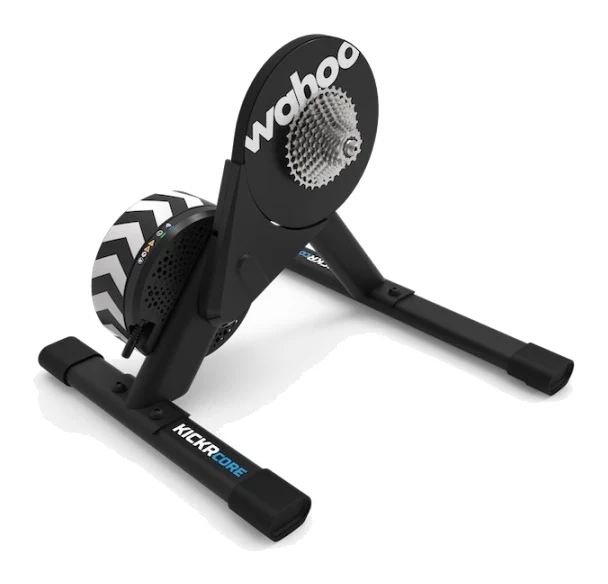
Wahoo KICKR CORE 2 Review (2026): Quiet and Accurate
A spec-based look at the Wahoo KICKR CORE 2, a mid-range direct-drive smart trainer praised for accuracy and quiet running, but awkward to move and store.
Published Oct 28, 2026