EcoFlow RIVER 2 Max 500 Review (2026): Fast Charging
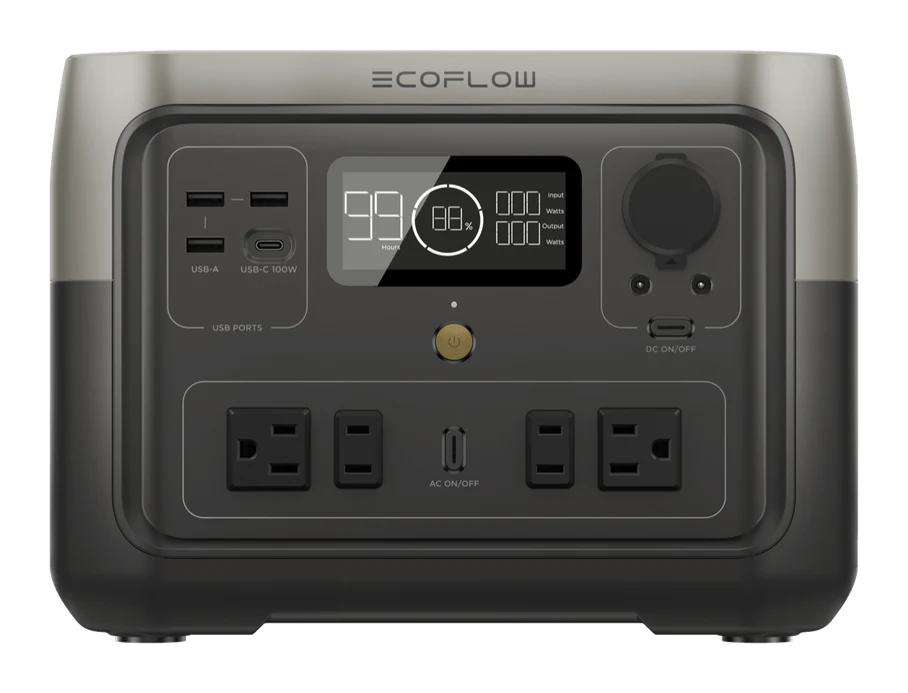
Our EcoFlow RIVER 2 Max 500 review covers the 499Wh LFP power station: fast AC recharging, four charging routes, 11 ports and the limits of its 500W output.
Research-based · We earn from qualifying purchases
Our verdict
The RIVER 2 Max 500 suits campers, van-lifers and anyone wanting portable backup power that recharges fast, lasts for years and is easy to carry. Skip it if you need to run high-wattage appliances for long periods, want expandable capacity, or need several USB-C ports.
The good
- Recharges 0-100% from a wall outlet in about 60 minutes
- LFP battery rated for 3000 cycles to 80%+ capacity
- Lightweight at 13.2 lbs for 499Wh of capacity
- 11 output ports, plus X-Boost for devices up to 1000W
- Charges via AC, car, solar (up to 220W) or USB-C
+2 more
- 11 output ports, plus X-Boost for devices up to 1000W
- Charges via AC, car, solar (up to 220W) or USB-C
The bad
- 500W AC output limits it to small and mid-sized appliances
- Reviewers note the cooling fan can get loud
- Only one USB-C port, and capacity can't be expanded
- Plastic build feels less premium than pricier EcoFlow models
+1 more
- Plastic build feels less premium than pricier EcoFlow models
If you are shopping for a portable power station that is easy to carry and quick to refill, this EcoFlow RIVER 2 Max 500 review is for you. It is a 499Wh unit built around an LFP battery, aimed at campers, van-lifers and anyone who wants a compact backup for the home. It sits in the mid-range part of the market. This review is based on EcoFlow's manufacturer specs and what independent expert reviews report, not on hands-on testing.
EcoFlow RIVER 2 Max 500: specs at a glance
From the manufacturer- Weight
- 13.2lbs
- AC input
- 100-120V 50Hz/60Hz, 660W Max
- Capacity
- 499Wh
- Warranty
- 5 years
- AC output
- 500W (1000W peak / X-Boost)
- Car input
- 12V/24V, 8A, 100W Max
- Cycle life
- 80%+ capacity after 3000 cycles
- Dimensions
- 10.6 x 10.2 x 7.7inches
- Solar input
- 11-50V, 13A, 220W Max
- Output ports
- 11
- AC recharge time
- 0-100% in 60 min
- Switch-over time
- 30ms
- Battery chemistry
- LFP (LiFePO4)
- USB-C input/output
- Up to 100W
Key features
- Recharges 0-100% from a wall outlet in about 60 minutes
- 499Wh LFP battery rated for 10 years of use
- 500W AC output, with X-Boost for devices up to 1000W
- Four ways to charge: AC, car, solar and USB-C
- Up to 220W solar input
- 30ms switch-over mode for outage backup
- Control and monitor from the EcoFlow app over Wi-Fi or Bluetooth
- Weighs 13.2 lbs, with 11 output ports
Why people consider the RIVER 2 Max 500
Most people shopping for a power station want three things: enough capacity for a weekend away, a way to refill it quickly, and a weight they can live with. The RIVER 2 Max 500 is built around those priorities. It stores 499Wh, recharges from a wall outlet from 0-100% in about 60 minutes, and weighs 13.2 lbs.
The pitch is not maximum power. It is a small, quick-turnaround unit that handles the usual camping and short-outage jobs: phones, laptops, lights, small appliances. If you want to run heavy kit for hours, this is not that product, and we say so below.
EcoFlow RIVER 2 Max 500 review: design and portability
At 13.2 lbs, this is a lightweight power station for 499Wh of capacity, which is a strength reviewers point to. That matters in practice. A power station that lives in a car boot, a van or a hall cupboard gets moved around a lot, and a lighter unit is one you are more likely to take with you.
The case is plastic. A common criticism is that the build feels less premium than EcoFlow's pricier models. It is worth knowing if you expect a premium, metal-feeling unit.
The unit has 11 output ports, which is generous for its size. EcoFlow's spec sheet doesn't break down which types of port make up that count. The one catch is USB-C: there is only one port, with up to 100W of input and output. If your travel kit is mostly USB-C laptops, tablets and phones, you will be sharing that single port.
Charging: the headline feature
Reviewers praise the fast wall charging.
Wall charging
EcoFlow rates the RIVER 2 Max 500 to go from 0-100% in about 60 minutes from a wall outlet. The AC input is 100-120V at 50Hz/60Hz, up to 660W max. For a unit this size, a one-hour refill changes how you use it. You can top it up while you pack, or between a morning outage and an evening one, rather than planning around an overnight charge.
Solar, car and USB-C
There are four ways to charge: AC, car, solar and USB-C. Solar input runs at 11-50V and 13A, up to 220W max. That is useful if you plan to stay off-grid for several days. If you are choosing panels, check voltage and connector compatibility against the 11-50V, 13A, 220W max input before you buy.
Car charging accepts 12V/24V at 8A, 100W max. That makes it suited to topping up while driving. USB-C input is also available, up to 100W.
Power output and what it can run
AC output is 500W, with a 1000W peak. EcoFlow also lists X-Boost, which lets the unit run some devices rated up to 1000W. In practice, that means the RIVER 2 Max 500 suits small and mid-sized appliances, and X-Boost gives a little more room for devices that would otherwise exceed the 500W limit.
That is also the main limit. Reviewers consistently note that 500W of AC output rules out the largest appliances. The capacity is 499Wh, so even within the output limit, a power-hungry device will drain the battery faster than a light load such as a laptop or LED lights. Check the wattage label on anything you plan to plug in before relying on it.
Capacity cannot be expanded. If your needs might grow, with a bigger campsite or a longer outage plan, you will need to buy a larger unit instead of adding batteries to this one.
Battery life and longevity
The battery is LFP (LiFePO4), and EcoFlow rates it at 80%+ capacity after 3000 cycles, or about 10 years of use. For a product that may sit in storage and then be used heavily for a trip or an outage, that durability is a major part of the appeal. EcoFlow backs it with a 5-year warranty.
The 30ms switch-over mode is also relevant if you want outage backup. Plug the unit into the wall and it can take over when the mains drops, with a 30ms switchover. It is not a substitute for a whole-home system, but it is a sensible feature for keeping a few essentials running.
App control and day-to-day use
The EcoFlow app lets you monitor and control the unit over Wi-Fi or Bluetooth. For a power station that may be tucked in a van or a cupboard, being able to check charge status and manage outputs from your phone is a practical convenience. EcoFlow's spec sheet doesn't go into more detail on what the app controls, so check the app listing if a specific setting matters to you.
One point reviewers raise about daily use is the cooling fan, which can get loud. If you plan to run it in a bedroom or a quiet campsite, bear that in mind.
What experts like and what they criticise
The RIVER 2 Max 500 gets strong marks. The two expert reviews we found averaged 9.5/10 across 2 expert reviews: Android Central gave it 4.5/5 and TechRadar Netherlands gave it 5/5. Both reviewed the model as the RIVER 2 Max, listed at 512Wh, so treat them as a guide to the family rather than a review of this exact 499Wh spec sheet. It is also recommended in 4 expert guides.
What reviewers praise:
- The speed of wall charging.
- The long-life LFP battery.
- The weight for the capacity.
- The number of ports, plus X-Boost.
- The range of charging options.
What they criticise:
- The 500W AC output limit.
- A fan that can get loud.
- A single USB-C port.
- No expandable capacity.
- A plastic build that feels less premium than pricier EcoFlow models.
Who should buy it
The RIVER 2 Max 500 suits:
- Campers and van-lifers who want something light, with solar and car charging for longer trips.
- Home-backup buyers who want to keep essentials running through a short outage, with a 30ms switch-over mode for that job.
- Anyone who values quick turnaround, since a recharge in about 60 minutes means less planning.
- People who want a battery that lasts, thanks to the LFP chemistry and long cycle rating.
Who should skip it
Look elsewhere if:
- You need to run high-wattage appliances for long periods. The 500W output and 499Wh capacity are the limit here.
- You want to add battery capacity later.
- You rely on several USB-C devices and want more than one USB-C port.
- You want a premium, metal-feeling build or a very quiet unit.
How it fits in its category
Portable power stations trade off capacity, output, weight and charging speed. The RIVER 2 Max 500 puts its weight on charging speed, portability and battery life, not on raw output or expandability. It sits in the mid-range part of the market and fits the light-to-medium use case well. If your needs are heavier, a larger unit will serve you better.
Verdict
The RIVER 2 Max 500 is a focused product. It does not try to power a whole campsite kitchen or a house. It aims to be light, fast to recharge and durable, and expert reviews suggest it delivers on those points. Go in knowing the limits: 500W of AC output, one USB-C port, a fan that can get loud and no way to add capacity. If those do not bother you, it is an easy power station to recommend for camping and backup use.
Related buying guides
- EcoFlow DELTA 3 Max Plus Review (2026): Quiet Home Backup
- EcoFlow DELTA 3 Review (2026): Fast Charge, Room to Grow
- EcoFlow DELTA Pro Review (2026): Big Backup, Big Weight
- BLUETTI AC180 Review (2026): Fast-Charging Home Backup
- EcoFlow NextGen 220W Bifacial Review: Output vs Weight
- Best Solar Panels for Portable Power Stations 2026
- Best Power Station for CPAP 2026: Runtime, Weight & Backup
- Anker SOLIX C1000 Gen 2 Review (2026): Fast but Fixed
Not sure about the EcoFlow RIVER 2 Max 500? Consider these
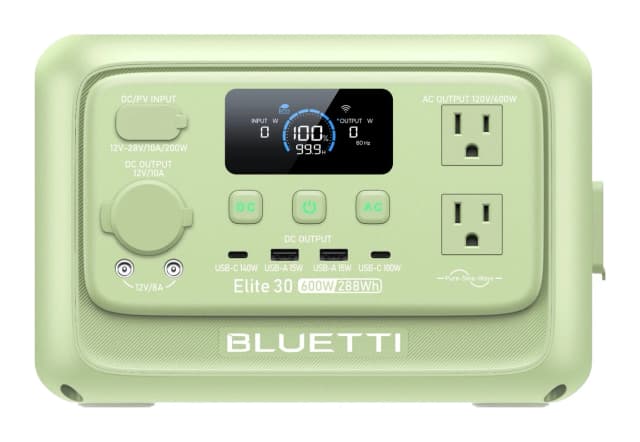
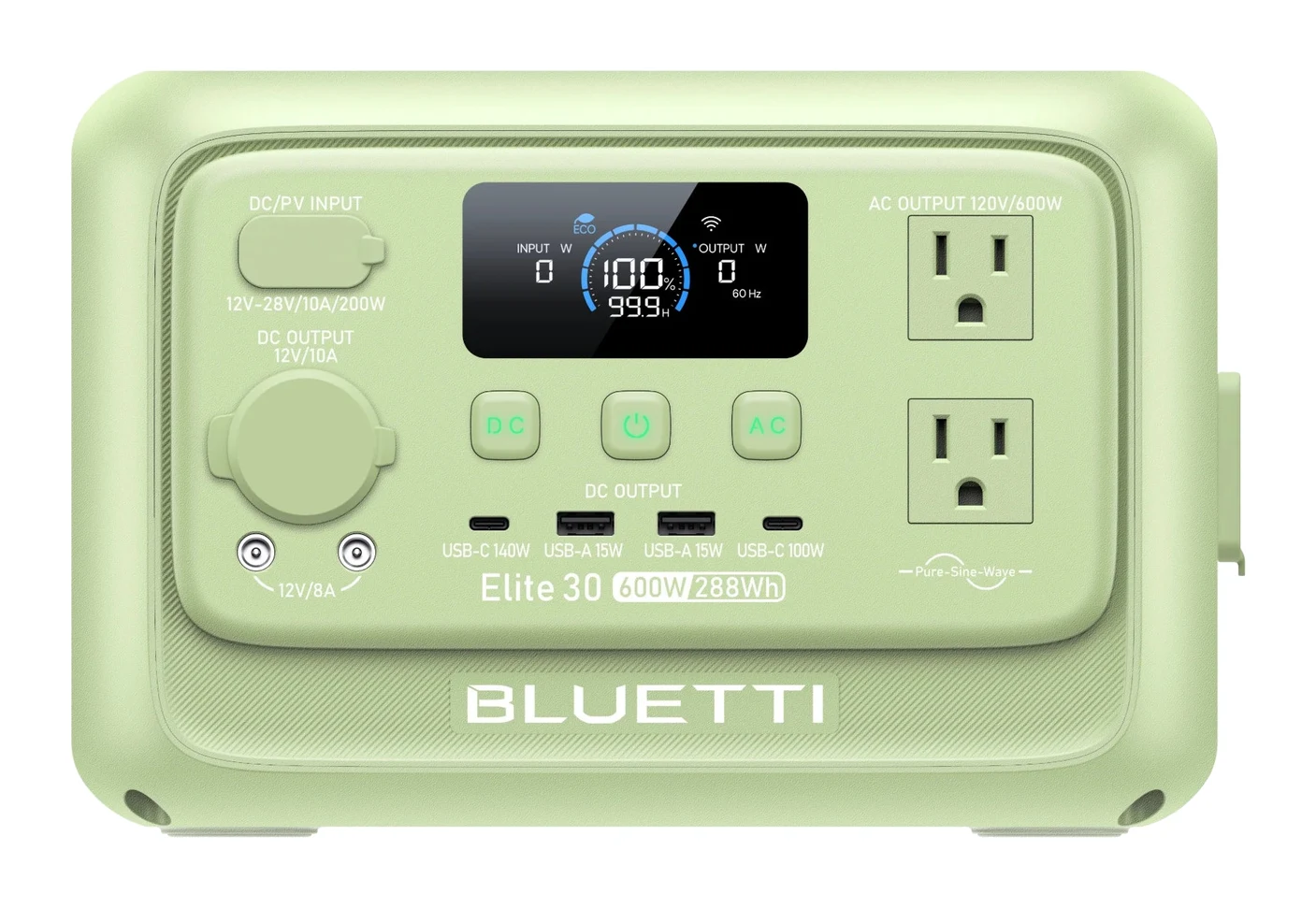
- Best OverallBLUETTI Elite 30 V2Why we picked it →
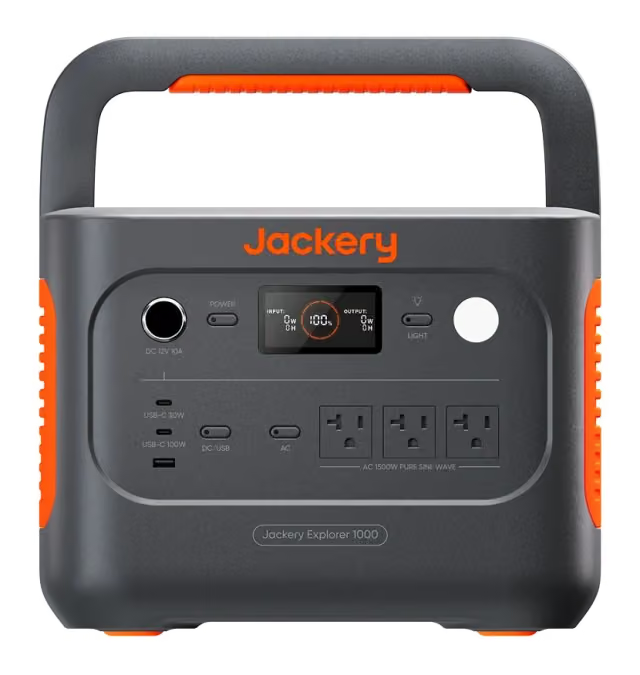
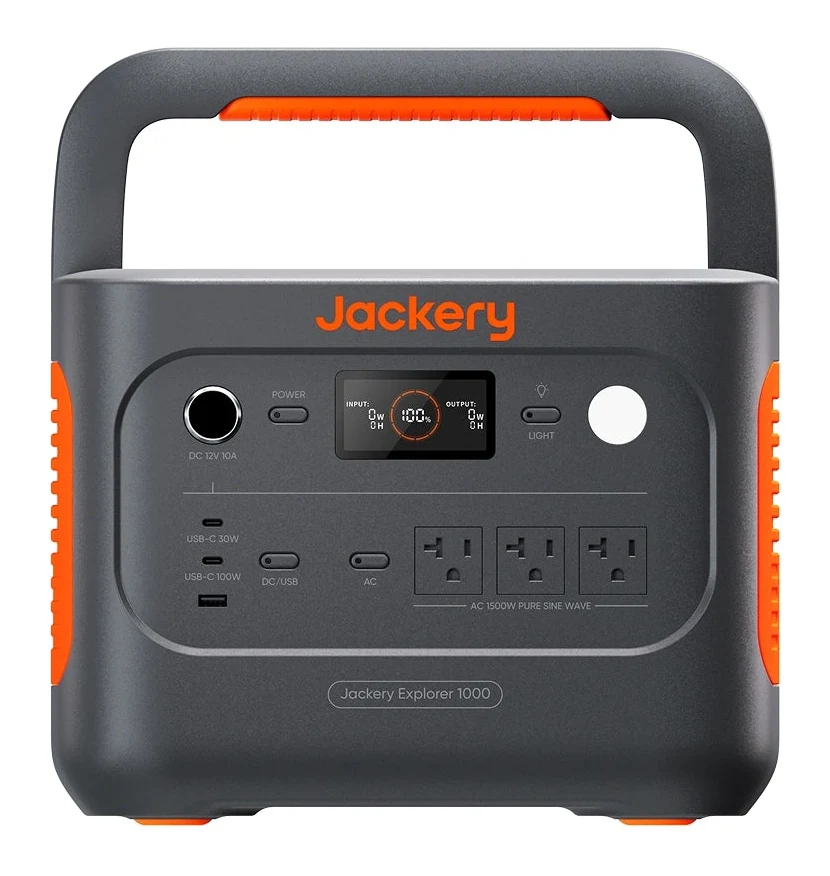
- Best BudgetJackery Explorer 1000 v2Why we picked it →
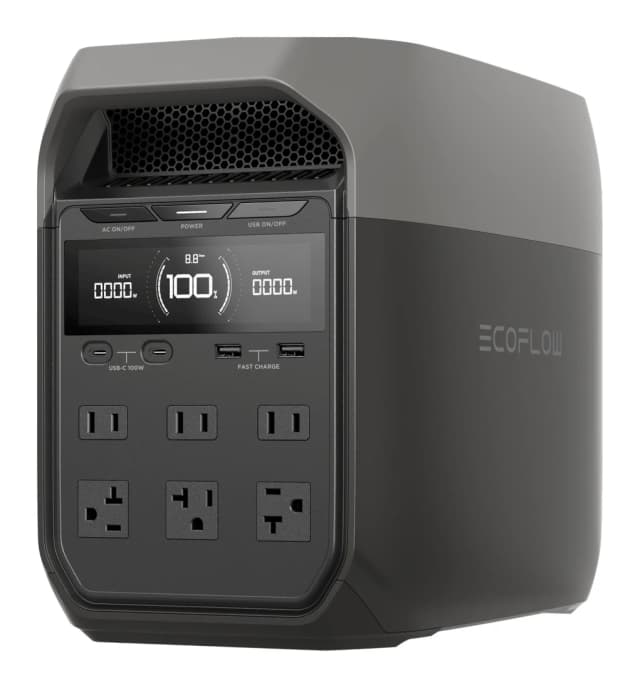
- Also GreatEcoFlow DELTA 3Why we picked it →
Frequently asked questions
Is the EcoFlow RIVER 2 Max 500 worth it?
For campers, van-lifers and people who want light backup power, reviewers think so. The two expert scores average 9.5/10, and it is recommended in 4 expert guides. It is less suitable if you need to run high-wattage appliances for long periods or want to expand capacity later.
How long does the EcoFlow RIVER 2 Max 500 take to charge?
EcoFlow rates it at 0-100% in about 60 minutes from a wall outlet. Charging from solar, a car or USB-C is also supported, with the car input being limited to 100W max.
What can the RIVER 2 Max 500 power?
It has 500W of AC output, with a 1000W peak, and X-Boost lets it run devices rated up to 1000W. That suits small and mid-sized appliances and everyday electronics. Check the wattage label on any appliance before relying on it.
Can I charge the RIVER 2 Max 500 with solar panels?
Yes. Solar input is 11-50V and 13A, up to 220W max. Check your panel's voltage and connector against those figures before you buy.
Can the RIVER 2 Max 500 be used as backup power during an outage?
EcoFlow lists a 30ms switch-over mode for outage backup. That makes it suitable for keeping a few essentials running, though its 500W output and 499Wh capacity limit what it can power and for how long.
Can I expand the capacity of the RIVER 2 Max 500?
No. Reviewers note that capacity cannot be expanded, so if your needs may grow, a larger unit is a better fit.
Sources
Specs are taken from the manufacturers' official pages; expert recommendations from the publications below.
- EcoFlow RIVER 2 Max 500: us.ecoflow.com, outboundpower.com, powergenstore.com
Related reviews & guides
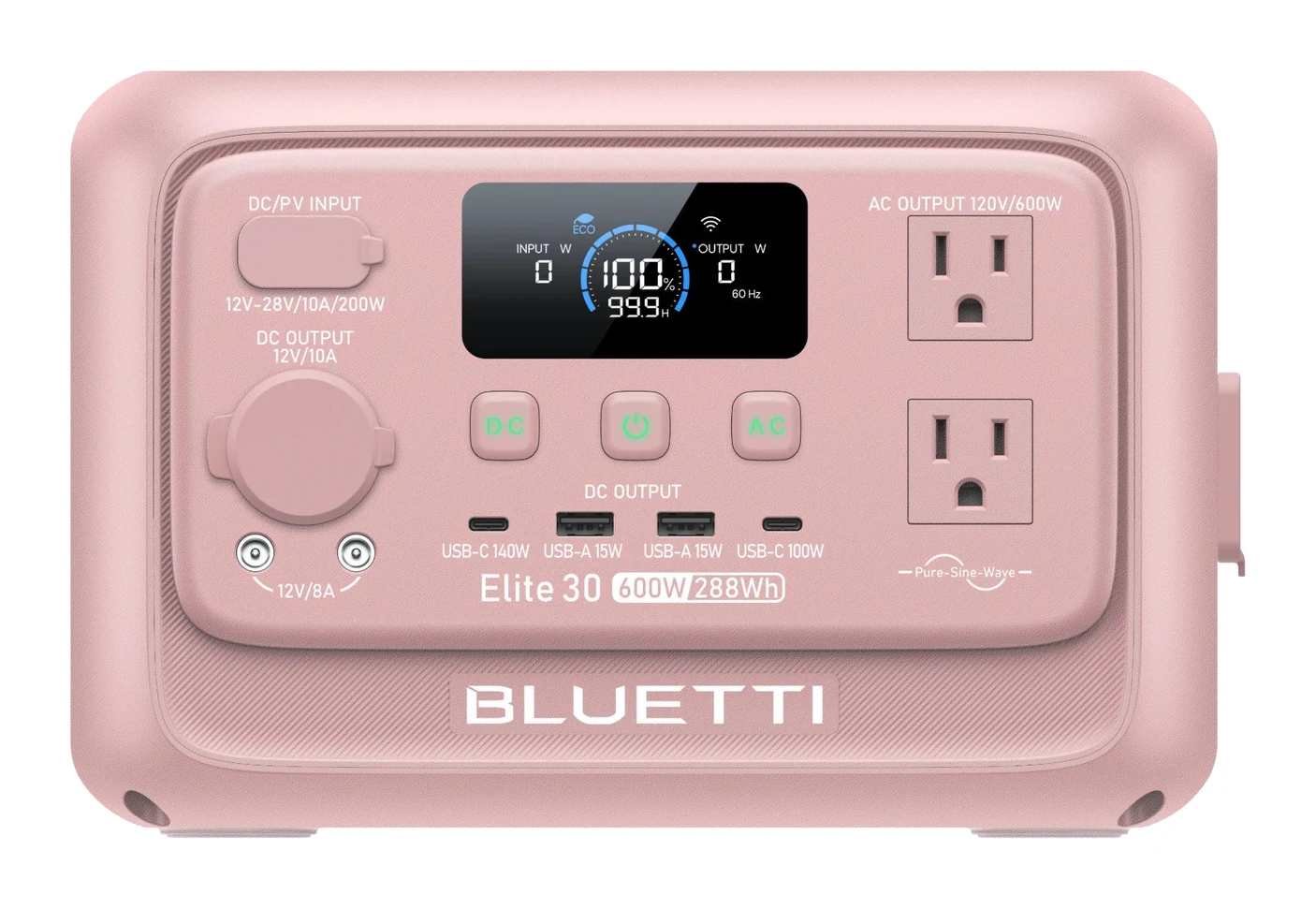
BLUETTI Elite 30 V2 vs EcoFlow RIVER 2 Max 500 (2026)
The BLUETTI Elite 30 V2 is light, quiet and the budget option. The EcoFlow RIVER 2 Max 500 stores much more energy. Here's which suits you.
Published Nov 16, 2026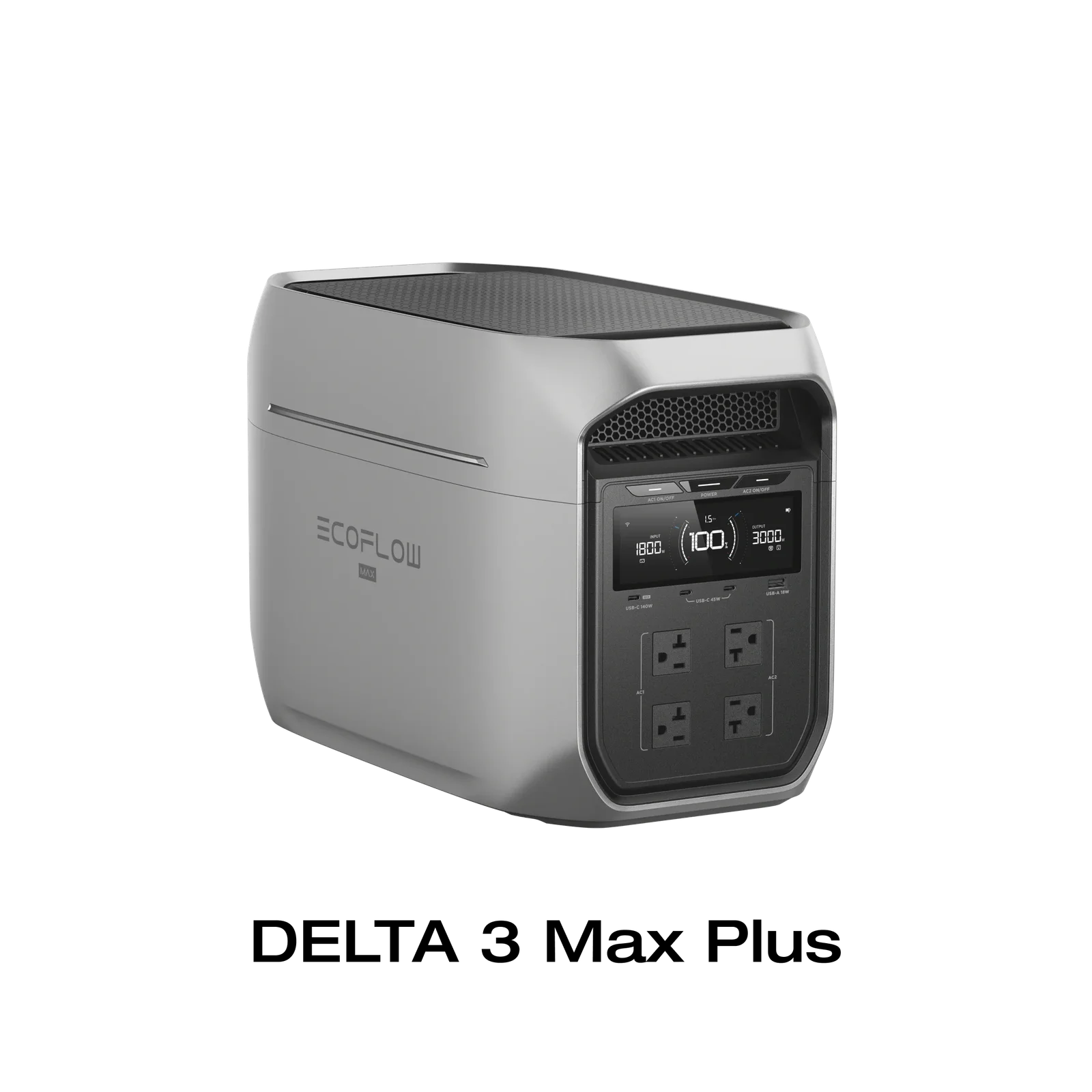
EcoFlow DELTA 3 Max Plus Review (2026): Quiet Home Backup
A look at the EcoFlow DELTA 3 Max Plus, a quiet, expandable 3000W power station aimed at home backup. Based on specs and expert reviews.
Published Oct 20, 2026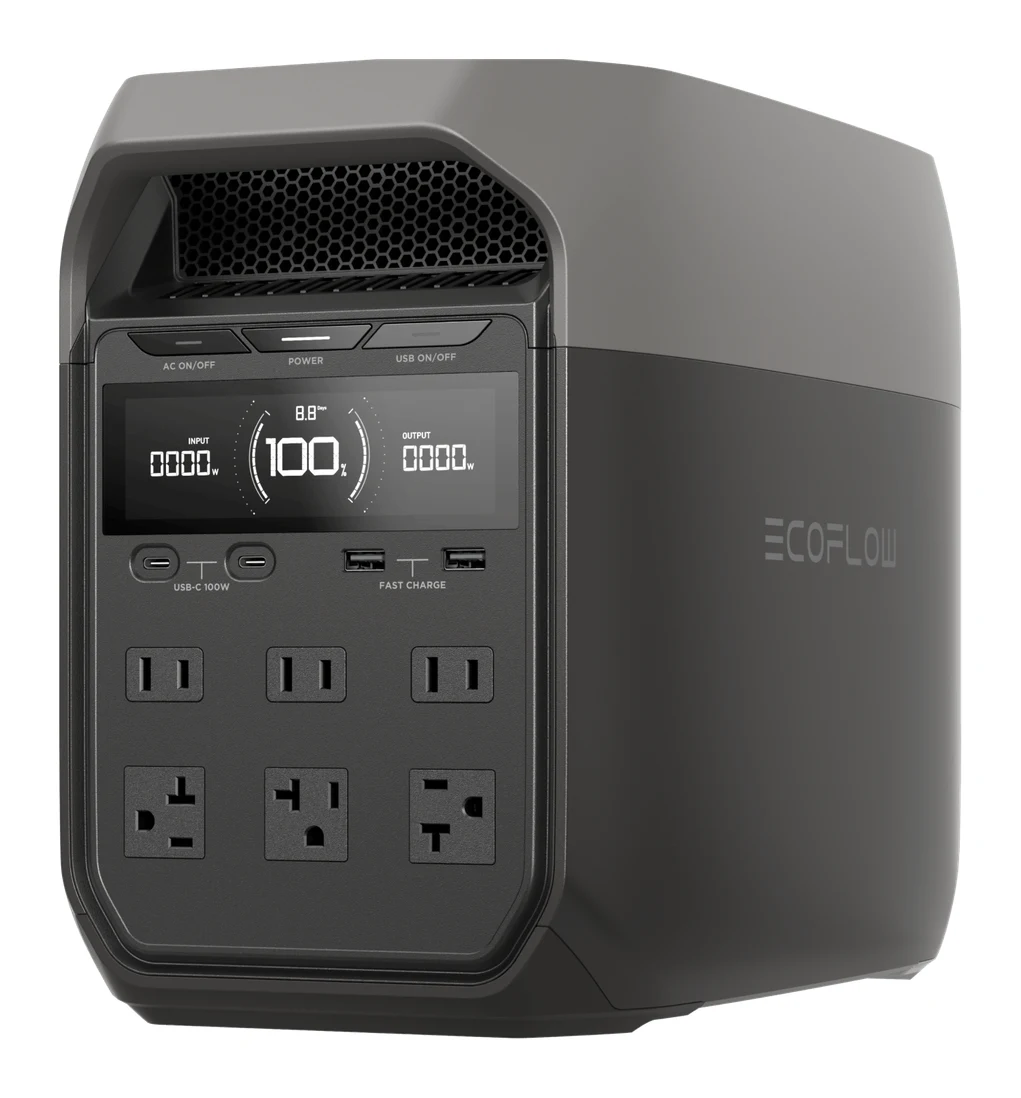
EcoFlow DELTA 3 Review (2026): Fast Charge, Room to Grow
The EcoFlow DELTA 3 is a 1024 Wh LFP power station built around fast recharging and expandability. Here is how its specs translate to home backup, camping and van use, and where it falls short.
Published Nov 16, 2026