Flashforge Adventurer 5M Review (2026): Fast and Fuss-Free
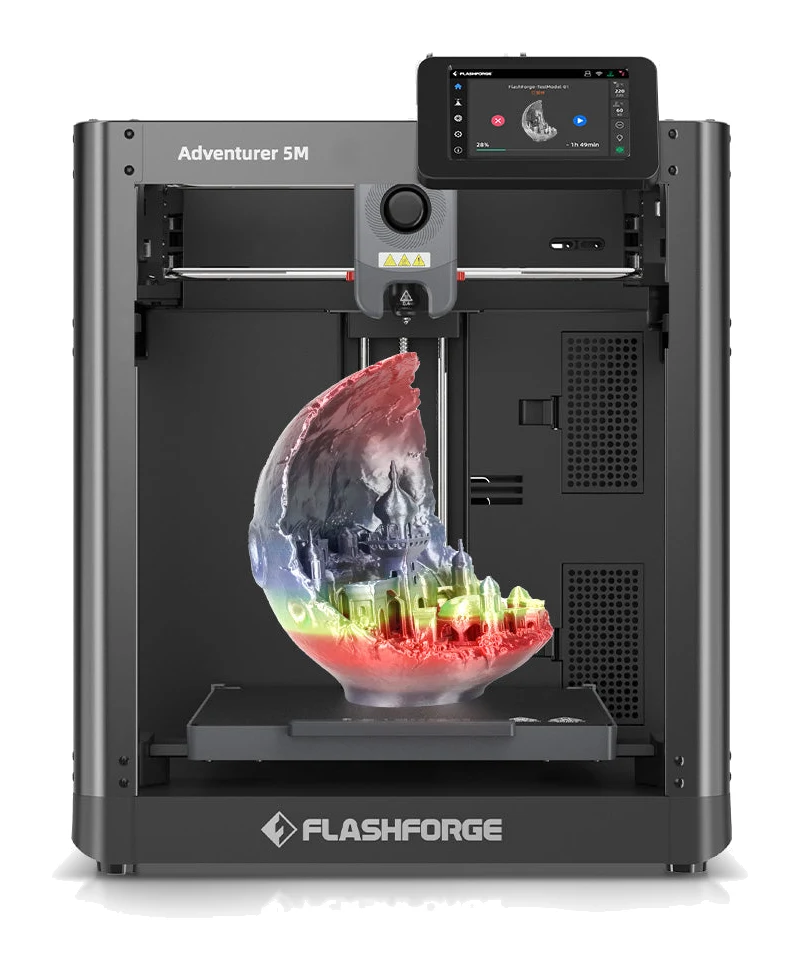
A spec-based look at the Flashforge Adventurer 5M: a CoreXY printer with auto-leveling, quick-swap nozzles and networking, held back by its open frame.
Research-based · We earn from qualifying purchases
Our verdict
The Adventurer 5M suits beginners, schools and small print farms that want fast, low-fuss printing with auto-leveling and networked workflow. Skip it if you need to print ABS/ASA reliably without adding an enclosure, or want multicolor printing.
The good
- Automatic one-click bed leveling gives a reliable first layer
- CoreXY frame reaches 600mm/s travel speed for very fast printing
- Setup is quick: 95% pre-assembled and ready in about 10 minutes
- Quick-detach nozzles swap in about 3 seconds, with four sizes available
- Flexible PEI plate, touchscreen, Wi-Fi/Ethernet and power-loss recovery add convenience
+2 more
- Quick-detach nozzles swap in about 3 seconds, with four sizes available
- Flexible PEI plate, touchscreen, Wi-Fi/Ethernet and power-loss recovery add convenience
The bad
- Open frame limits ABS, ASA and other enclosure-dependent materials
- Rear-mounted spool holder is awkward to use
- Stock slicer profiles may need tuning for best print quality
- No built-in camera, filtration or multicolor support
+1 more
- No built-in camera, filtration or multicolor support
If you want a 3D printer that gets from box to first print with as little fiddling as possible, this Flashforge Adventurer 5M review is aimed at you. The Adventurer 5M is a mid-range, open-frame CoreXY printer built around automation: one-click bed leveling, quick-detach nozzles, a removable flexible build plate and network connectivity. It targets beginners, classrooms and small print farms that mostly print PLA-style materials and value speed and convenience over flexibility.
This review is based on Flashforge's published specifications and on what independent expert reviews report. It is not hands-on testing.
Flashforge Adventurer 5M: specs at a glance
From the manufacturer- Frame
- Open (no enclosure)
- Display
- 4.3-inch touchscreen
- Extruder
- Direct drive, single
- Build plate
- Flexible removable PEI steel plate
- Device size
- 363*376*413mm (excluding the display screen and spool holder)
- Nozzle flow
- 32mm³/s
- Build volume
- 220 × 220 × 220 mm
- Connectivity
- Wi-Fi; Ethernet; USB
- Power supply
- AC100~120/200~240V,50/60Hz,350W
- Max acceleration
- 20000mm/s²
- Max travel speed
- 600mm/s
- Nozzle diameters
- 0.4mm (default); 0.25mm/0.6mm/0.8mm optional
- Compatible slicers
- FlashPrint 5, Orca-Flashforge, Orca Slicer
- Max bed temperature
- 100ºC
- Max extruder temperature
- 280°C
Key features
- Fully automatic one-click bed leveling for a reliable first layer
- CoreXY all-metal frame with up to 600mm/s travel speed and 20000mm/s² acceleration
- Direct-drive 280°C nozzle that heats to 200°C in 35 seconds
- Quick-detach nozzles (0.25/0.4/0.6/0.8mm) swap in about 3 seconds
- Flexible removable PEI steel build plate for easy part removal
- 95% pre-assembled, with setup in about 10 minutes
- 4.3-inch touchscreen plus Wi-Fi, Ethernet and USB connectivity
- Filament run-out detection and power-loss recovery
Design and build
The Adventurer 5M uses a CoreXY all-metal frame. It is an open design with no enclosure, which shapes who the printer suits (more on that below). The build volume is 220 × 220 × 220 mm.
The printer ships 95% pre-assembled, and Flashforge says setup takes about 10 minutes. For a first-time buyer, that matters more than it sounds. Much of the early frustration with 3D printing comes from assembly and calibration, and this printer is 95% pre-assembled and has automatic one-click bed leveling, which cuts down on setup and first-layer calibration.
The build surface is a flexible, removable PEI steel plate. In practice, a flexible plate means you take it off the printer and bend it to release a finished part, rather than scraping at it in place. Reviewers count the PEI plate among the printer's convenience features.
One design criticism is worth knowing about: the spool holder is mounted at the rear, and reviewers find it awkward to use. It is a drawback to weigh if you change filament often.
Features and what they mean day to day
Automatic bed leveling
The headline feature is fully automatic one-click bed leveling. Automatic leveling gives a reliable first layer, and reviewers praise it for that.
Quick-detach nozzles
Nozzles swap in about 3 seconds, and four sizes are available: 0.25/0.4/0.6/0.8mm, with 0.4mm as the default. Smaller nozzles suit finer detail, while larger ones generally trade detail for faster, sturdier prints. Making the swap this easy means you can change nozzle size for a particular job instead of living with one compromise. It also helps if a nozzle needs replacing.
Direct-drive extruder and hotend
The single direct-drive extruder feeds a nozzle rated to 280°C, and Flashforge says it heats to 200°C in 35 seconds. The nozzle flow is listed at 32mm³/s. The bed reaches a maximum of 100ºC. Those temperatures are plenty for common PLA-style printing. For materials that need a warm, stable enclosed chamber, the open frame is the limiting factor rather than the hotend.
Touchscreen and connectivity
A 4.3-inch touchscreen handles on-printer control. Connectivity covers Wi-Fi, Ethernet and USB, so you can send jobs over the network or use a USB drive. That flexibility is useful in a classroom or small print farm, where several printers may need to be managed without walking a drive to each one. The printer works with FlashPrint 5, Orca-Flashforge and Orca Slicer.
Safety nets
Filament run-out detection and power-loss recovery are included. Both reduce the cost of a failed long print: the printer can flag that filament has run out, and it can recover after an interruption to power. Reviewers list power-loss recovery among the convenience features that round out the package.
Performance and speed
This is a fast printer on paper. The CoreXY frame has a maximum travel speed of 600mm/s and a maximum acceleration of 20000mm/s². Reviewers highlight the 600mm/s travel speed as a reason it prints very fast.
Treat those figures as ceilings, not guarantees for every print. Travel speed describes how quickly the toolhead moves when it is not extruding. What you actually get on a given model depends on the material, the geometry and the slicer settings. The 32mm³/s nozzle flow is a better indicator of how quickly the hotend can push plastic through.
The quality caveat concerns the software side. A common criticism is that the stock slicer profiles may need tuning for the best print quality. If you are a beginner, expect to spend a little time refining settings rather than assuming the defaults are perfect for every filament and model. Orca Slicer is among the compatible slicers, so you can adjust settings there.
TechGearLab scores it 68/100.
What experts like and what they criticise
The praise
Reviewers consistently single out:
- the automatic one-click bed leveling and the reliable first layer it delivers
- the very fast CoreXY frame
- the quick setup, with the printer 95% pre-assembled
- the quick-detach nozzles and the choice of four sizes
- convenience extras such as the flexible PEI plate, the touchscreen, Wi-Fi/Ethernet and power-loss recovery
The common thread is low friction. Almost everything here is designed to shorten the time between wanting a part and holding it.
The criticism
The criticisms are just as consistent:
- The open frame limits ABS, ASA and other materials that depend on an enclosure.
- The rear-mounted spool holder is awkward.
- Stock slicer profiles may need tuning.
- There is no built-in camera, filtration or multicolor support.
The first and last points deserve weight. This is not a printer you can quietly grow into for engineering-grade materials without adding an enclosure yourself, and it will not do multicolor prints.
Who should buy it
The Adventurer 5M suits:
- Beginners who want auto-leveling and a short setup to remove the usual hurdles.
- Classrooms and schools, where Wi-Fi, Ethernet and USB options, plus a touchscreen, make shared use manageable.
- Small print farms that want fast, networked printing of PLA-style materials.
- Hobbyists who like to experiment with nozzle sizes, since swapping takes seconds.
Who should skip it
- Anyone who needs to print ABS or ASA reliably without adding an enclosure. The open frame is the main reason to look elsewhere.
- Anyone who wants multicolor printing.
- Buyers who expect a built-in camera or filtration out of the box.
- Those who want perfect results from default slicer profiles without any tuning.
How it fits in its category
The Adventurer 5M is a mid-range printer whose strengths are automation, speed and ease of use. Its CoreXY motion system and quick-swap hardware are the strengths. The open frame and missing extras (camera, filtration, multicolor) are the trade-offs. When comparing it with other printers, check three things first: the materials you plan to print, whether you need an enclosure, and whether multicolor matters to you.
Verdict
The Flashforge Adventurer 5M does what it sets out to do: it makes fast, low-effort printing accessible. Automatic leveling, a pre-assembled frame, quick nozzle swaps and flexible networking suit people who want to print rather than tinker. Its limits are clear and consistent across expert feedback: an open frame that restricts enclosure-dependent materials, an awkward rear spool holder, profiles that may need tuning, and no camera, filtration or multicolor support. If your plans center on PLA-style printing, in a classroom, a home workshop or a small farm, it is a strong, sensible fit. If you need ABS or ASA out of the box, or multicolor output, look at other options.
Related buying guides
Not sure about the Flashforge Adventurer 5M? Consider these
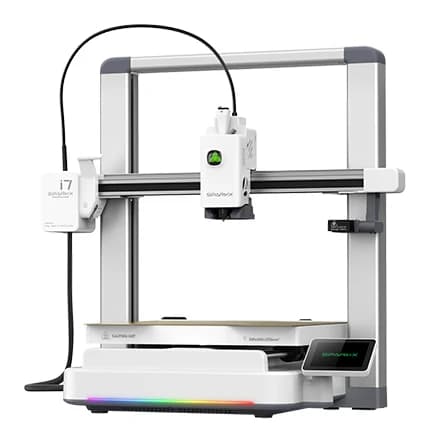
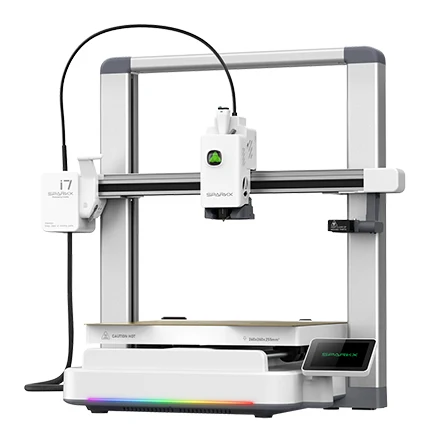
- Best ValueCreality SPARKX i7Why we picked it →
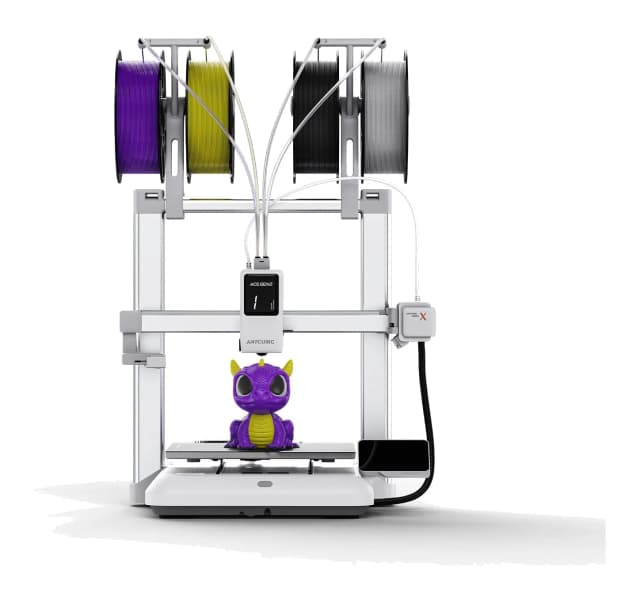
- Best BudgetAnycubic Kobra XWhy we picked it →
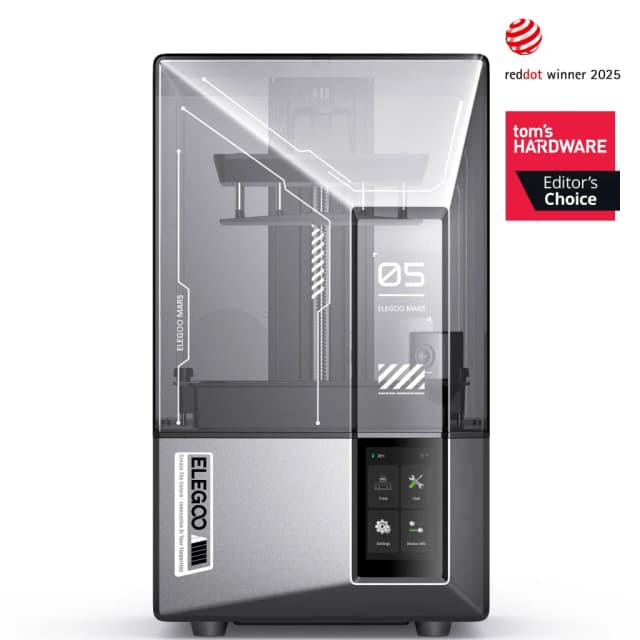
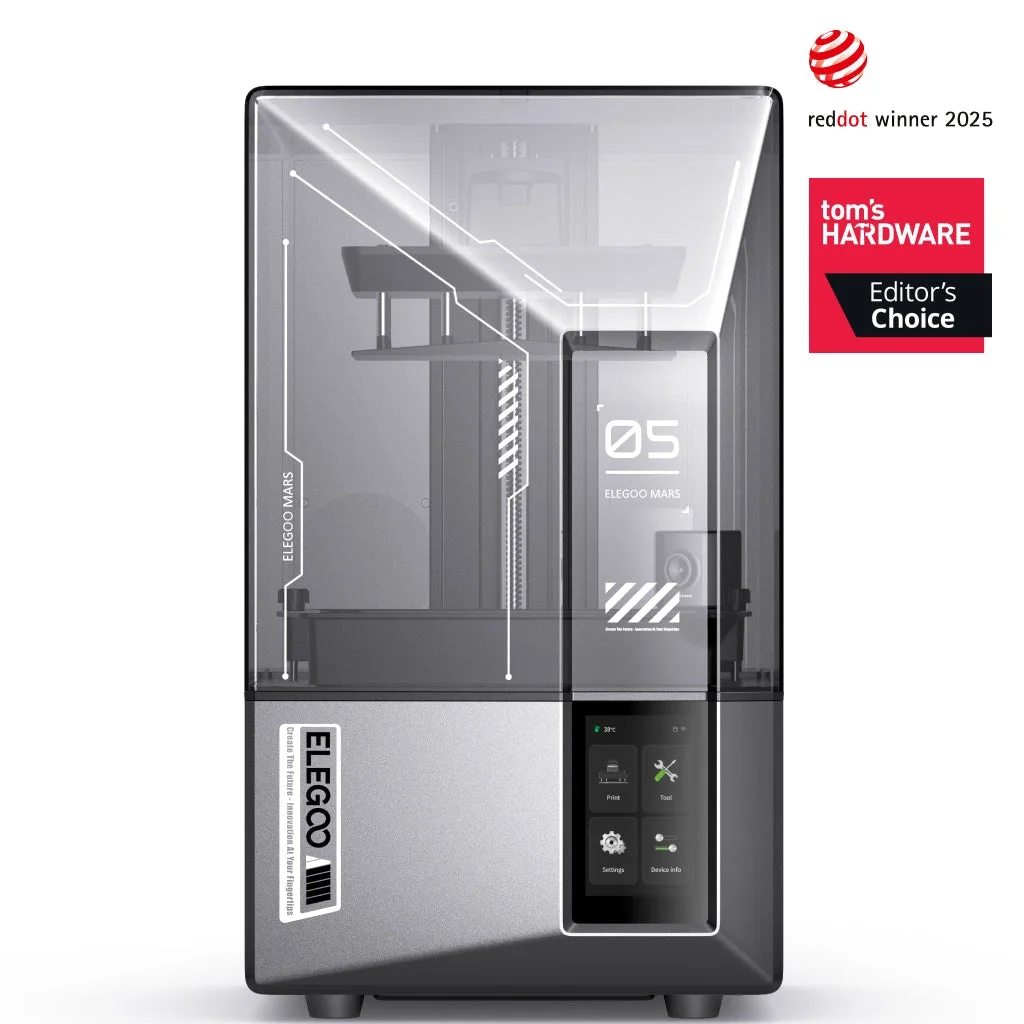
- Also GreatElegoo Mars 5 UltraWhy we picked it →
Frequently asked questions
Is the Flashforge Adventurer 5M good for beginners?
Yes, that is its main appeal. It is 95% pre-assembled with setup in about 10 minutes, and it has fully automatic one-click bed leveling for a reliable first layer. Beginners may still need to tune the stock slicer profiles for the best print quality.
Can the Flashforge Adventurer 5M print ABS or ASA?
It is limited here. The frame is open with no enclosure, and reviewers note that this restricts ABS, ASA and other enclosure-dependent materials. It is better suited to PLA-style printing unless you add an enclosure yourself.
How fast is the Flashforge Adventurer 5M?
Its CoreXY frame has a maximum travel speed of 600mm/s and a maximum acceleration of 20000mm/s², with a nozzle flow of 32mm³/s. Real-world print speed depends on the material, the model and the slicer settings.
What is the build volume of the Flashforge Adventurer 5M?
The build volume is 220 × 220 × 220 mm.
Does the Flashforge Adventurer 5M have Wi-Fi?
Yes. It supports Wi-Fi, Ethernet and USB, and has a 4.3-inch touchscreen. It works with FlashPrint 5, Orca-Flashforge and Orca Slicer.
Does the Flashforge Adventurer 5M support multicolor printing?
No. It has a single direct-drive extruder, and reviewers list the absence of multicolor support, a built-in camera and filtration as drawbacks.
Sources
Specs are taken from the manufacturers' official pages; expert recommendations from the publications below.
- Flashforge Adventurer 5M: flashforge.com, latin.flashforge.com, shop3duniverse.com, flashforge-usa.com
Related reviews & guides
Best 3D Printers for Beginners 2026: Easy to Set Up
Five beginner-friendly 3D printers compared on setup, auto leveling, build volume and monitoring, drawn from manufacturer specs and independent expert recommendations.
Published Oct 11, 2026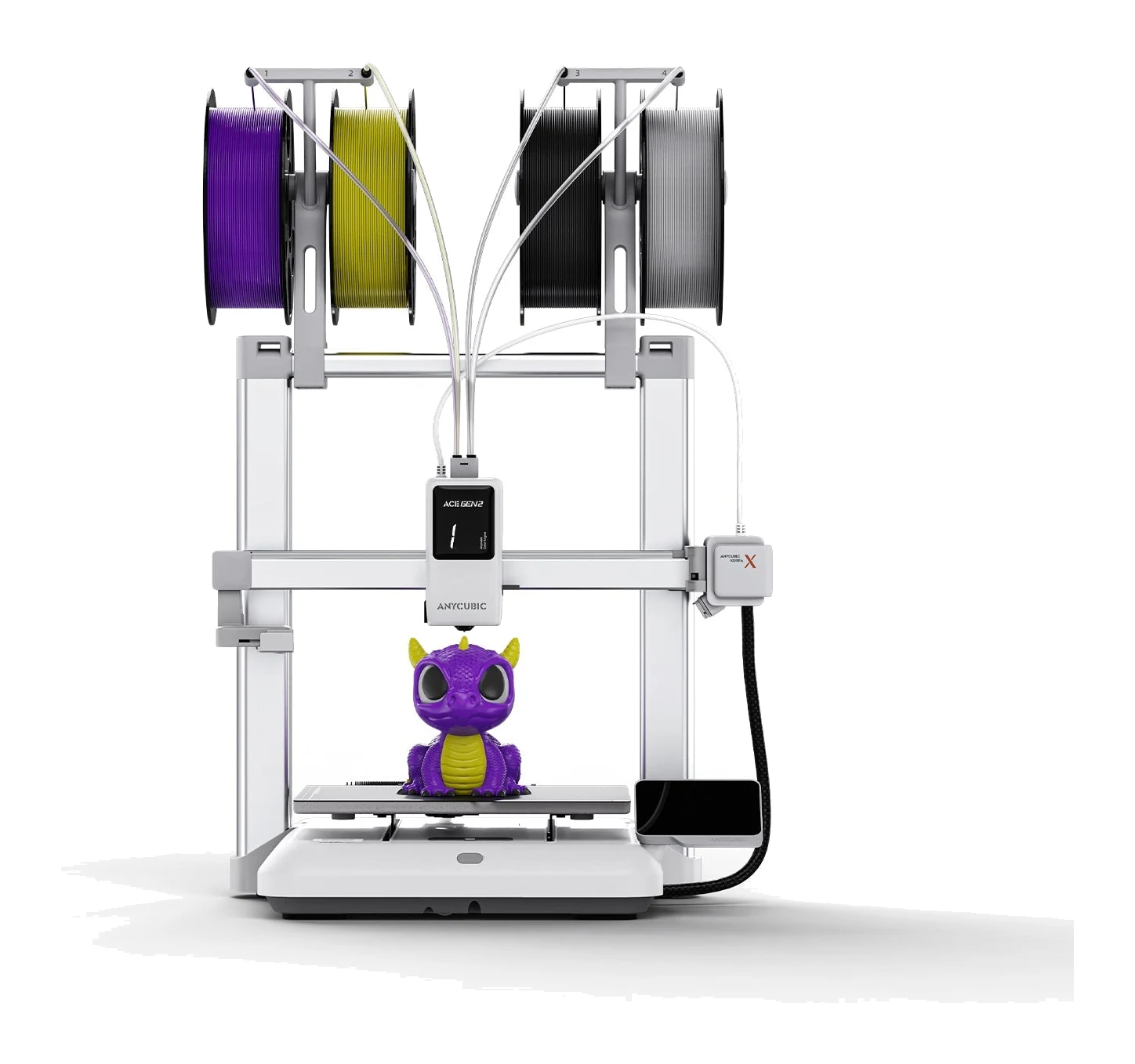
Anycubic Kobra X Review (2026): Multicolor for Beginners
The Anycubic Kobra X puts a four-color system into the toolhead of a mid-range printer. Here's what the specs and expert reviews say about who it suits.
Published Oct 30, 2026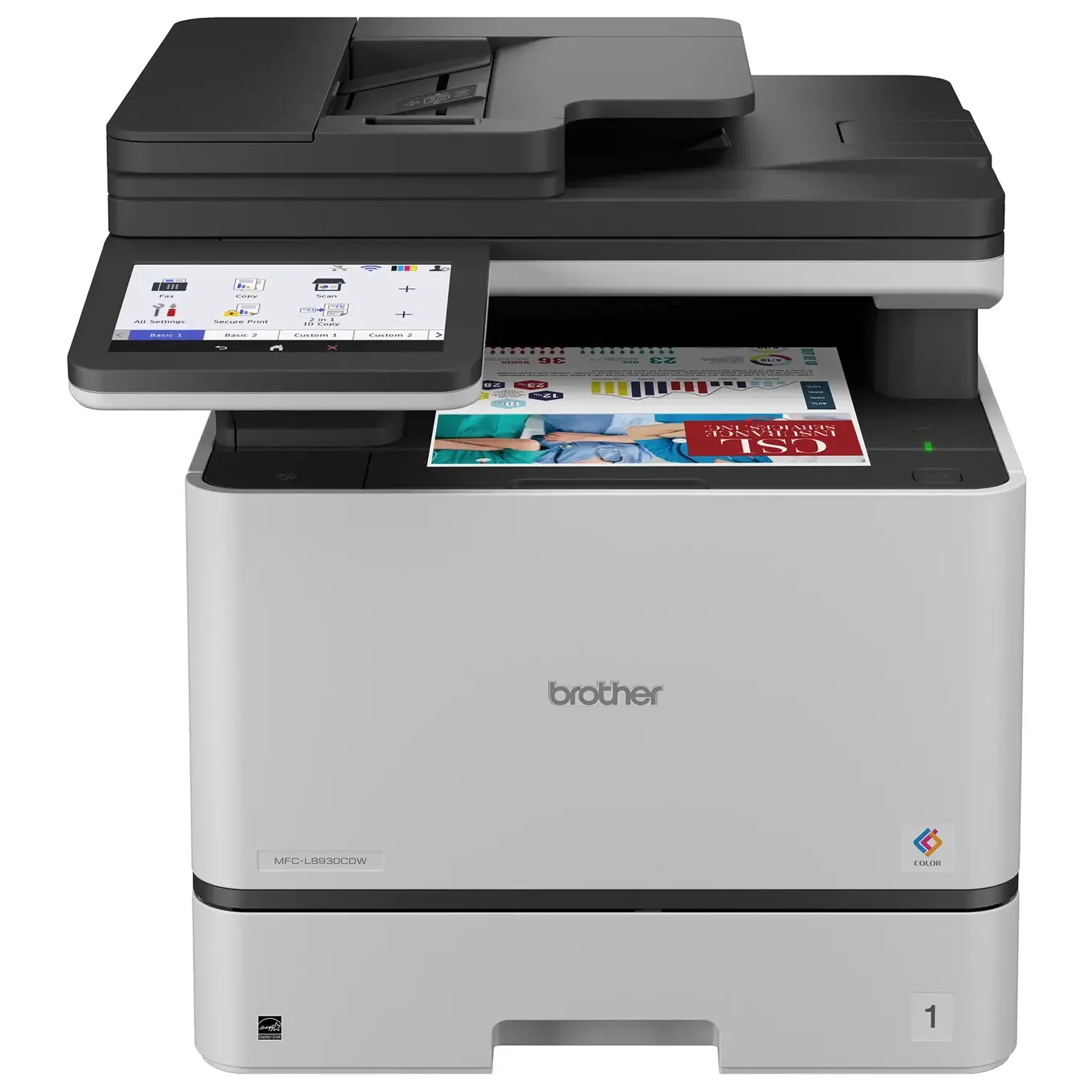
Best Printer for Home Office 2026: Five All-in-Ones Compared
Five home office all-in-ones compared on print speed, running costs, scanning and paper handling, from a fast color laser to a compact ink tank model.
Published Oct 17, 2026