KEF LSX II LT vs Edifier R1280DB (2026): Which?
KEF's compact streaming speakers go up against Edifier's budget powered bookshelves. We compare sound, connectivity, inputs and ease of use to show who should buy which.
Head-to-head comparison · Research-based · Affiliate links
We earn a commission from qualifying purchases made through our links, at no extra cost to you. It never decides our picks. As an Amazon Associate I earn from qualifying purchases. How we make money
KEF LSX II LT vs Edifier R1280DB: which one should you buy?
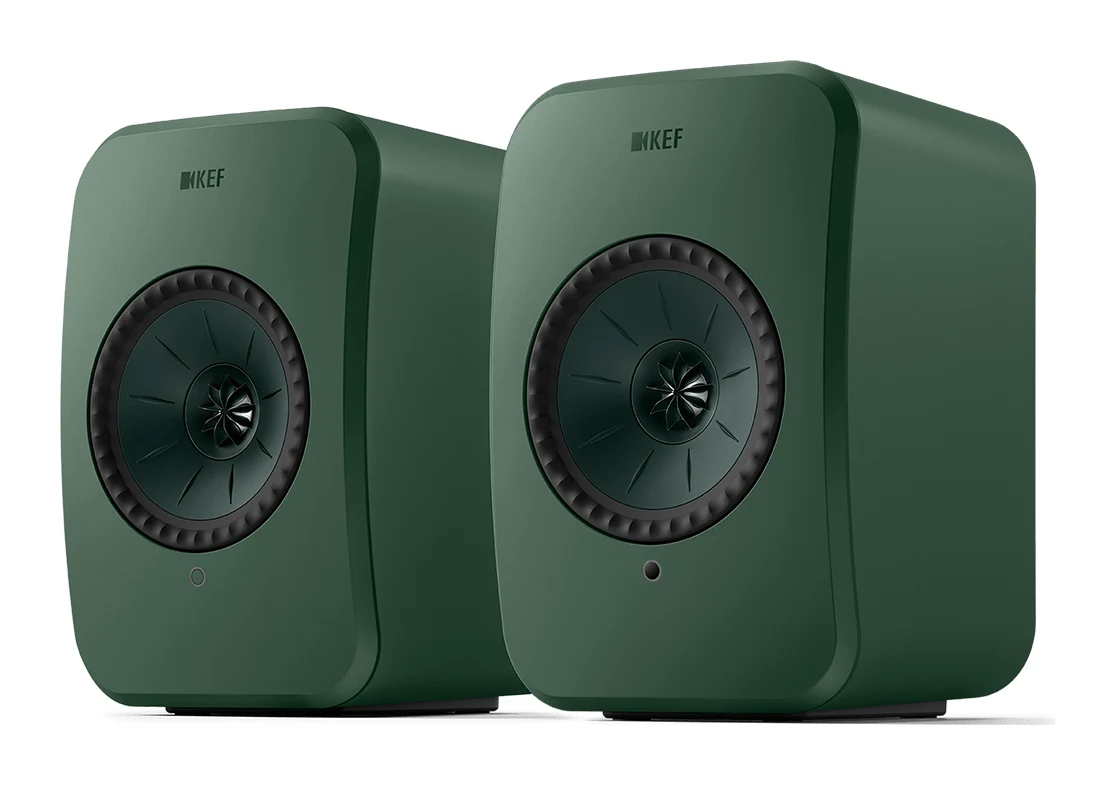
Best for: Streaming-focused listeners wanting refined, detailed sound for desk or TV
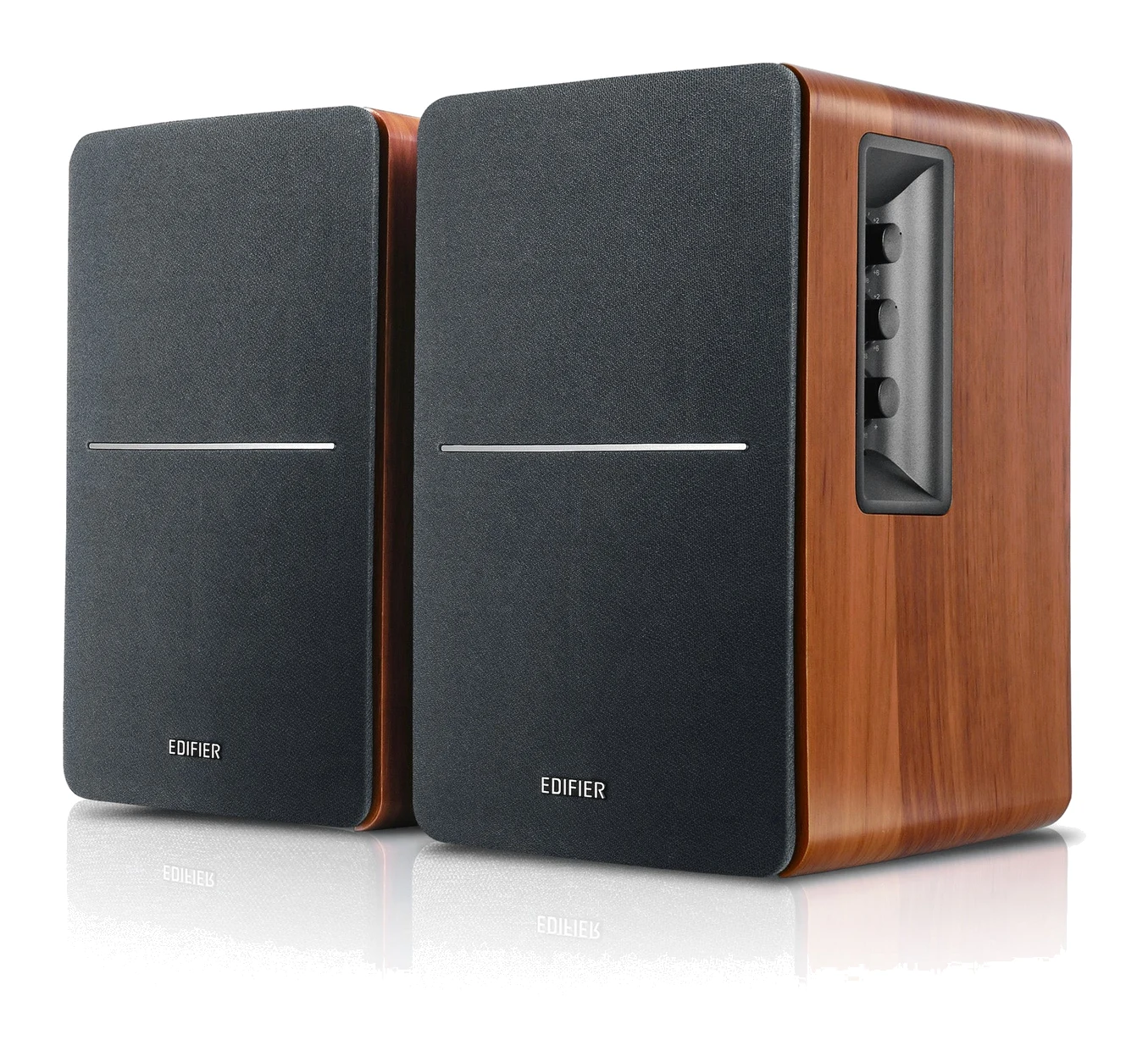
Best for: Budget buyers wanting flexible inputs, including analogue, and warm sound
The KEF LSX II LT vs Edifier R1280DB choice comes down to what you want to plug in. Most buyers who stream music and want refined, detailed sound for a desk or TV should pick the KEF LSX II LT. The Edifier R1280DB is the better choice if you want a budget set with analogue inputs for a turntable or console, a remote and simple tone knobs.
They are both powered speakers that need no external amp, but they are built for different people. KEF's is the premium, network-connected pair. Edifier's is the budget pair with optical, coaxial and analogue inputs. Reviewers rate both well, though the KEF scores higher.
KEF LSX II LT vs Edifier R1280DB: sound quality
The KEF's main design feature is its 11th-gen Uni-Q point-source driver array. This puts a 19mm (0.75in.) aluminium dome tweeter and a 115mm (4.5in.) magnesium/aluminium alloy cone driver in one array. KEF says this gives a wide sweet spot, and reviewers praise the precise imaging and the neutral, detailed tonality. They also note punchy, controlled bass for the size. KEF lists a frequency response of 54Hz – 28kHz (±3dB) and 49Hz – 47kHz (-6dB), and a Max SPL of 102 dB. Its Music Integrity Engine DSP tunes the sound to the drivers.
The Edifier uses a classic two-way layout: a 0.5'' silk-dome tweeter and a 4'' mid/bass woofer in each speaker, in an MDF cabinet with a front-facing bass reflex port. Edifier lists a frequency response of 55Hz - 20kHz. Reviewers describe the sound as warm, smooth and room-filling, with natural, clear mids and vocals. They also say it is easy to listen to.
The criticisms mirror each other. For the Edifier, reviewers report limited sub-bass and top-end extension, with some high-frequency detail missing. They also say the mids can get crowded at high volume, so it is best in small to medium rooms. For the KEF, the common complaint is that its small size limits scale and volume in larger rooms.
Edge: KEF, for listeners who value detail and imaging. The Edifier is the more relaxed, warm-sounding pair for casual listening.
Streaming and wireless connectivity
This is where the two differ most. The KEF is a network speaker. It has dual-band Wi-Fi, AirPlay 2, Google Chromecast and UPnP, plus Spotify and Tidal Connect streaming and Bluetooth 5.0. It plays files up to 24-bit/384kHz PCM and DSD. The KEF Connect app handles setup, EQ and source control. KEF doesn't list which Bluetooth codecs it supports, and reviewers note it isn't Roon Ready.
The Edifier's only wireless option is Bluetooth, version V5.1. A common criticism from reviewers is that it supports only basic codecs, with no aptX. Its only wireless option is Bluetooth, so it works as a speaker you send audio to, not a streamer in its own right.
Edge: KEF, clearly. If you want to play music from AirPlay 2, Chromecast or a streaming service's own connect feature, the Edifier can't do that.
Inputs: TV, turntable and desktop
The two take different approaches here too.
The KEF has HDMI ARC, TOSLINK optical, USB-C and RJ45 Ethernet, plus an RCA subwoofer output. HDMI ARC makes it easy to use as a TV speaker pair, and USB-C suits a desktop. The main gap, and a common criticism from reviewers, is that there is no analogue input, so turntable owners will miss it.
The Edifier covers the other end. It has optical, coaxial and dual RCA inputs, which reviewers say handle TVs, turntables, laptops and consoles. It has no HDMI ARC and no USB input. It also has no subwoofer output, so you can't add bass later.
If you plan to hook up a record player, the Edifier's RCA inputs make it the easier match. If you want a subwoofer down the line, the KEF's sub output gives you room to grow.
Edge: it depends. KEF wins for modern TV and streaming setups. Edifier wins for analogue sources and older gear.
Setup, controls and size
The Edifier is the simpler pair to live with day to day. It has bass, treble and volume knobs on the side panel and a wireless remote for volume, mute and input switching. It comes in black, brown and silver white. Each speaker measures 146mm × 234mm × 196mm (W x H x D), and the pair weighs 4.9kg (net). Edifier lists a noise level of ≤ 25dB(A) and a signal-to-noise ratio of ≥ 85dB(A).
The KEF is controlled through its app, and it comes in Sage Green, Stone White and Graphite Grey. Each speaker is 240 mm x 155 mm x 180 mm (9.5 in. x 6.1 in. x 7.1 in.), and the set weighs 6.8 kg (15.0 lbs). Only one mains cable is needed, because the second speaker is powered over the USB-C interspeaker link. The catch is that the two speakers must be joined by a cable, with no wireless link between them. All sources are resampled to 96kHz/24bit PCM over that link.
On power, KEF lists 70W LF + 30W HF Class D per speaker (a 200W system), and Edifier lists 42W RMS total. The two makers quote power differently, so don't treat the gap as a direct measure of loudness. Reviewers' comments on room size are the better guide: both do best in small to medium spaces.
Edge: Edifier for hands-on controls and a remote. KEF for app control and only one mains cable.
What experts say
Reviewers are positive about both. The KEF LSX II LT averages 9.5 out of 10 across its published scores: Trusted Reviews, TechRadar and What Hi-Fi? each gave it 5/5, and 7Review gave it 8/10. Reviewers praise its imaging, its neutral and detailed tonality, its streaming options and its HDMI ARC. Their complaints are the missing analogue input, the cable between the speakers, limited scale in bigger rooms and the lack of Roon Ready support. It is recommended in one expert buying guide.
The Edifier R1280DB averages 8.4 out of 10. PCGamesN gave it 9/10, Pixel Refresh 8/10 and Pokde.Net 8.3/10. Reviewers like its warm, room-filling sound, flexible inputs, remote and side-panel knobs, and its solid MDF cabinets. They criticise the basic Bluetooth codecs, the limited sub-bass and treble extension, the lack of a sub output and the crowded mids at high volume. It is also recommended in one expert buying guide.
The score gap is real, but it comes with a price gap. The KEF is the premium option and the Edifier the budget one.
Choose KEF LSX II LT if…
Best for: Streaming-focused listeners wanting refined, detailed sound for desk or TV
Pick the KEF LSX II LT over the Edifier if you want precise, neutral sound with Wi-Fi streaming, HDMI ARC and hi-res file support in a compact premium design. It is the better choice for a desk or TV setup where detail and modern connectivity matter more than price.
Read our full KEF LSX II LT review →- Drivers
- Uni-Q array: 19mm (0.75in.) aluminium dome HF, 115mm (4.5in.) magnesium/aluminium alloy cone LF/MF
- Bluetooth
- Bluetooth 5.0
- Weight
- 6.8 kg (15.0 lbs) per set
- Dimensions
- 240 mm x 155 mm x 180 mm (9.5 in. x 6.1 in. x 7.1 in.) per speaker
- Output
- LF 70W + HF 30W Class D per speaker (200W system)
- Ports
- HDMI ARC, TOSLINK optical, USB-C, RJ45 Ethernet, USB-C interspeaker, RCA subwoofer output
Reasons to buy
- Uni-Q point-source array gives a wide sweet spot and precise imaging
- Neutral, detailed tonality with punchy, controlled bass for its size
- AirPlay 2, Chromecast, Spotify/Tidal Connect and Bluetooth 5.0 streaming
- HDMI ARC, optical and USB-C inputs suit TV and desktop use
- Plays 24-bit/384kHz PCM and DSD files, with subwoofer output for added bass
Reasons to avoid
- No analogue input, so turntable owners will miss it
- Speakers must be joined by a cable; no wireless link between them
- Small size limits scale and volume in larger rooms
- Not Roon Ready
- What Hi-Fi?
- 10.0
- TechRadar
- 10.0
- Trusted Reviews
- 10.0
- 7Review
- 8.0
- Truthful Reviews
- 8.0
- StereoNET
- 8.5
Choose the KEF if you stream most of your music and want precise, neutral sound with a wide sweet spot. It suits a desk or a TV setup thanks to HDMI ARC, optical and USB-C inputs, and it handles AirPlay 2, Chromecast, Spotify and Tidal Connect, with 24-bit/384kHz and DSD file support. It also has a subwoofer output if you want more bass later. Accept that it has no analogue input and that the speakers need a cable between them.
Choose Edifier R1280DB if…
Best for: Budget buyers wanting flexible inputs, including analogue, and warm sound
Pick the Edifier R1280DB over the KEF if you want an affordable, flexible set of powered speakers with analogue inputs, a remote and easy tone controls. It suits anyone who wants a warm, enjoyable sound and a turntable or console hookup without paying premium prices.
Read our full Edifier R1280DB review →- Drivers
- 0.5'' silk-dome tweeter + 4'' mid/bass woofer
- Bluetooth
- V5.1
- Weight
- 4.9kg (net, pair)
- Dimensions
- 146mm × 234mm × 196mm (W x H x D)
- Output
- 42W RMS total (R/L: 21W + 21W)
- Ports
- Optical, Coaxial, Dual RCA
Reasons to buy
- Warm, smooth, room-filling sound that is easy to listen to
- Bluetooth, optical, coaxial and dual RCA inputs cover TVs, turntables and consoles
- Wireless remote plus side-panel bass, treble and volume knobs
- Solid MDF cabinets with classic looks and a front bass port
- Natural, clear mids and vocals with easy setup
Reasons to avoid
- Bluetooth supports only basic codecs, with no aptX
- Limited sub-bass and top-end extension; some high-frequency detail is missing
- No subwoofer output for adding bass later
- Mids can get crowded at high volume; best in small to medium rooms
- PCGamesN
- 9.0
- Pokde.Net
- 8.3
- Pixel Refresh
- 8.0
- Vinyl Pickup
- 8.8
- Home DJ Studio
- 7.8
Choose the Edifier if you want the budget option with a warm, easy sound and flexible inputs. It has optical, coaxial and dual RCA connections for a TV, turntable, laptop or console, plus a remote and bass, treble and volume knobs. It is a good fit for small to medium rooms and for anyone who doesn't need Wi-Fi streaming. Just don't expect aptX, deep sub-bass or a subwoofer output.
Compare our picks side by side
The specs most of our picks share, from each maker’s spec page (— = not published). Expert score = the average of published expert reviews, which rate each product for its price. Scroll sideways on small screens.
| Spec | KEF LSX II LT | Edifier R1280DB |
|---|---|---|
| Best for | Our Pick | The Alternative |
| Expert score | 9.1 | 8.4 |
| Price vs. these picks | Higher | Lower |
| Drivers | Uni-Q array: 19mm (0.75in.) aluminium dome HF, 115mm (4.5in.) magnesium/aluminium alloy cone LF/MF | 0.5'' silk-dome tweeter + 4'' mid/bass woofer |
| Bluetooth | Bluetooth 5.0 | V5.1 |
| Weight | 6.8 kg (15.0 lbs) per set | 4.9kg (net, pair) |
| Dimensions | 240 mm x 155 mm x 180 mm (9.5 in. x 6.1 in. x 7.1 in.) per speaker | 146mm × 234mm × 196mm (W x H x D) |
| Output | LF 70W + HF 30W Class D per speaker (200W system) | 42W RMS total (R/L: 21W + 21W) |
| Ports | HDMI ARC, TOSLINK optical, USB-C, RJ45 Ethernet, USB-C interspeaker, RCA subwoofer output | Optical, Coaxial, Dual RCA |
| Warranty | 2 years (3 years with myKEF registration in US) | 2 Year Warranty |
| Wireless connectivity | Dual-band Wi-Fi (IEEE 802.11a/b/g/n/ac), AirPlay 2, Google Chromecast, UPnP | Bluetooth |
| Where to buy | View on Amazon | View on Amazon |
The verdict
For most people choosing between these two, the KEF LSX II LT is the better pair. It offers precise, neutral sound, much broader streaming support and HDMI ARC for TVs, and has the stronger expert scores. The Edifier R1280DB is the smarter buy when budget matters, or when you need analogue inputs for a turntable or console and want a remote and tone knobs. Reviewers rate both well in their own roles.
Ready to buy?
 Our PickKEF LSX II LTView on Amazon
 The AlternativeEdifier R1280DBView on Amazon
Related buying guides
- KEF LSX II LT vs Fluance Ri71 (2026): Streaming vs Value
- Edifier R1700BTs Review (2026): Clear Mids, Light Bass
- Best Record Players / Turntables 2026: Starter to Hi-Fi
- Best Powered Bookshelf Speakers 2026: 5 Top Picks
- Audio-Technica AT-LP60X Review (2026): Easy Auto Turntable
- Fluance Ri71 Review (2026): A Real Step Up From Soundbars?
Frequently asked questions
Is the KEF LSX II LT better than the Edifier R1280DB?
The KEF LSX II LT is better for sound detail and streaming, and it has the higher expert average (9.5 out of 10 against 8.4). The Edifier R1280DB is the better pick on a budget or if you need analogue inputs.
Does the KEF LSX II LT or the Edifier R1280DB work better with a turntable?
The Edifier R1280DB works better with a turntable because it has dual RCA inputs. The KEF LSX II LT has no analogue input, which reviewers flag as a drawback for turntable owners.
Which is better for a TV, the KEF LSX II LT or the Edifier R1280DB?
The KEF LSX II LT is the more modern TV option because it has HDMI ARC as well as optical. The Edifier R1280DB can connect to a TV by optical or coaxial, and it has a remote, but it has no HDMI ARC.
Does the Edifier R1280DB support Wi-Fi, AirPlay or Chromecast?
No. The Edifier R1280DB lists only Bluetooth (V5.1) for wireless, and reviewers note it supports only basic codecs with no aptX. The KEF LSX II LT offers Wi-Fi, AirPlay 2, Chromecast and Bluetooth 5.0.
Can I add a subwoofer to the KEF LSX II LT or the Edifier R1280DB?
You can add one to the KEF LSX II LT, which has an RCA subwoofer output. The Edifier R1280DB has no subwoofer output, so you can't add bass later.
Are the KEF LSX II LT speakers wireless?
Only partly. The KEF LSX II LT streams over Wi-Fi and Bluetooth, but the two speakers must be joined by a USB-C cable. That cable also powers the second speaker, so you only need one mains cable.
Sources
Specs are taken from the manufacturers' official pages; expert recommendations from the publications below.
- KEF LSX II LT: us.kef.com, assets.kef.com, whathifi.com, fullspecs.net
- Edifier R1280DB: us.edifier.com, edifier.com
More buying guides
KEF LSX II LT Review (2026): Compact Active Hi-Fi for TVs
Our KEF LSX II LT review looks at a compact active speaker pair with Uni-Q drivers, broad streaming support and HDMI ARC, based on specs and expert reports.
Published Oct 21, 2026
KEF LSX II LT vs Fluance Ri71 (2026): Streaming vs Value
The KEF LSX II LT is the streaming-first pick; the Fluance Ri71 is the budget pair with a turntable input. Here is how they compare.
Published Nov 6, 2026Edifier R1280DB Review (2026): Warm Sound, Many Inputs
Our Edifier R1280DB review covers the powered bookshelf speakers' warm sound, flexible inputs, limits in bass and Bluetooth lag, and who should buy them.
Published Oct 29, 2026