Meta Quest 3S vs Meta Quest 3 (2026): Savings or Sharpness?
Both headsets share the same chip and game library, but the Quest 3 adds sharper pancake lenses, a wider field of view and more storage. Here is who should pay for it.
Head-to-head comparison · Research-based · Affiliate links
We earn a commission from qualifying purchases made through our links, at no extra cost to you. It never decides our picks. How we make money
Meta Quest 3 vs Meta Quest 3S: which one should you buy?
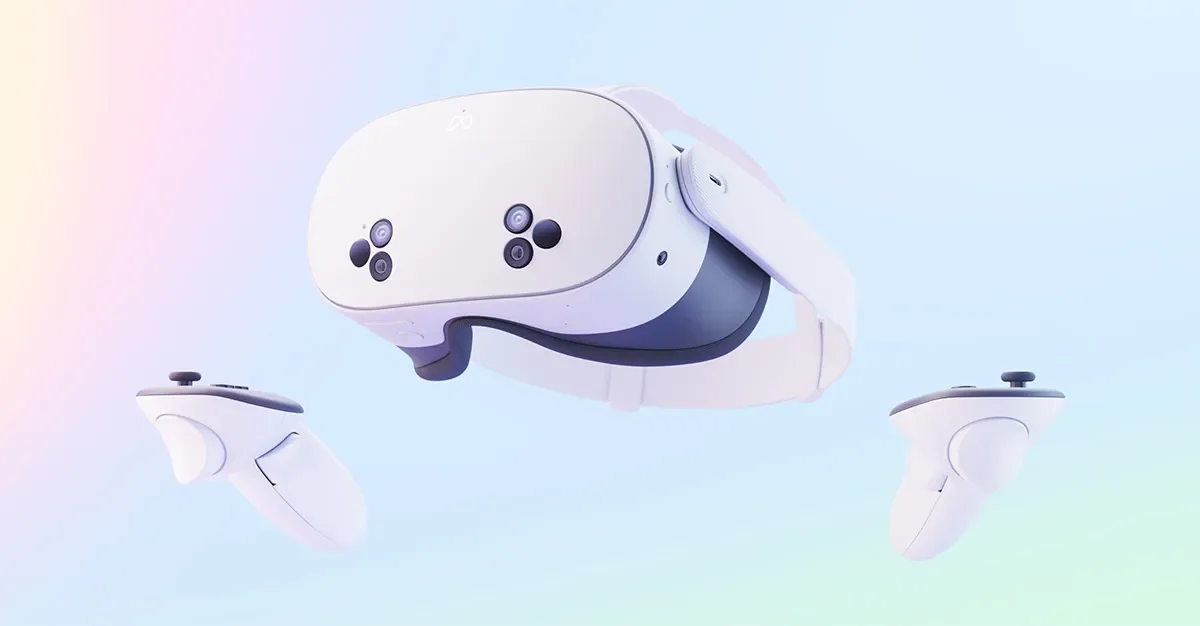
Best for: Budget-minded newcomers who want full Quest library access
Buyers who put image sharpness, field of view and comfort ahead of saving money should pick the Meta Quest 3, because its sharper lenses, wider field of view and slimmer design are the real differences in the Meta Quest 3S vs Meta Quest 3 decision. The Quest 3S is the better choice if you are new to VR and want the same chip and the same game library for much less money, and you can accept softer visuals.
The two headsets are closer than their price gap suggests. Both use the Qualcomm Snapdragon XR2 Gen 2 chip with 8GB of RAM, both have full-color passthrough, both ship with Touch Plus controllers and both can play PC VR over a Link cable or Air Link. What separates them is the optics, the fit and the storage.
Meta Quest 3S vs Meta Quest 3: Lenses and Image Sharpness
This is the biggest gap. The Quest 3 uses a dual LCD display with pancake lenses and a resolution of 2064 x 2208 pixels per eye, which works out to 25 pixels per degree. The Quest 3S uses an LCD with a Fresnel lens at 1832 x 1920 pixels per eye, listed at 20 PPD and 773 PPI.
Reviewers consistently say the difference shows. They praise the Quest 3 for sharper edge-to-edge clarity and clearer text. A common criticism of the 3S is that its Fresnel lenses and lower resolution look softer, with a visible screen-door effect.
If you read text in VR, watch video or care about visual polish, the Quest 3 comes out ahead. If you mostly want to play games and are happy with a less crisp picture, the 3S is perfectly capable of running the same titles.
Field of View, Fit and Comfort
The Quest 3 lists a field of view of 110° horizontal and 96° vertical. The Quest 3S lists 96 degrees horizontal and 90 degrees vertical. The Quest 3 shows you more of the virtual world without turning your head.
Fit is the other half. The Quest 3 has continuous IPD adjustment, so it can be set to your exact eye spacing. The Quest 3S offers three fixed positions (58 mm, 63 mm and 68 mm). Reviewers say the Quest 3's continuous IPD adjustment fits a wider range of eye spacing. The 3S does include a glasses spacer in the box, which helps if you wear glasses.
On weight, the two are nearly identical: 515 g for the Quest 3 and 514 grams for the 3S. The Quest 3's pancake lenses give it a slimmer profile, though, and reviewers describe the 3S as bulkier and less comfortable for long sessions. They also say the Quest 3's stock strap and fabric face padding are not ideal, so neither headset is perfect out of the box.
For long sessions, the Quest 3 is the better pick. For short sessions, the 3S's comfort shortfall matters less.
Performance, Games and Refresh Rate
Here the headsets are effectively level. Both run the Snapdragon XR2 Gen 2 with 8GB of RAM, and the 3S runs the same game and app library as the Quest 3. The Quest 3 is also listed as backward compatible with the Quest library.
The refresh rate options differ slightly. The Quest 3 supports 72Hz, 80Hz, 90Hz and 120Hz, and the 3S supports 72Hz, 90Hz and 120Hz. Both reach 120Hz, so the missing 80Hz option is unlikely to matter much.
If raw performance is your priority, you don't need to pay extra for it. The gap is in how the games look and feel on your face, not in what they can run.
Storage, Battery and Mixed Reality
Storage is a clear separator. The Quest 3 comes with 512GB, which suits a large game library. The Quest 3S is offered in 128GB or 256GB versions. If you plan to install many big games, the smaller capacities will fill up faster.
On battery, the 3S is rated slightly higher: up to 2.5 hours of average use against 2.2 hours average (Meta) for the Quest 3. The 3S has a 4,324 mAh battery and the Quest 3 has 5,060mAh. In real use, reviewers say both are around two hours, so treat battery as a draw.
For mixed reality, both have full-color passthrough. The Quest 3 adds a depth sensor, while reviewers point out the 3S has none. The 3S lists hand tracking with 4 IR cameras and 2 RGB cameras, plus 2 flood LEDs. Reviewers say the Quest 3's mixed-reality content is limited and its hand tracking is inconsistent, so don't buy either mainly for those features.
What Experts Say
The Quest 3 holds an expert average of 8.7 out of 10. TechRadar gave it 5 out of 5, Trusted Reviews 4.5 out of 5, Tom's Guide 4 out of 5, Stuff 4 out of 5, CGMagazine 9 out of 10 and TechGearLab 82 out of 100. Reviewers praise its sharper lenses, higher resolution, wider field of view, continuous IPD adjustment, 512GB of storage and depth sensor. Their criticisms are battery life of around 2 hours, the stock strap and face padding, the price once accessories are added, and limited mixed-reality content with inconsistent hand tracking.
The Quest 3S holds an expert average of 8.3 out of 10. CGMagazine scored it 9.5 out of 10, PC Gamer 83 out of 100, Tom's Guide 4 out of 5 and Talk Android 3.6 out of 5. Reviewers praise its much cheaper entry point, the same chip and game library as the Quest 3, solid full-color passthrough and the slightly longer rated battery runtime. They criticise the softer image, the bulkier fit, the three fixed IPD presets and the lack of a depth sensor.
The scores are close. The Quest 3 leads on average, but Tom's Guide rated both 4 out of 5, and CGMagazine scored the 3S higher than the Quest 3. Experts rate both highly: the Quest 3 leads on average score, while the 3S is the cheaper entry point.
Choose Meta Quest 3 if…
Best for: Enthusiasts wanting the sharpest visuals and best comfort
Pick the Quest 3 over the 3S if image sharpness, a wider field of view and a slimmer, more comfortable design matter more than saving money. It suits buyers planning long sessions who want continuous IPD adjustment and plenty of storage.
Read our full Meta Quest 3 review →- Capacity
- 5,060mAh
- Battery life
- 2.2 hours average (Meta)
- Weight
- 515 g
- Display
- Dual LCD, pancake lenses
- Resolution
- 2064 x 2208 pixels per eye
- Refresh rate
- 72Hz, 80Hz, 90Hz, 120Hz
Reasons to buy
- Pancake lenses give sharper edge-to-edge clarity and clearer text
- Higher resolution per eye at 2064 x 2208 pixels
- Wider field of view: 110° horizontal, 96° vertical
- Continuous IPD adjustment fits a wider range of eye spacing
- 512GB storage and a depth sensor for mixed reality
Reasons to avoid
- Battery life is only around 2 hours in real use
- Stock strap and fabric face padding are not ideal
- Pricey, especially once you add accessories
- Mixed-reality content is limited and hand tracking is inconsistent
- Trusted Reviews
- 9.0
- Stuff
- 8.0
- TechGearLab
- 8.2
- CGMagazine
- 9.0
- IGN
- 9.0
- Expert Reviews
- 8.0
- TechRadar
- 10.0
- Tom's Guide
- 8.0
Choose the Quest 3 if image quality and comfort matter more to you than saving money. Its pancake lenses, higher resolution and wider field of view give a clearer, more immersive picture, and continuous IPD adjustment helps you dial in the fit. It also suits you if you want 512GB of storage for a big library, or a depth sensor for mixed reality. It is the premium option, and reviewers say the cost climbs further once you add accessories.
Choose Meta Quest 3S if…
Best for: Budget-minded newcomers who want full Quest library access
Pick the Quest 3S over the Quest 3 if you want the same performance and game library at a far lower price. It's the better choice for first-time VR buyers who can accept softer visuals and a less refined fit.
Read our full Meta Quest 3S review →- Capacity
- 4,324 mAh
- Battery life
- Up to 2.5 hours average use
- Weight
- 514 grams
- Display
- LCD, Fresnel lens
- Resolution
- 1832 x 1920 pixels per eye (20 PPD, 773 PPI)
- Refresh rate
- 72Hz, 90Hz, 120Hz
Reasons to buy
- Same XR2 Gen 2 chip and 8GB RAM as Quest 3
- Runs the same game and app library as Quest 3
- Full-color passthrough with solid mixed reality
- Slightly longer rated battery runtime of up to 2.5 hours
Reasons to avoid
- Fresnel lenses and lower resolution look softer, with visible screen-door effect
- Bulkier and less comfortable for long sessions
- Only three fixed IPD presets instead of continuous adjustment
- No depth sensor, and real-world battery is about two hours
- Trusted Reviews
- 9.0
- TechRadar
- 9.0
- CGMagazine
- 9.5
- PCGamesN
- 7.0
- NexReview
- 8.9
- PC Gamer
- 8.3
- Tom's Guide
- 8.0
- Talk Android
- 7.2
Choose the Quest 3S if you want to get into VR for as little as possible without losing access to the full Quest library. It has the same Snapdragon XR2 Gen 2 chip and 8GB of RAM, full-color passthrough and Touch Plus controllers. It is the budget option, and the compromises are a softer image, a bulkier fit, three fixed IPD presets and no depth sensor. It suits first-time buyers and shorter sessions.
Compare our picks side by side
The specs most of our picks share, from each maker’s spec page (— = not published). Expert score = the average of published expert reviews, which rate each product for its price. Scroll sideways on small screens.
| Spec | Meta Quest 3 | Meta Quest 3S |
|---|---|---|
| Best for | Our Pick | The Alternative |
| Expert score | 8.7 | 8.4 |
| Price vs. these picks | Higher | Lower |
| Capacity | 5,060mAh | 4,324 mAh |
| Battery life | 2.2 hours average (Meta) | Up to 2.5 hours average use |
| Weight | 515 g | 514 grams |
| Display | Dual LCD, pancake lenses | LCD, Fresnel lens |
| Resolution | 2064 x 2208 pixels per eye | 1832 x 1920 pixels per eye (20 PPD, 773 PPI) |
| Refresh rate | 72Hz, 80Hz, 90Hz, 120Hz | 72Hz, 90Hz, 120Hz |
| Processor | Qualcomm Snapdragon XR2 Gen 2 | Qualcomm Snapdragon XR2 Gen 2 |
| RAM | 8GB | 8GB |
| Where to buy | Check price | Check price |
The Verdict
In the Meta Quest 3S vs Meta Quest 3 matchup, the Quest 3 is the pick if sharpness, field of view and comfort matter more to you than saving money, thanks to sharper optics, a wider field of view, continuous IPD adjustment and more storage. The Quest 3S earns its place as the budget route into the same games on the same chip. If the extra cost of the Quest 3 stretches your budget, the 3S is a sensible way to start.
Ready to buy?
 Our PickMeta Quest 3Check price
 The AlternativeMeta Quest 3SCheck price
Frequently asked questions
Is the Meta Quest 3 better than the Quest 3S?
Yes, the Meta Quest 3 is the better headset on image quality and fit. It has pancake lenses, a resolution of 2064 x 2208 pixels per eye, a wider field of view and continuous IPD adjustment. The Quest 3S is the cheaper option and runs the same game library on the same chip.
Do the Quest 3 and Quest 3S play the same games?
Yes. Both use the Qualcomm Snapdragon XR2 Gen 2 chip with 8GB of RAM, and the Quest 3S runs the same game and app library as the Quest 3. Both can also play PC VR over a Link cable or Air Link.
Which has longer battery life, Quest 3 or Quest 3S?
The Quest 3S has the longer rated battery life at up to 2.5 hours of average use, against 2.2 hours average (Meta) for the Quest 3. Reviewers say real-world battery is around two hours on both, so the gap is small.
How much storage do the Quest 3 and Quest 3S have?
The Quest 3 has 512GB of storage. The Quest 3S is offered in 128GB or 256GB versions, so it fills up sooner if you install many large games.
Is the Quest 3S screen noticeably worse than the Quest 3?
Reviewers say yes. The Quest 3S uses Fresnel lenses at 1832 x 1920 pixels per eye (20 PPD) and they report a softer image with a visible screen-door effect. The Quest 3 has pancake lenses and 25 pixels per degree, which reviewers say gives sharper edge-to-edge clarity and clearer text.
Which is better for first-time VR buyers, Quest 3S or Quest 3?
The Meta Quest 3S suits most first-time buyers who want to spend less, since it gives access to the full Quest library. Choose the Quest 3 instead if you already know you want sharper visuals, a wider field of view and more storage.
Sources
Specs are taken from the manufacturers' official pages; expert recommendations from the publications below.
- Meta Quest 3: meta.com, vr-compare.com, androidcentral.com
- Meta Quest 3S: meta.com, en.wikipedia.org
More buying guides
Meta Quest 3S Review (2026): Full Library, Softer Lenses
The Meta Quest 3S pairs the Quest 3's chip and game library with Fresnel lenses and less comfort. Here is what the specs and expert reviews say.
Published Oct 19, 2026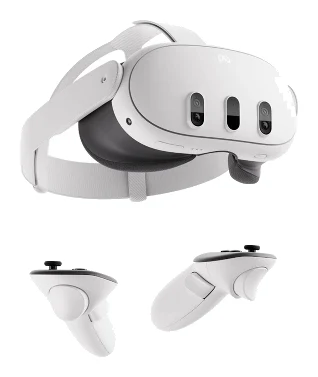
Meta Quest 3 Review (2026): Wireless VR With Trade-Offs
A look at the Meta Quest 3 based on manufacturer specs and expert reviews: sharp lenses, strong performance and mixed reality, held back by battery life and the stock strap.
Published Oct 25, 2026Meta Quest 3S vs Pimax Dream Air (2026): Which VR Fits?
Meta Quest 3S vs Pimax Dream Air: a budget wireless headset with a huge library against a premium, ultra-sharp PC VR headset. Here's who should buy which.
Published Oct 30, 2026