Meta Quest 3 Review (2026): Wireless VR With Trade-Offs
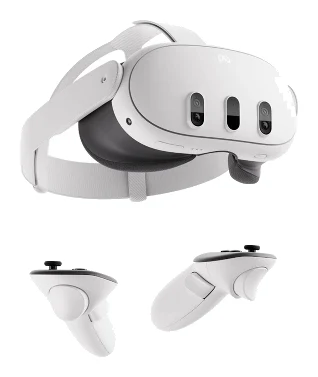
A look at the Meta Quest 3 based on manufacturer specs and expert reviews: sharp lenses, strong performance and mixed reality, held back by battery life and the stock strap.
Research-based · We earn from qualifying purchases
Our verdict
The Meta Quest 3 is a strong all-in-one headset, with sharp lenses, a big performance boost over Quest 2 and good mixed reality, backed by a deep software library. It suits buyers who want wireless VR with PC VR as an option, but skip it if you need long sessions on the stock strap and battery, or want eye tracking.
The good
- Sharp pancake-lens visuals at 2064x2208 pixels per eye
- Snapdragon XR2 Gen 2 delivers a big graphics jump over Quest 2
- Full-color passthrough makes mixed reality convincing
- Works standalone or connects to a PC for wireless VR
- Slimmer, more comfortable design than Quest 2, with a wide library of games
+2 more
- Works standalone or connects to a PC for wireless VR
- Slimmer, more comfortable design than Quest 2, with a wide library of games
The bad
- Battery lasts only about 2.2 hours on average
- Stock soft strap can get uncomfortable in long sessions
- Mixed reality apps and content are still limited
- No eye tracking, and it costs more than Quest 2
+1 more
- No eye tracking, and it costs more than Quest 2
This Meta Quest 3 review looks at an all-in-one VR headset and asks who it suits in 2026. It runs without a PC or console, adds full-color passthrough for mixed reality, and can connect to a PC when you want more power. It sits in the mid-range part of the market and is aimed at players who want wireless VR with the option of PC play. This review is based on Meta's published specs and what independent experts report. We haven't handled the headset ourselves.
Meta Quest 3: specs at a glance
From the manufacturer- RAM
- 8 GB
- Audio
- Integrated stereo speakers, 3.5mm audio jack
- Wi-Fi
- Wi-Fi 6E (802.11ax)
- Optics
- Pancake lens
- Weight
- 515 grams
- Storage
- 512GB
- Processor
- Snapdragon XR2 Gen 2
- Charge time
- Approximately 2.3 hours with the included 18W power adapter (headset only)
- Passthrough
- 2 RGB cameras, 18 PPD
- Battery life
- Up to 2.2 hours of usage on average
- Refresh rate
- 72Hz, 90Hz, 120Hz
- Field of view
- 110 degrees horizontal and 96 degrees vertical
- Display resolution
- 2064x2208 pixels per eye
- IPD range accommodated
- 53-75 mm
Key features
- Pancake lenses with 2064x2208 pixels per eye for sharp visuals
- Snapdragon XR2 Gen 2 chip, with double the GPU power of Quest 2
- Full-color passthrough for mixed reality
- Wireless all-in-one design, with optional PC VR
- Slim, balanced headset with an adjustable soft strap
- Touch Plus controllers, plus controller-free hand tracking
- Built-in stereo speakers with spatial audio and a 3.5mm headphone jack
- 512GB of storage for large game and app libraries
What the Meta Quest 3 is
The Quest 3 is a wireless, all-in-one headset. The processor, storage and battery are all inside the unit, so you don't need a console or a PC to start. It pairs a Snapdragon XR2 Gen 2 chip with 8 GB of RAM and 512GB of storage. Meta says the chip has double the GPU power of Quest 2. That matters for graphics, and reviewers repeatedly call it a big jump over the previous model.
The headset can also connect to a PC for wireless PC VR. Standalone play and PC play are both options on the same hardware. If you plan to use it that way, a capable graphics card helps, and our guide to the best graphics cards for gaming PCs covers that side of the setup.
Design and build
The Quest 3 weighs 515 grams. Meta describes it as a slim, balanced headset with an adjustable soft strap, and reviewers say the design is slimmer and more comfortable than Quest 2. Weight on your face still adds up over a long session, so comfort depends on both the balance of the headset and the strap.
A recurring criticism is that the stock soft strap can become uncomfortable in long sessions. If you expect marathon play, treat this as a real consideration rather than a footnote.
The headset accommodates an IPD range of 53-75 mm. IPD is the distance between your pupils, and a wider adjustment range helps more people get a clear, comfortable image. The headset uses Touch Plus controllers. It also supports controller-free hand tracking.
Display and optics
Visuals are one of the headset's main selling points. It uses pancake lenses with a display resolution of 2064x2208 pixels per eye. Reviewers praise the sharpness of the pancake-lens visuals.
The field of view is 110 degrees horizontal and 96 degrees vertical. That is the width and height of the image you see inside the headset, and a larger field of view makes the experience feel less like looking through a window. Refresh rates of 72Hz, 90Hz and 120Hz are supported. Higher refresh rates generally give smoother motion, though what you get depends on what the app supports and how hard it works the hardware.
Mixed reality and passthrough
The Quest 3 offers full-color passthrough, using 2 RGB cameras at 18 PPD. Passthrough shows the real world through the headset's cameras. Apps can then blend virtual objects into your actual room. Reviewers say this makes mixed reality convincing.
The weak spot is content. A common criticism is that mixed reality apps and content are still limited. The hardware is capable, but mixed reality apps and content are still limited, so it shouldn't be the only reason to buy.
Performance and software
The Snapdragon XR2 Gen 2 is the engine behind the experience. Experts call the graphics gain over Quest 2 big, and they also praise the wide library of games. For a standalone headset, that library is a significant advantage. You have plenty to play from day one, and 512GB of storage leaves room for a large collection of games and apps.
Wi-Fi 6E (802.11ax) is supported. That helps with downloads, and it is also relevant for wireless PC VR, where a solid connection matters.
Audio
The headset has integrated stereo speakers with spatial audio, so you can get started without extra accessories. There is also a 3.5mm audio jack for wired headphones. The jack is useful if you prefer your own headphones or want more privacy.
Battery life and charging
Battery life is the headset's clearest weakness. Meta lists up to 2.2 hours of usage on average, and experts flag it as a limitation. Experts flag this as a limitation for long sessions.
Charging takes approximately 2.3 hours with the included 18W power adapter (headset only). In practice, a drained headset means a pause before you play again. If you plan long sessions, plan around charging.
What experts like and what they criticise
The Quest 3 averages 8.6/10 across 4 expert reviews. The published scores are 4.5/5 from Trusted Reviews, 4/5 from Stuff, 82/100 from TechGearLab and 9/10 from CGMagazine. It is also recommended in 6 expert guides, which shows how consistently it appears on shortlists.
Reviewers praise:
- the sharp pancake-lens visuals
- the graphics jump from the Snapdragon XR2 Gen 2
- convincing full-color passthrough
- the freedom to run standalone or connect to a PC
- a slimmer, more comfortable design and a wide game library
A common criticism is:
- battery life of about 2.2 hours on average
- an uncomfortable stock soft strap in long sessions
- limited mixed reality content
- the lack of eye tracking, and a higher cost than Quest 2
The praise is about the core experience and the criticism is about practical limits. Neither list suggests a headset with a fundamental flaw, but the battery and strap points are worth weighing if you play for long stretches.
Who should buy the Meta Quest 3
The Quest 3 suits players who want wireless VR without a PC, and those who want the option of PC VR later. It also fits people curious about mixed reality, as long as they accept that the content is still growing. Buyers who care about sharp visuals and a deep game library will find a lot to like.
Who should skip it
Skip it if you need long sessions on the stock strap and battery without interruption. Expect to pause for charging, and expect comfort to be a question over time. It's also not the one to buy if you want eye tracking, because the headset doesn't have it. And if mixed reality is the main draw, the limited app selection may disappoint you.
How it fits in its category
The Quest 3 is a mid-range, all-in-one VR headset. It combines standalone convenience with PC connectivity, and a strong library, and those strengths are why it shows up so often in expert recommendations. The trade-offs, mainly battery life, strap comfort and mixed reality content, are the things to weigh against it.
Verdict
The Meta Quest 3 is a strong all-in-one headset. It offers sharp optics, a large performance gain over Quest 2, convincing passthrough and a deep software library, with PC VR available when you want it. Its main limits are battery life, a stock strap that can become uncomfortable and limited mixed reality content. If those don't bother you, it is an easy headset to recommend. If they do, they are worth thinking through before you buy.
Related buying guides
- Meta Quest 3S Review (2026): Full Library, Softer Lenses
- Best VR Headsets 2026 for PS5, PC and Standalone Play
- Best Gaming Headset 2026: Comfort, Battery & Low Latency
- Best DJ Controllers for Beginners 2026: Easy to Grow Into
- Meta Quest 3S vs Meta Quest 3 (2026): Savings or Sharpness?
- Quest 3S vs Dream Air (2026): Wireless Ease or PC Image Quality?
Not sure about the Meta Quest 3? Consider these
- Best OverallMeta Quest 3SWhy we picked it →
- Premium PickPimax Dream AirWhy we picked it →
- Meta Quest 3SRead the review →
Frequently asked questions
Is the Meta Quest 3 worth it in 2026?
For most buyers who want wireless VR, experts say yes. It averages 8.6/10 across 4 expert reviews and is recommended in 6 expert guides. The main caveats are battery life of up to 2.2 hours on average, a stock strap that can get uncomfortable and limited mixed reality content.
Does the Meta Quest 3 work with a PC?
Yes. It is a wireless all-in-one headset that works on its own, and it can also connect to a PC for PC VR. It supports Wi-Fi 6E (802.11ax).
How long does the Meta Quest 3 battery last?
Meta lists up to 2.2 hours of usage on average. Charging takes approximately 2.3 hours with the included 18W power adapter (headset only).
Does the Meta Quest 3 have eye tracking?
No. Reviewers list the absence of eye tracking as a drawback.
What is the display resolution of the Meta Quest 3?
It uses pancake lenses with 2064x2208 pixels per eye. It supports refresh rates of 72Hz, 90Hz and 120Hz.
Does the Meta Quest 3 support mixed reality?
Yes. It has full-color passthrough using 2 RGB cameras at 18 PPD. Reviewers say mixed reality looks convincing, though they note that apps and content are still limited.
Sources
Specs are taken from the manufacturers' official pages; expert recommendations from the publications below.
- Meta Quest 3: meta.com, camelcamelcamel.com, getjasin.com, cambridgelsat.com
Related reviews & guides
Meta Quest 3S vs Meta Quest 3 (2026): Savings or Sharpness?
Both headsets share the same chip and game library, but the Quest 3 adds sharper pancake lenses, a wider field of view and more storage. Here is who should pay for it.
Published Oct 30, 2026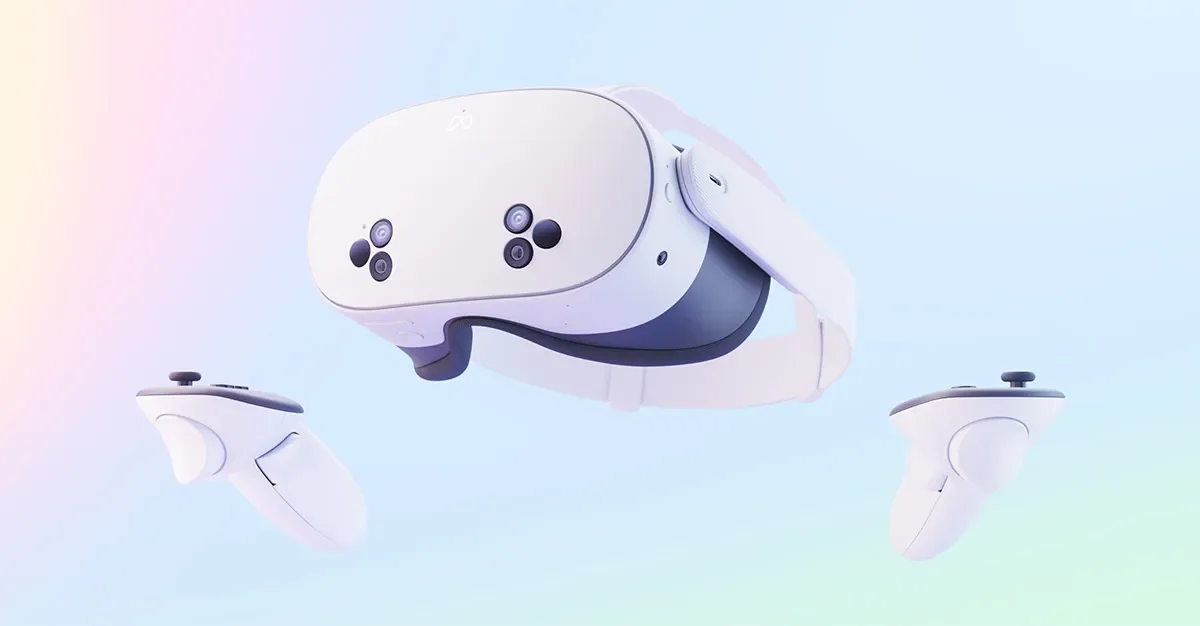
Meta Quest 3S Review (2026): Full Library, Softer Lenses
The Meta Quest 3S pairs the Quest 3's chip and game library with Fresnel lenses and less comfort. Here is what the specs and expert reviews say.
Published Oct 19, 2026Meta Quest 3S vs Pimax Dream Air (2026): Which VR Fits?
Meta Quest 3S vs Pimax Dream Air: a budget wireless headset with a huge library against a premium, ultra-sharp PC VR headset. Here's who should buy which.
Published Oct 30, 2026