Kawai ES60 vs Casio CDP-S160 (2026): Tone vs Portability
Kawai ES60 vs Casio CDP-S160 compared on sound, polyphony, speakers, portability and connections, with what reviewers say about each.
Head-to-head comparison · Research-based · Affiliate links
We earn a commission from qualifying purchases made through our links, at no extra cost to you. It never decides our picks. As an Amazon Associate I earn from qualifying purchases. How we make money
Casio CDP-S160 vs Kawai ES60: which one should you buy?
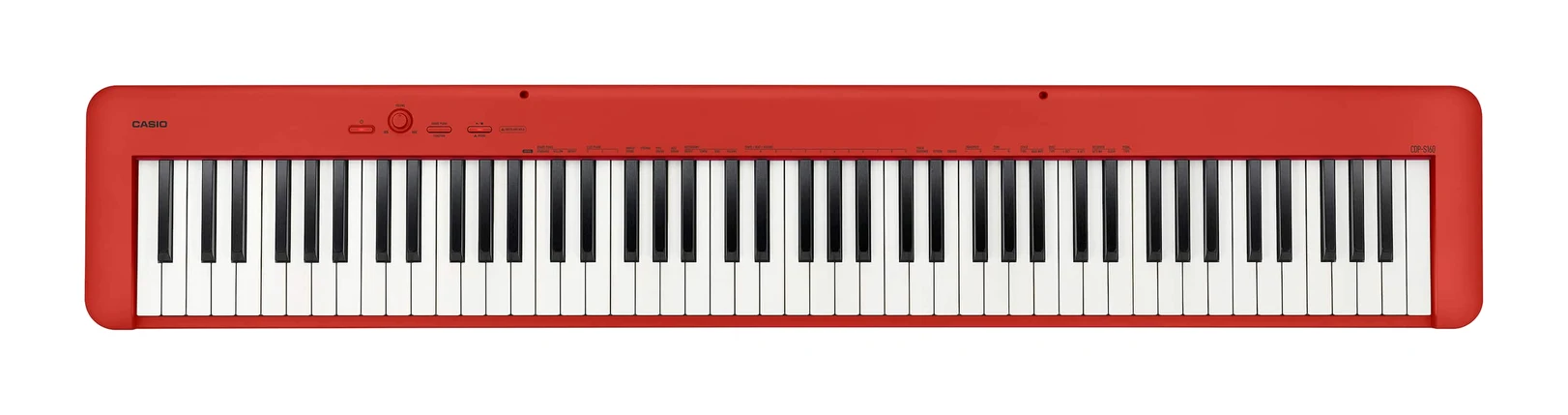
Best for: Beginners wanting a slim, battery-powered piano for small spaces
The Kawai ES60 vs Casio CDP-S160 matchup comes down to sound against portability. Most beginners who want a slim, simple, battery-powered piano for a small space should pick the Casio CDP-S160. If tone, speaker power, polyphony and stage-ready line outs matter more, the Kawai ES60 is the better choice.
Both are 88-key weighted-action digital pianos at a similar weight, so the choice isn't about size class. It's about what each one prioritizes. The Casio is built around simplicity and flexibility away from a wall socket. The Kawai is built around a richer grand piano tone and more ways to get that sound out to a PA or recording setup.
Kawai ES60 vs Casio CDP-S160: sound and speakers
This is where the Kawai pulls ahead most clearly. The ES60 uses Harmonic Imaging stereo sampling of the Shigeru Kawai SK-EX concert grand. Reviewers praise that sound as detailed at this price. Its speakers are 12 cm x 2 at 20W (10W x 2), and reviewers call them strong for the class.
The Casio CDP-S160 uses a stereo PCM sampled sound source with a newly enhanced stereo grand piano tone. Its speakers are 2 x oval 13cm / 7cm units driven by 8W + 8W amplifiers. A common criticism is that the speakers are small. The Casio's effects include 4 reverb types and 4 chorus types. The Kawai offers Room, Small Hall and Concert Hall reverb, or off, and Kawai doesn't list a chorus effect.
If you'll play mostly through the built-in speakers and care how the piano sounds, the Kawai comes out ahead. If you mostly practice on headphones, the gap matters less.
Polyphony and sound variety
Polyphony is the number of notes that can sound at once. It matters when you hold the sustain pedal through fast or layered passages. The Kawai ES60 is rated at 192 notes max, and reviewers say that handles sustained and layered playing better. The Casio CDP-S160 tops out at 64 notes max, and reviewers note that this can cut off sustained passages.
Variety also favors the Kawai. It has 17 sounds, Dual and Split modes, and 30 drum rhythms alongside a 7-beat metronome. The Casio has 10 built-in tones, a metronome with 0 to 9 beats and a tempo range of 20 to 255, plus layer and duet modes. Reviewers describe its feature set as basic.
For advancing players, those who like to layer sounds, or anyone practicing with backing rhythms, the Kawai is the stronger pick. The Casio's smaller feature set suits beginners who value simple operation over deeper sound.
Keys, action and pedals
Both pianos have 88 weighted keys with a hammer-action design, but they approach it differently. The Casio has scaled hammer-action keys with simulated ebony and ivory textures, and three sensitivity levels plus an off setting. The Kawai uses its Responsive Hammer Lite (RHL) grade-weighted action, with a quiet, low-noise mechanism. A reviewer caveat is that the compact action may not suit every player.
On pedals, each piano includes a single pedal. The Casio includes an SP-3 sustain pedal, and reviewers call it basic. An optional SP-34 three-pedal unit adds damper, soft and sostenuto. The Kawai includes an F-1SP switch pedal. An optional F-10H damper pedal adds half-pedal support. If you want to practice nuanced pedaling, budget for an upgrade with either piano. The Casio's upgrade path adds more pedal functions, while the Kawai's adds half-pedal support.
Portability, size and power
This round goes to the Casio. The CDP-S160 is slim, barely larger than the keys, at 52 x 9.1 x 3.9" / 132.2 x 23.2 x 9.9 cm. It weighs 23.1 lb / 10.5 kg. It runs on 6 AA batteries for approx. 13 hours or on the included AC adapter, so you can play where there's no outlet.
The Kawai ES60 is 1295 (W) x 260 (D) x 150 (H) mm / 51" x 10 1/4" x 6" and weighs 11.0 kg / 24 1/4 lbs. Kawai pitches it as easy to carry between home, class and stage. The weight is close to the Casio's, but it stands taller at 6" against 3.9", and the maker doesn't list battery operation. Reviewers also mention its plastic chassis.
For a small apartment, a shelf or a trip to a friend's house, the Casio is easier to live with. For regular gigs and lessons where you'll have power, the Kawai's portability is fine.
Connections, recording and learning
The two split on connectivity.
The Kawai ES60 has dedicated stereo 1/4" Line Out jacks (L/MONO and R) for a PA or recording rig, a 1/4" headphone jack, a damper jack and USB-MIDI. It supports the PianoRemote and PiaBookPlayer apps. It has no Bluetooth or USB audio, and no built-in recorder, both common criticisms.
The Casio CDP-S160 has class-compliant USB-MIDI that works with computers and phones with no drivers. It also has a stereo mini output jack, a stereo mini audio input for playing along, and a connector for the 3-pedal unit. It supports the Casio Music Space app. It adds a one-button MIDI recorder with 1 track, 1 song and about 2,500 notes. That's simple, but it's more than the Kawai offers built in.
Performers and anyone recording through external gear will prefer the Kawai's line outs. Beginners who want to capture a practice take, or plug into a phone or computer with no setup, will prefer the Casio.
What experts say
Reviewers praise the Casio CDP-S160 for its slim body, roughly 13 hours of battery life, driverless USB-MIDI, built-in recorder with duet and layer modes, and easy-to-learn controls. The main complaints are the 64-note polyphony, the basic feature set with only 10 tones, settings that rely on button and key combos with no display, and small speakers with a basic sustain pedal. Pianist's Compass scored it 4.5/5 and BestDigitalPiano.org gave it 9/10, for an expert average of 9 out of 10.
Reviewers praise the Kawai ES60 for its detailed SK-EX grand piano sound, 192-note polyphony, strong 20W speakers, stereo line outs, and its 17 sounds with Dual/Split modes and 30 drum rhythms. They criticize the lack of Bluetooth or USB audio, the lack of a built-in recorder, the plastic chassis, and a compact action that may not suit every player. Pianist's Compass scored it 4.7/5. Pianist's Compass is the only expert score published for it, so there's no expert average to compare with the Casio's.
On the one review both share, Pianist's Compass, the two score closely, with a slight edge to the Kawai.
Choose the Kawai ES60 if…
Best for: Players wanting richer piano tone and line outs for stage
Choose the Kawai ES60 over the Casio if sound quality and stage-ready connectivity matter most. Its richer grand piano tone, louder speakers, higher polyphony and line outs suit players who perform, practice with backing rhythms or record through external gear.
Read our full Kawai ES60 review →- Weight
- 11.0 kg / 24 1/4 lbs
- Dimensions
- 1295 (W) x 260 (D) x 150 (H) mm / 51" x 10 1/4" x 6"
- Keys
- 88 weighted keys, Responsive Hammer Lite (RHL) action
- Pedals
- F-1SP switch pedal included; optional F-10H damper pedal (half-pedal support)
- Speakers
- 12 cm x 2, 20W (10W x 2)
- Polyphony
- 192 notes max
Reasons to buy
- Shigeru Kawai SK-EX concert grand sound is detailed at this price
- 192-note polyphony handles sustained and layered playing better
- 20W speakers are strong for the class
- Dedicated stereo line outs for PA or recording
- 17 sounds, Dual/Split modes and 30 drum rhythms
Reasons to avoid
- No Bluetooth or USB audio
- No built-in recorder
- Plastic chassis feels less sturdy than the ES120
- Compact action may not suit every player
- Pianist's Compass
- 9.4
- 1st Note
- 6.4
Choose the Kawai ES60 if piano tone and volume matter most to you. It has the richer SK-EX grand sound, 20W speakers, 192-note polyphony and stereo line outs for a PA or recording setup. It also suits players who like Dual/Split modes and backing drum rhythms. Keep in mind it has no built-in recorder, Bluetooth or USB audio.
Choose the Casio CDP-S160 if…
Best for: Beginners wanting a slim, battery-powered piano for small spaces
Choose the Casio CDP-S160 over the Kawai if you want a battery-powered, ultra-slim piano with a built-in recorder and driverless USB-MIDI. It suits beginners who value portability and simple operation over deeper sound and speaker power.
Read our full Casio CDP-S160 review →- Weight
- 23.1 lb / 10.5 kg
- Dimensions
- 52 x 9.1 x 3.9" / 132.2 x 23.2 x 9.9 cm
- Keys
- 88, scaled weighted hammer-action, 3 sensitivity levels plus off
- Pedals
- SP-3 sustain pedal included; optional SP-34 three-pedal unit (damper, soft, sostenuto)
- Speakers
- 2 x oval 13cm / 7cm speakers, 8W + 8W amplifiers
- Polyphony
- 64 notes max
Reasons to buy
- Slim body barely larger than the keys, good for small spaces
- Runs on 6 AA batteries for roughly 13 hours
- Driverless USB-MIDI works with computers and phones
- Built-in MIDI recorder, plus duet and layer modes
- Simple controls that beginners find easy to learn
Reasons to avoid
- Only 64 notes of polyphony can cut off sustained passages
- Only 10 tones and basic feature set
- Settings rely on button and key combos, with no display
- Small speakers and basic sustain pedal
- Pianist's Compass
- 9.0
- Best Digital Piano
- 9.0
- Best Choice
- 7.5
Choose the Casio CDP-S160 if you're a beginner who wants a slim piano for a small space, and one that can run on 6 AA batteries for approx. 13 hours. It offers driverless USB-MIDI for computers and phones, a one-button MIDI recorder, and simple controls. You give up polyphony, tone variety and speaker power, and the settings rely on button combos with no display.
Compare our picks side by side
The specs most of our picks share, from each maker’s spec page (— = not published). Expert score = the average of published expert reviews, which rate each product for its price. Scroll sideways on small screens.
| Spec | Casio CDP-S160 | Kawai ES60 |
|---|---|---|
| Best for | Our Pick | The Alternative |
| Expert score | 8.5 | 7.9 |
| Price vs. these picks | Higher | Lower |
| Weight | 23.1 lb / 10.5 kg | 11.0 kg / 24 1/4 lbs |
| Dimensions | 52 x 9.1 x 3.9" / 132.2 x 23.2 x 9.9 cm | 1295 (W) x 260 (D) x 150 (H) mm / 51" x 10 1/4" x 6" |
| Keys | 88, scaled weighted hammer-action, 3 sensitivity levels plus off | 88 weighted keys, Responsive Hammer Lite (RHL) action |
| Pedals | SP-3 sustain pedal included; optional SP-34 three-pedal unit (damper, soft, sostenuto) | F-1SP switch pedal included; optional F-10H damper pedal (half-pedal support) |
| Speakers | 2 x oval 13cm / 7cm speakers, 8W + 8W amplifiers | 12 cm x 2, 20W (10W x 2) |
| Polyphony | 64 notes max | 192 notes max |
| Connectivity | USB Type B (MIDI), stereo mini phones/output jack, stereo mini audio in, 3-pedal unit connector | USB-MIDI (USB to Host), Line Out 1/4" L/MONO and R, 1/4" headphone jack, damper jack; no Bluetooth |
| Sound engine | Stereo PCM sampled sound source | Harmonic Imaging, stereo sampling (SK-EX) |
| Where to buy | View on Amazon | View on Amazon |
The verdict
For most beginners who value portability and easy operation, the Casio CDP-S160 is the one to pick. The Kawai ES60 is the stronger choice on sound, with richer piano tone, louder speakers, more polyphony and line outs. If you'll play through its speakers, perform or record through external gear, choose the Kawai. If you need a battery-powered, ultra-slim piano with a built-in recorder, choose the Casio.
Ready to buy?
 Our PickCasio CDP-S160View on Amazon
 The AlternativeKawai ES60View on Amazon
Frequently asked questions
Is the Kawai ES60 better than the Casio CDP-S160?
The Kawai ES60 is better on sound, with its SK-EX grand piano tone, 20W speakers, 192-note polyphony and line outs. The Casio CDP-S160 is better for portability, with a slim body, 6 AA battery operation and a built-in recorder. Most beginners in small spaces will prefer the Casio, while players who care about tone should choose the Kawai.
Which has more polyphony, the Kawai ES60 or the Casio CDP-S160?
The Kawai ES60 has more polyphony, at 192 notes max against 64 notes max for the Casio CDP-S160. Reviewers say the Kawai handles sustained and layered playing better, while the Casio's 64 notes can cut off sustained passages.
Can the Casio CDP-S160 run on batteries?
Yes, the Casio CDP-S160 runs on 6 AA batteries for approx. 13 hours, or on the included AC adapter. The Kawai ES60's maker doesn't list battery operation.
Does the Kawai ES60 have a built-in recorder?
No, the Kawai ES60 has no built-in recorder, which reviewers list as a drawback. The Casio CDP-S160 has a one-button MIDI recorder with 1 track, 1 song and about 2,500 notes.
Which is better for gigging or recording, the Kawai ES60 or the Casio CDP-S160?
The Kawai ES60 is better for gigging or recording through external gear because it has dedicated stereo 1/4" Line Out jacks. The Casio CDP-S160 has a stereo mini output jack and driverless USB-MIDI, which suit practice and computer or phone use better.
Do the Kawai ES60 and Casio CDP-S160 have Bluetooth?
The Kawai ES60 has no Bluetooth or USB audio. The Casio CDP-S160's spec sheet doesn't list Bluetooth either, but it connects to computers and phones over class-compliant USB-MIDI with no drivers.
Sources
Specs are taken from the manufacturers' official pages; expert recommendations from the publications below.
- Casio CDP-S160: casio.com, bhphotovideo.com, kraftmusic.com
- Kawai ES60: kawai-global.com, kawai.co.uk, zzounds.com, kawai.com.au
More buying guides
Casio CDP-S160 Review (2026): Weighted Keys, Slim Body
The Casio CDP-S160 is a slim, portable 88-key digital piano with scaled hammer action. Here is what it offers beginners, where it falls short and who should look elsewhere.
Published Oct 25, 2026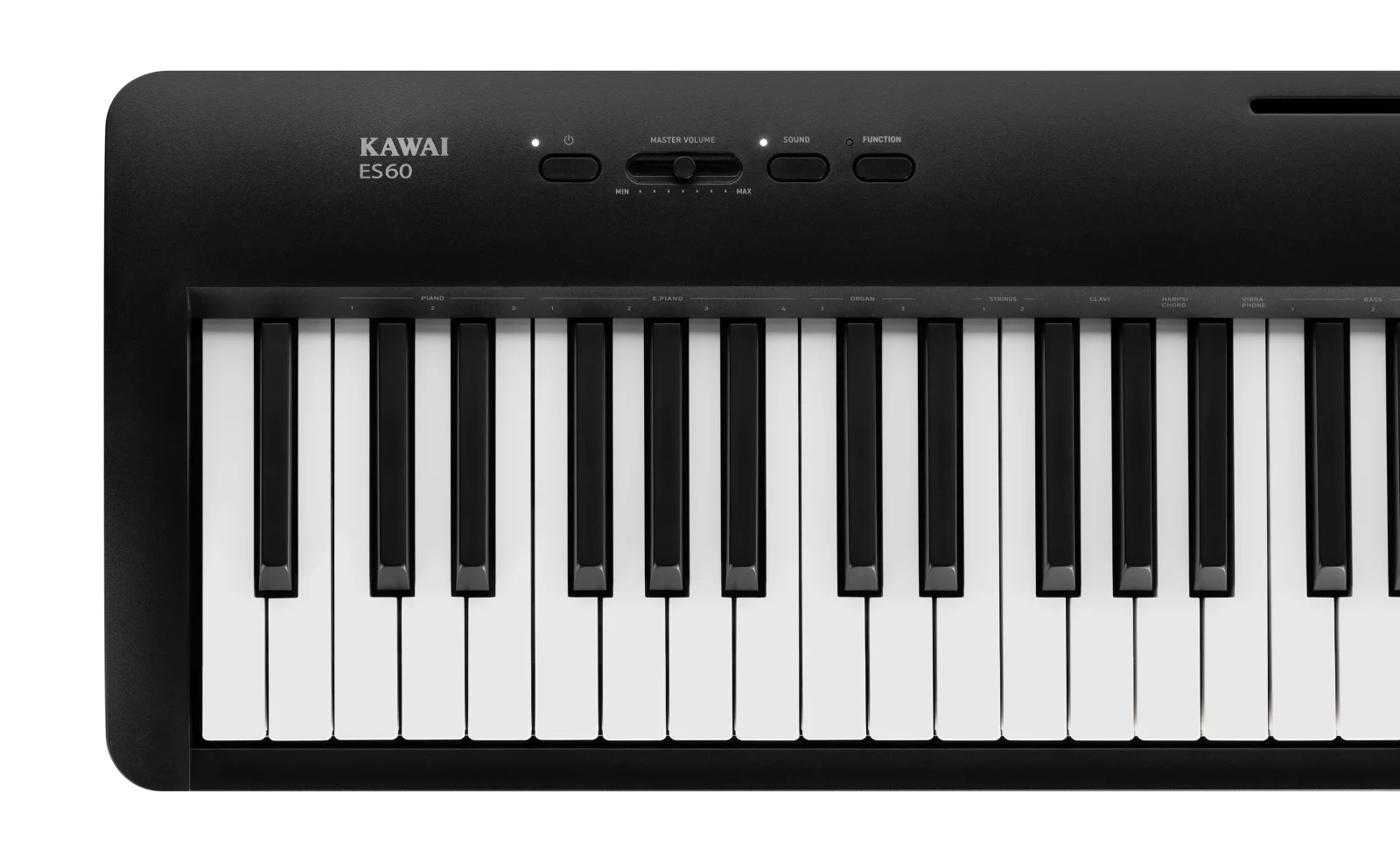
Kawai ES60 Review (2026): Grand Tone in a Portable Body
A look at the Kawai ES60 portable digital piano: its Shigeru Kawai SK-EX sound, Responsive Hammer Lite keys, line outs, and where reviewers say it falls short.
Published Oct 25, 2026Best Digital Pianos for Beginners 2026: Real Touch at Home
Five beginner-friendly digital pianos from Kawai, Casio, Roland and Yamaha, compared on key action, polyphony, portability and connectivity, with a clear pick for each kind of learner.
Published Oct 25, 2026