DJI Mini 5 Pro vs DJI Neo (2026): Camera vs Simplicity
The DJI Mini 5 Pro is the better drone for image quality, safety sensing and flight time. The DJI Neo wins on price, weight and ease of use.
Head-to-head comparison · Research-based · Affiliate links
We earn a commission from qualifying purchases made through our links, at no extra cost to you. It never decides our picks. As an Amazon Associate I earn from qualifying purchases. How we make money
DJI Mini 5 Pro vs DJI Neo: which one should you buy?
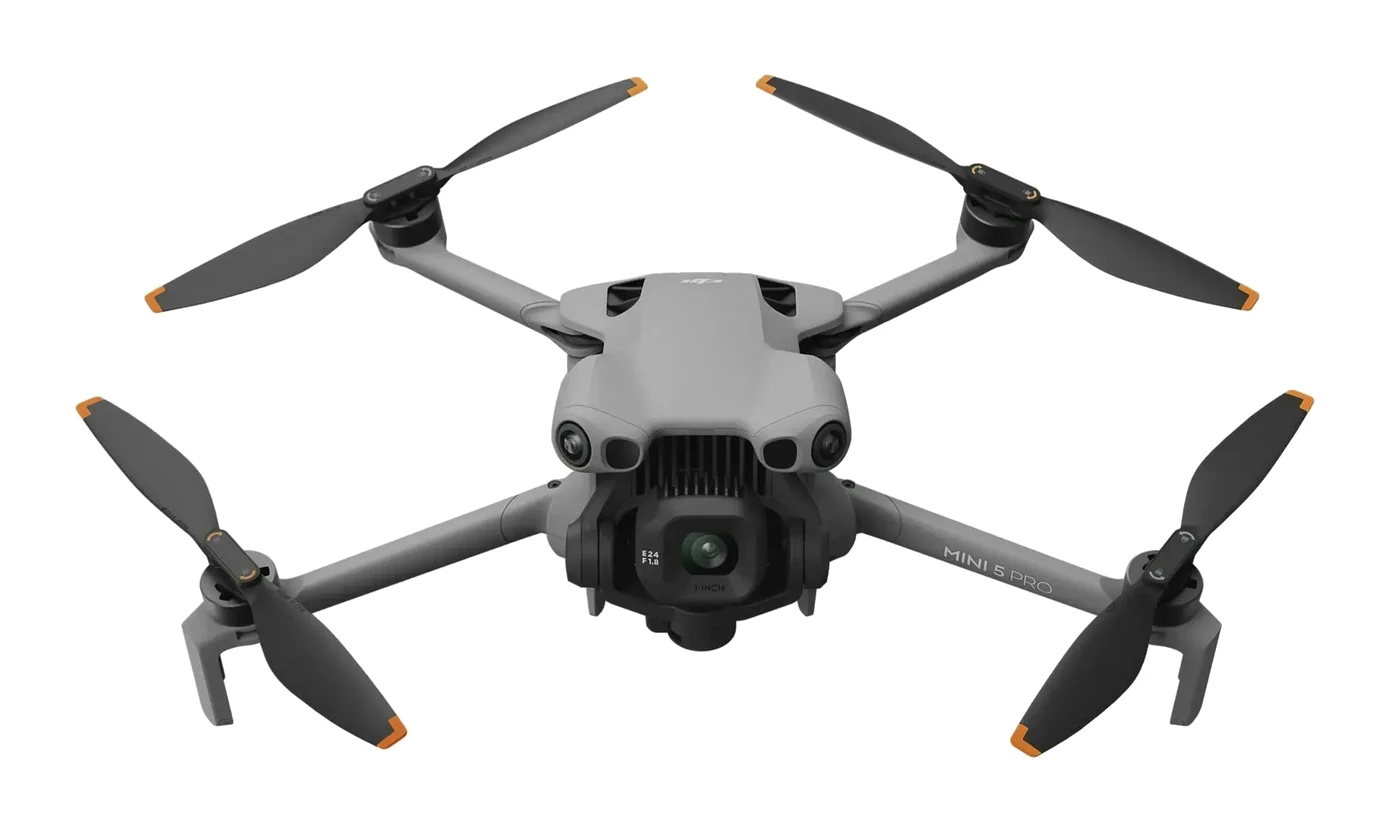
Best for: Creators wanting top image quality and safer, longer flights
The DJI Mini 5 Pro is the drone most buyers should pick in the dji mini 5 pro vs dji neo matchup, because its 1-inch camera, obstacle sensing and longer flights are a clear step up. The DJI Neo is the better choice if you want a cheap, 135 g, palm-launch flyer for casual clips and don't care about top image quality.
These are two very different drones from the same maker. One is the premium, camera-first option. The other is the budget, beginner-first one. Here is where the differences matter.
DJI Mini 5 Pro vs DJI Neo: camera and image quality
This is the widest gap between them. The Mini 5 Pro has a 50 MP, 1-inch CMOS sensor behind a 24 mm equivalent, f/1.8 lens with an 84° field of view. It records 4K up to 120 fps and 1080p up to 240 fps, so slow motion is a real option. It also offers 10-bit D-Log M and HLG colour profiles, which give more room for colour grading. Reviewers praise the clean low-light results from the large sensor and fast lens.
The Neo uses a 1/2-inch sensor with an f/2.8 lens and a 117.6° field of view. It shoots 4K at 30fps with electronic stabilisation, or 4K 4:3 at 30fps with stabilisation off, and tops out at 1080p up to 60fps for slower footage. Photos are 12 MP (4000×3000), and a common criticism is that they are JPEG-only. Reviewers describe the image quality as average and say it struggles in low light.
The gimbal widens the gap further. The Mini 5 Pro has a 3-axis gimbal with 225° of roll, which allows true vertical shooting and creative angles. The Neo has a single-axis mechanical (tilt) gimbal.
Winner: DJI Mini 5 Pro, for anyone who cares how the footage looks. The Neo is fine for casual social clips, but it is a different tier of camera.
Flight time and battery
The Mini 5 Pro is rated for up to 36 min on the standard battery (2788 mAh, 19.52 Wh). The Intelligent Flight Battery Plus (4680 mAh, 33.51 Wh) extends that to 52 min. Reviewers note that real-world flight time is typically shorter than advertised, so treat those figures as best-case.
The Neo's battery is 1435 mAh (10.5 Wh), good for approx. 18 mins, or approx. 17 mins with Propeller Guards fitted. The battery is swappable, which helps longer sessions, but reviewers still flag short battery life as a drawback. The Neo also has no microSD slot, only 22GB of internal storage. The Mini 5 Pro has 42GB built in plus a microSD slot.
Winner: DJI Mini 5 Pro, with roughly double the rated flight time on the standard battery and an option to go further.
Range, wind and speed
The Mini 5 Pro uses O4+ video transmission with a maximum range of 20 km (FCC). Its wind resistance is 12 m/s, its top speed is 18 m/s in S Mode (19 m/s with Battery Plus), and its maximum takeoff altitude is 6000 m.
The Neo's maximum flight distance is 7 km. Its wind resistance is 8 m/s (Level 4), and its top speed is 16 m/s in Manual mode, dropping to 8 m/s in Sport mode. In practice, few casual flyers will use 20 km of range. But the extra wind resistance matters if you shoot outdoors in less-than-calm conditions, and the Mini 5 Pro handles that better.
Winner: DJI Mini 5 Pro, particularly for outdoor flying in the wind.
Safety and obstacle avoidance
The two drones take different approaches to safety. The Mini 5 Pro has forward-facing LiDAR plus omnidirectional sensing, and reviewers highlight that this helps avoid obstacles, including at night. It also has upgraded ActiveTrack 360° subject tracking.
The Neo has no obstacle avoidance. Instead it relies on full-coverage propeller guards, which make flying safer and make indoor flights more realistic. With the guards fitted, rated flight time is approx. 17 mins. The guards cost about a minute of rated flight time (approx. 17 mins versus approx. 18 mins without), and they are not a substitute for obstacle sensing.
Winner: DJI Mini 5 Pro for avoiding crashes. The Neo takes this round only for the simplest indoor use, where the guards are the point.
Ease of use, size and regulations
This is where the Neo fights back. At approx. 135 g, it is palm-sized and exempt from US drone registration. It takes off and lands from your palm with no controller, and you can fly it with the DJI Fly app, voice commands, the RC-N3 controller or FPV goggles. Subject tracking and QuickShots modes make it easy to get a usable clip without piloting skills. Reviewers repeatedly call it very easy for beginners to fly.
The Mini 5 Pro is still very portable. It folds to 157×95×68 mm (without propellers) and weighs 249.9 g ± 4 g at takeoff with the standard battery. But a common criticism is that real takeoff weight can creep over 250g, which can complicate regulations depending on where you fly. It is simply a more involved drone than the Neo, with a premium price to match.
Winner: DJI Neo, for beginners and anyone who wants the simplest, lightest, cheapest way to get a flying camera.
What experts say
The published scores favour the Mini 5 Pro clearly. It averages 9.7 out of 10, built from 5/5 from TechRadar, 5/5 from Digital Camera World, 5/5 from Trusted Reviews and 8.8/10 from Digital Reg. Reviewers praise the large sensor, the 4K/120fps slow motion with D-Log M and HLG profiles, the obstacle sensing, the flight time and the 225° gimbal roll. The recurring complaints are the premium price, the takeoff weight creeping over 250g, and real-world flight time falling short of the claims. It is recommended in 1 expert buying guide.
The Neo averages 7.7 out of 10: 4/5 from TechRadar, 4.5/5 from Amateur Photographer, 4/5 from Trusted Reviews and 58/100 from TechGearLab. Reviewers praise how easy it is to fly, the palm takeoff and landing, the 135 g registration-exempt body, the budget route to stabilised 4K video, and the propeller guards. Criticisms include average image quality that struggles in low light, no obstacle avoidance, a single-axis gimbal, 4K capped at 30fps, JPEG-only photos, short battery life and no microSD slot. It is recommended in 3 expert buying guides.
Choose the DJI Mini 5 Pro if…
Best for: Creators wanting top image quality and safer, longer flights
Choose the Mini 5 Pro over the Neo if image quality, obstacle avoidance and flight time matter more than price. It suits serious hobbyists and creators who want a high-end camera in a very portable drone.
Read our full DJI Mini 5 Pro review →- Capacity
- 2788 mAh (19.52 Wh) standard battery; 4680 mAh (33.51 Wh) Plus battery
- Range
- 20 km
- Weight
- 249.9 g ± 4 g (takeoff weight, standard battery)
- Dimensions
- 157×95×68 mm folded (without propellers); 304×380×91 mm unfolded (with propellers)
- Storage
- 42 GB
- Gimbal
- 3-axis, 225° roll rotation
Reasons to buy
- 1-inch 50MP sensor with f/1.8 lens gives clean low-light shots
- 4K/120fps slow motion plus 10-bit D-Log M and HLG profiles
- LiDAR and omnidirectional sensing help avoid obstacles, including at night
- Up to 36 min flight time, or 52 min with Plus battery
- 225° gimbal roll enables true vertical shooting
Reasons to avoid
- Premium price compared with entry-level Mini drones
- Real takeoff weight can creep over 250g, complicating regulations
- Real-world flight time is typically shorter than advertised
- Tom's Guide
- 10.0
- Trusted Reviews
- 10.0
- TechRadar
- 10.0
- Digital Camera World
- 10.0
- Drone Authority
- 9.2
- Digital Reg
- 8.8
Choose the Mini 5 Pro if image quality is the point of buying a drone. The 1-inch 50 MP sensor, 4K/120fps slow motion, D-Log M and HLG profiles and 225° gimbal roll suit creators and serious hobbyists. It is also the safer, longer-flying option, with LiDAR and omnidirectional sensing, up to 36 min of flight time (52 min with the Plus battery) and 20 km of range. Accept that it costs noticeably more and that you should check the takeoff weight against your local rules.
Choose the DJI Neo if…
Best for: Beginners wanting a cheap, simple, controller-free flying camera
Choose the Neo over the Mini 5 Pro if you want a cheap, simple, lightweight drone for casual selfie-style clips. It's the better pick for beginners and anyone who values ease of use and low cost over camera quality.
Read our full DJI Neo review →- Capacity
- 1435 mAh (10.5 Wh)
- Range
- 10 km (FCC), 6 km (CE)
- Weight
- Approx. 135 g
- Dimensions
- 130×157×48.5 mm (L×W×H)
- Storage
- 22 GB (no microSD slot)
- Gimbal
- Single-axis mechanical (tilt)
Reasons to buy
- Very easy for beginners to fly
- Takes off and lands from your palm, no controller needed
- At 135 g it is exempt from US drone registration
- Budget-friendly way to get 4K stabilized video
- Full propeller guards add safety, including indoor flying
Reasons to avoid
- Image quality is average and struggles in low light
- No obstacle avoidance and only a single-axis gimbal
- 4K capped at 30fps, with JPEG-only photos
- Short battery life and no microSD slot
- TechRadar
- 8.0
- Gizmodo
- 9.0
- Tom's Guide
- 9.0
- Space.com
- 8.0
- Amateur Photographer
- 9.0
- Stuff
- 8.0
- Engadget
- 9.2
- Drone Authority
- 8.1
- SlashGear
- 9.0
- Trusted Reviews
- 8.0
- TechGearLab
- 5.8
Choose the Neo if you want a cheap, simple drone for casual selfie-style clips. It is the budget option, takes off from your palm without a controller, and its 135 g body is exempt from US drone registration. The full propeller guards make it a sensible first drone, including for indoor flying. Be ready to live with average low-light footage, no obstacle avoidance, a single-axis gimbal and short flights.
Compare our picks side by side
The specs most of our picks share, from each maker’s spec page (— = not published). Expert score = the average of published expert reviews, which rate each product for its price. Scroll sideways on small screens.
| Spec | DJI Mini 5 Pro | DJI Neo |
|---|---|---|
| Best for | Our Pick | The Alternative |
| Expert score | 9.7 | 8.3 |
| Price vs. these picks | Higher | Lower |
| Capacity | 2788 mAh (19.52 Wh) standard battery; 4680 mAh (33.51 Wh) Plus battery | 1435 mAh (10.5 Wh) |
| Range | 20 km | 10 km (FCC), 6 km (CE) |
| Weight | 249.9 g ± 4 g (takeoff weight, standard battery) | Approx. 135 g |
| Dimensions | 157×95×68 mm folded (without propellers); 304×380×91 mm unfolded (with propellers) | 130×157×48.5 mm (L×W×H) |
| Storage | 42 GB | 22 GB (no microSD slot) |
| Gimbal | 3-axis, 225° roll rotation | Single-axis mechanical (tilt) |
| Max Range | 20 km (O4+, FCC) | 7 km (Max Flight Distance) |
| Max Speed | 18 m/s (S Mode); 19 m/s with Battery Plus | 16 m/s (Manual mode); 8 m/s (Sport mode) |
| Where to buy | View on Amazon | View on Amazon |
The verdict
For most buyers who want a camera drone they will keep using, the Mini 5 Pro is the stronger choice. It leads on image quality, safety sensing, flight time, range and wind resistance, and reviewers score it far higher. The Neo is not a worse drone for its purpose. It is a far cheaper, lighter and simpler one, and it is the right pick if ease of use and low cost matter more than footage quality.
Ready to buy?
 Our PickDJI Mini 5 ProView on Amazon
 The AlternativeDJI NeoView on Amazon
Related buying guides
- DJI Neo 2 Review (2026): A Palm-Launch Drone for Beginners
- DJI Flip Review (2026): A Safer Drone for Vloggers
- Best Drone for Beginners 2026: Five DJI and Potensic Picks
- Canon EOS R100 vs Canon EOS R50 (2026): Budget or Video?
- Best 65-Inch TV 2026: OLED and Mini LED for Gaming
- GoPro HERO13 Black vs Insta360 Ace Pro 2 (2026)
Frequently asked questions
Is the DJI Mini 5 Pro better than the DJI Neo?
The DJI Mini 5 Pro is better on camera quality, obstacle avoidance, flight time, range and wind resistance, and it averages 9.7/10 from expert reviews against 7.7/10 for the Neo. The Neo is the better pick only if you want a cheap, simple, lightweight drone for casual clips.
Which has longer flight time, the DJI Mini 5 Pro or the DJI Neo?
The DJI Mini 5 Pro flies longer, rated at up to 36 min on the standard battery or 52 min with the Intelligent Flight Battery Plus. The DJI Neo is rated at approx. 18 mins, or approx. 17 mins with Propeller Guards. Reviewers note the Mini 5 Pro's real-world time is typically shorter than advertised.
Does the DJI Neo have obstacle avoidance?
No. The DJI Neo has no obstacle avoidance, and reviewers list this as a drawback. It relies on full-coverage propeller guards for safety. The DJI Mini 5 Pro has forward-facing LiDAR plus omnidirectional sensing, including at night.
Which is better for beginners, the DJI Mini 5 Pro or the DJI Neo?
The DJI Neo is the easier starting point. It takes off and lands from your palm with no controller, weighs approx. 135 g and has full propeller guards. Reviewers call it very easy for beginners to fly. The Mini 5 Pro is more capable but costs more and is a more involved drone.
Which shoots better video, the DJI Mini 5 Pro or the DJI Neo?
The DJI Mini 5 Pro shoots better video. It has a 1-inch 50 MP sensor, 4K up to 120 fps and 10-bit D-Log M and HLG profiles. The DJI Neo has a 1/2-inch sensor and records 4K at 30fps, and reviewers say it struggles in low light.
Does the DJI Neo have a microSD slot?
No. The DJI Neo has 22GB of internal storage and no microSD slot. The DJI Mini 5 Pro has 42GB of built-in storage plus a microSD slot.
Sources
Specs are taken from the manufacturers' official pages; expert recommendations from the publications below.
- DJI Mini 5 Pro: dji.com, jvn.photo, pix-pro.com, oscarliang.com
- DJI Neo: dji.com, en.wikipedia.org
More buying guides
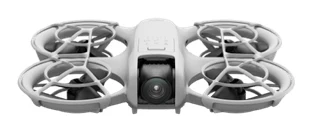
DJI Neo Review (2026): Palm-Launch Drone for Beginners
A palm-sized, fully guarded drone that launches from your hand and films itself. Here is what the DJI Neo offers beginners, and where it falls short.
Published Oct 26, 2026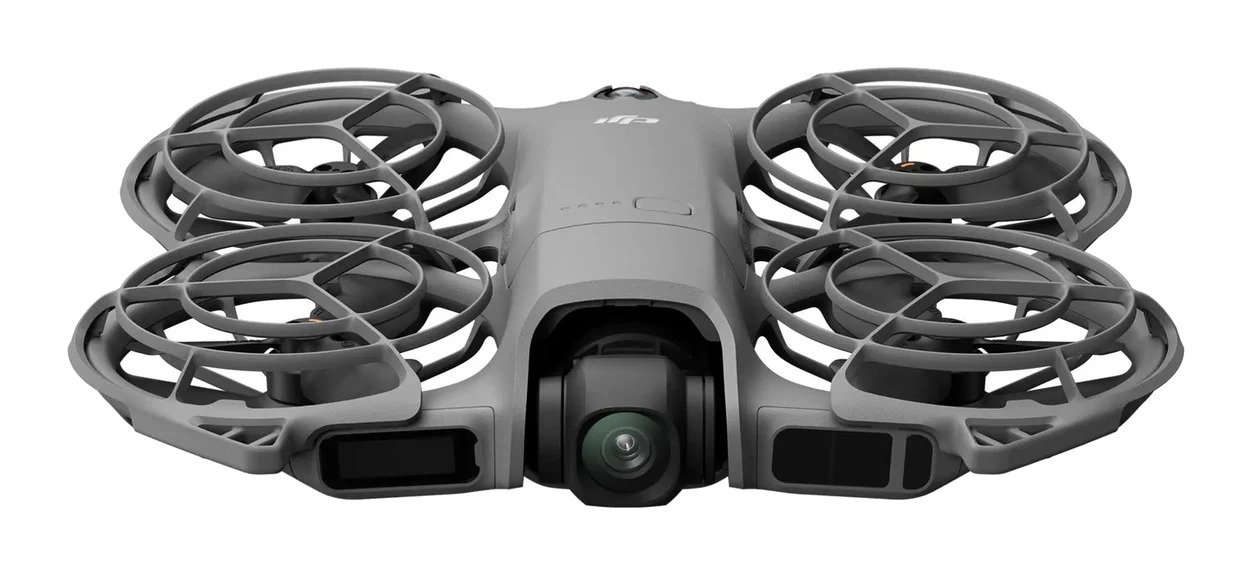
DJI Neo 2 Review (2026): A Palm-Launch Drone for Beginners
Our DJI Neo 2 review covers palm takeoff, gesture control, 4K/60fps video and obstacle sensing, plus the limits: 19-minute flights, a small sensor and no microSD slot.
Published Oct 19, 2026DJI Mini 5 Pro Review (2026): Big Sensor, Tiny Body
A 1-inch 50MP sensor, forward LiDAR and a 225° gimbal in a drone that folds down small. Here is what the DJI Mini 5 Pro offers, where reviewers see limits, and who it suits.
Published Oct 22, 2026