Canon EOS R100 vs Canon EOS R50 (2026): Budget or Video?
The Canon EOS R50 is the better camera for most buyers, but the cheaper EOS R100 still makes sense for casual stills. Here is how they differ on autofocus, video, screen and battery.
Head-to-head comparison · Research-based · Affiliate links
We earn a commission from qualifying purchases made through our links, at no extra cost to you. It never decides our picks. As an Amazon Associate I earn from qualifying purchases. How we make money
Canon EOS R50 vs Canon EOS R100: which one should you buy?
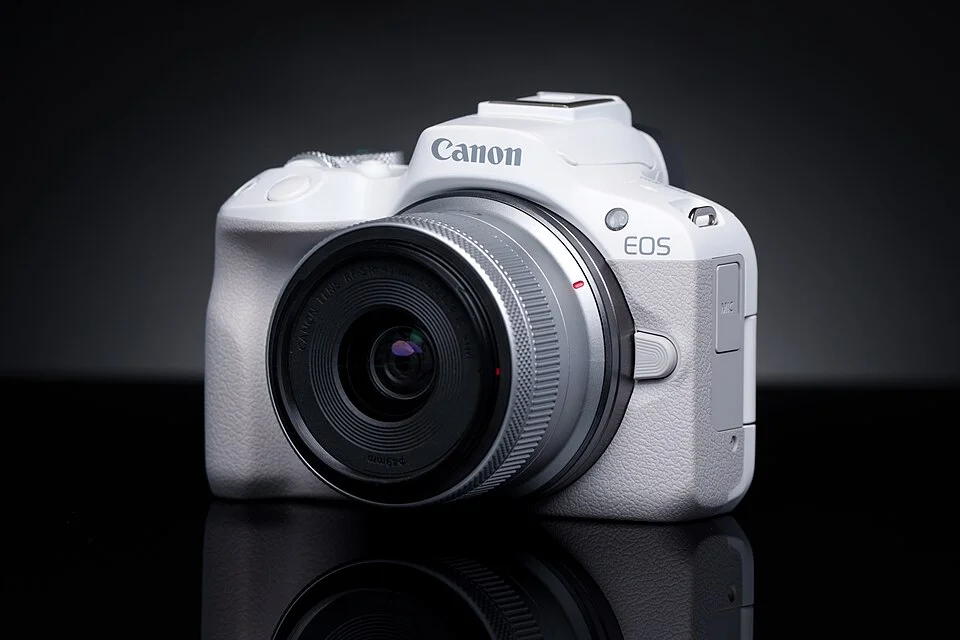
Best for: Vloggers and hobbyists wanting strong autofocus and quality 4K video
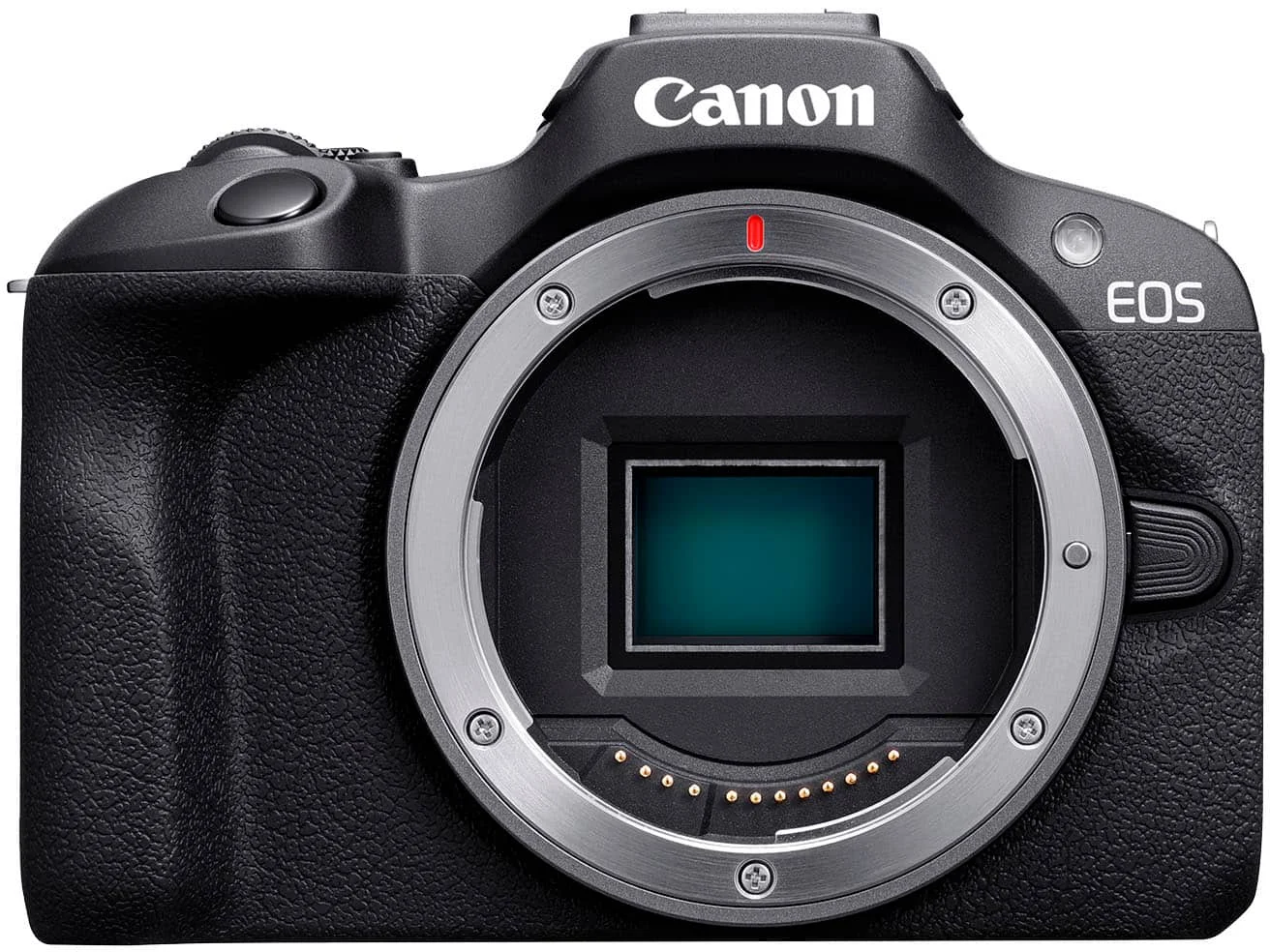
Best for: Budget beginners mainly shooting stills who want a simple camera
In the Canon EOS R100 vs Canon EOS R50 matchup, most buyers should pick the EOS R50: it has stronger autofocus, uncropped 4K video, faster bursts and a flip-out touchscreen. The EOS R100 is the better choice if budget is the priority and you mainly shoot casual stills with a light, simple camera.
Both are small APS-C mirrorless cameras with Canon's RF mount, a roughly 24-megapixel sensor, an OLED viewfinder and built-in Wi-Fi and Bluetooth. The R50 is the premium option here and the R100 the budget one, and the main differences are in autofocus, video and handling, while both use roughly 24-megapixel APS-C sensors.
Autofocus and burst speed
This is where the two cameras separate most clearly. The EOS R50 uses Dual Pixel CMOS AF II with people, animal and vehicle subject detection, covering up to 651 zones for stills with 4503 selectable positions. It is paired with the DIGIC X processor and shoots 12 fps with electronic first curtain, or 15 fps with the electronic shutter.
The EOS R100 uses the older Dual Pixel CMOS AF with face and eye detection across 143 zones for stills. Continuous shooting tops out at 6.5 fps, dropping to 3.5 fps with continuous AF, and the camera runs a DIGIC 8 processor. Reviewers describe its face and eye-detection autofocus as reliable for stills, but they also criticise the slow burst and small buffer, and note that it has no animal or vehicle detection.
For kids, pets, cars or any subject that moves, the R50 is the clear winner. If your photography is mostly posed or static, the R100's autofocus is described as dependable enough, and you may never need the extra speed.
The R50 isn't free of limits, though. Reviewers point to a small buffer and a UHS-I card slot that limit continuous RAW shooting.
Video: 4K quality and frame rates
Video is the second big gap. The EOS R50 records uncropped 4K, oversampled from 6K, at up to 30 fps (the spec sheet lists 4K UHD up to 29.97 fps). It also offers 1080p up to 119.88 fps for slow motion. It has a 3.5mm microphone jack and a micro HDMI port, and it supports UVC/UAC webcam and streaming use.
The EOS R100 offers 4K (cropped) at up to 24 fps and Full HD at up to 60 fps. Reviewers call the 4K heavily cropped and limited to 24 fps. Canon's listing for the R100 doesn't mention a microphone jack or webcam and streaming support, so check before buying if you need either.
The R50's 4K isn't perfect. Reviewers report that it can suffer from overheating and rolling shutter. Even so, for vlogging, YouTube or family video, the R50 is the much stronger option. The R100's video is better treated as a bonus than a reason to buy.
Screen, viewfinder and handling
The EOS R50 has a 3.0-inch fully articulating touchscreen of approx. 1.62 million dots, which suits vlogging and selfies. The EOS R100 has a 3.0-inch screen of approx. 1.04 million dots that is fixed and non-touch, and reviewers list that as a drawback. If you want to frame yourself or shoot from awkward angles, the R50's screen is a real advantage.
The viewfinders are on par on paper: both use a 0.39-inch OLED EVF of approx. 2.36 million dots. The R50 lists 100% coverage, a figure the R100's listing doesn't give.
On beginner-friendliness, the R100 leans into simplicity. It includes Creative Assist and Creative Filters for smartphone-style shooting, and reviewers praise its simple operation. It is also billed as the smallest and lightest camera in the EOS R series, at 356 g with battery and card. The R50 is still compact and light at 375 g with battery and card (328 g body only), so the difference in carry weight is small.
Battery life and price
The R100 uses an LP-E17 battery and is rated at 430 shots with the LCD or 340 shots with the EVF (CIPA, per DPReview). The R50 is rated from 230 shots (EVF Smooth) to 440 shots (LCD Power Saving). These figures come from different testing modes, so they aren't perfectly like-for-like. The pattern is still clear: the R50's EVF-heavy figure is the lowest on either camera, and reviewers flag it as a weakness.
If you shoot a lot through the viewfinder and want to carry fewer spare batteries, the R100 has the edge on endurance. With the LCD, the two are close.
On price, the R100 is the budget option and the cheapest way into Canon's RF-mount system, according to reviewers. The R50 costs more and its verdict says the extra spend buys a real step up in autofocus, video and speed. Reviewers do note that few native RF-S lenses are available for the R50, so check your lens plans on either camera.
What experts say
Reviewers rate the EOS R50 higher overall. Its published scores are DPReview 84/100, Tom's Guide 4/5, TechRadar 3.5/5 and Photography Blog 4.5/5, which averages 8.1/10. Reviewers consistently praise the subject-detecting autofocus, the uncropped 4K, the fast bursts, the articulating touchscreen and the compact body with webcam support. The common criticisms are the limited native RF-S lens range, the small buffer and UHS-I slot, overheating and rolling shutter in 4K, and the short EVF battery life.
The EOS R100 averages 6.3/10 from three reviews: Pocket-lint 4/5, ePHOTOzine 3.5/5 and The Phoblographer 2/5. Praise centres on its low entry price, its small and light body, reliable face and eye-detection autofocus for stills, good battery life and easy operation. Criticism focuses on the fixed non-touch screen, the cropped 24 fps 4K, the slow burst with a small buffer, and the older processor without animal or vehicle detection. The spread between scores shows that opinion on the R100 is more divided than on the R50.
Choose the Canon EOS R100 if…
Best for: Budget beginners mainly shooting stills who want a simple camera
Choose the EOS R100 over the R50 if budget is the priority and you mainly shoot casual stills. It gives you a light, simple camera with good image quality and a route into the RF system, without paying for video and speed features you may not use.
Read our full Canon EOS R100 review →- Battery life
- LP-E17; 430 shots with LCD / 340 shots with EVF
- Weight
- 356 g (with battery and card)
- Display
- 3.0-inch, approx. 1.04 million dots, fixed, non-touch
- Resolution
- Approx. 24.1 megapixels (6000 x 4000)
- Processor
- DIGIC 8
- Video
- 4K (cropped) up to 24 fps; Full HD up to 60 fps
Reasons to buy
- Cheapest way into Canon's RF-mount system
- Smallest and lightest camera in the EOS R series
- Reliable face and eye-detection autofocus for stills
- Good battery life, up to 430 shots with the LCD
- Simple, beginner-friendly operation with Creative Assist
Reasons to avoid
- Fixed, non-touch rear screen
- 4K is heavily cropped and limited to 24 fps
- Slow 6.5 fps burst and small buffer
- Older DIGIC 8 processor, no animal or vehicle detection
- DPReview
- 7.9
- Digital Camera World
- 9.0
- Photography Blog
- 7.0
- The Phoblographer
- 4.0
- TechRadar
- 8.0
- Pocket-lint
- 8.0
- ePHOTOzine
- 7.0
Choose the R100 if you want the cheapest route into Canon's RF system and mostly shoot casual stills. It is light, simple to use and offers reliable face and eye detection, and its battery rating is decent at 430 shots with the LCD. It suits beginners who would rather not pay for video and speed features they may never use.
Choose the Canon EOS R50 if…
Best for: Vloggers and hobbyists wanting strong autofocus and quality 4K video
Choose the EOS R50 over the R100 if you shoot video, vlog, or photograph moving subjects. Its stronger autofocus, uncropped 4K, faster bursts and articulating touchscreen are a real step up for the extra cost.
Read our full Canon EOS R50 review →- Battery life
- 230 shots (EVF Smooth) to 440 shots (LCD Power Saving)
- Weight
- Approx. 375 g (0.83 lbs) with battery and card; 328 g body only
- Display
- 3.0-inch fully articulating touchscreen, approx. 1.62 million dots
- Resolution
- 24.2 megapixels (APS-C, 22.3 x 14.9 mm)
- Processor
- DIGIC X
- Video
- 4K UHD up to 29.97 fps, 1080p up to 119.88 fps
Reasons to buy
- Dual Pixel CMOS AF II with people, animal and vehicle subject detection
- Uncropped 4K video oversampled from 6K
- 12 fps burst, 15 fps with electronic shutter
- Fully articulating touchscreen suits vlogging and selfies
- Compact 375 g body with webcam and streaming support
Reasons to avoid
- Few native RF-S lenses available
- Small buffer and UHS-I slot limit continuous RAW shooting
- 4K video can suffer overheating and rolling shutter
- Battery life is as low as 230 shots with the EVF
- DPReview
- 8.4
- Tom's Guide
- 8.0
- TechRadar
- 7.0
- Photography Blog
- 9.0
- ePHOTOzine
- 8.0
Choose the R50 if you shoot video, vlog or photograph anything that moves. Its subject-detecting autofocus, uncropped 4K, 12 fps and 15 fps bursts, and flip-out touchscreen are all features reviewers praise. It also offers webcam and streaming support and a microphone jack. Just be aware of the battery drop when you use the EVF and the limited native lens range.
Compare our picks side by side
The specs most of our picks share, from each maker’s spec page (— = not published). Expert score = the average of published expert reviews, which rate each product for its price. Scroll sideways on small screens.
| Spec | Canon EOS R50 | Canon EOS R100 |
|---|---|---|
| Best for | Our Pick | The Alternative |
| Expert score | 8.1 | 7.3 |
| Price vs. these picks | Higher | Lower |
| Battery life | 230 shots (EVF Smooth) to 440 shots (LCD Power Saving) | LP-E17; 430 shots with LCD / 340 shots with EVF |
| Weight | Approx. 375 g (0.83 lbs) with battery and card; 328 g body only | 356 g (with battery and card) |
| Display | 3.0-inch fully articulating touchscreen, approx. 1.62 million dots | 3.0-inch, approx. 1.04 million dots, fixed, non-touch |
| Resolution | 24.2 megapixels (APS-C, 22.3 x 14.9 mm) | Approx. 24.1 megapixels (6000 x 4000) |
| Processor | DIGIC X | DIGIC 8 |
| Video | 4K UHD up to 29.97 fps, 1080p up to 119.88 fps | 4K (cropped) up to 24 fps; Full HD up to 60 fps |
| Sensor | 24.2MP APS-C CMOS (22.3 x 14.9 mm) | APS-C CMOS, 22.3 x 14.9 mm |
| Autofocus | Dual Pixel CMOS AF II, up to 651 zones (stills), 4503 selectable positions | Dual Pixel CMOS AF, 143 zones (stills), face/eye detection |
| Where to buy | View on Amazon | View on Amazon |
The verdict
The Canon EOS R50 is the one to buy if you shoot video, vlog or photograph moving subjects, because its stronger autofocus, uncropped 4K, faster bursts and articulating touchscreen are a real step up for the extra cost. The EOS R100 stays a sensible pick for budget buyers who mainly shoot still photos and want a small, easy camera with the same RF mount and a similar sensor.
Ready to buy?
 Our PickCanon EOS R50View on Amazon
 The AlternativeCanon EOS R100View on Amazon
Related buying guides
- Best Digital Camera for Beginners 2026: Compact & Easy
- Best High-End Cameras 2026: Resolution, Speed & Video
- Fujifilm X-M5 Review (2026): Pocket Camera, Big Video Specs
- Best Instant Cameras 2026: Easy Snaps to Creative Control
- Nikon Z f Review (2026): Is Retro Worth the Quirks?
- Sony a7CR Review (2026): 61MP in a Small Body
Frequently asked questions
Is the Canon EOS R50 better than the EOS R100?
Yes, for most buyers the Canon EOS R50 is better. It has subject-detecting autofocus, uncropped 4K video, 12 fps bursts and a fully articulating touchscreen, and reviewers score it higher (8.1/10 against 6.3/10). The EOS R100 is the better pick only if budget and simple stills shooting come first.
Which is better for video, the EOS R100 or the EOS R50?
The Canon EOS R50 is clearly better for video. It records uncropped 4K oversampled from 6K at up to 30 fps and 1080p up to 119.88 fps. The EOS R100 offers cropped 4K at up to 24 fps and Full HD at up to 60 fps.
Does the EOS R100 or EOS R50 have better battery life?
The Canon EOS R100 is more consistent. It is rated at 430 shots with the LCD and 340 shots with the EVF. The EOS R50 is rated from 230 shots (EVF Smooth) to 440 shots (LCD Power Saving), so it runs down faster when you use the viewfinder.
Does the Canon EOS R100 have a touchscreen?
No. The Canon EOS R100 has a 3.0-inch screen that is fixed and non-touch. The Canon EOS R50 has a 3.0-inch fully articulating touchscreen, which is better for vlogging and selfies.
Is the EOS R100 or EOS R50 better for beginners?
It depends on the budget. The Canon EOS R100 is the cheaper, simpler option with Creative Assist and Creative Filters, and suits beginners shooting casual stills. The Canon EOS R50 costs more but has stronger autofocus and video, so it gives beginners more room to grow.
Do the EOS R100 and EOS R50 use the same lenses?
Both cameras are in Canon's RF-mount system. The Canon EOS R50's spec sheet lists RF-S lenses, plus EF/EF-S lenses via an adapter. The EOS R100 is described as the cheapest way into the RF system, though the listing doesn't detail adapter support. Reviewers note that few native RF-S lenses are available for the R50.
Sources
Specs are taken from the manufacturers' official pages; expert recommendations from the publications below.
- Canon EOS R50: usa.canon.com, en.wikipedia.org, cam.start.canon, downloads.canon.com
- Canon EOS R100: usa.canon.com, dpreview.com, bhphotovideo.com, ephotozine.com
More buying guides
Canon EOS R50 Review (2026): Small Body, Smart Autofocus
Our Canon EOS R50 review covers its compact body, subject-detecting autofocus and uncropped 4K video, and the handling and lens limits that reviewers flag.
Published Oct 19, 2026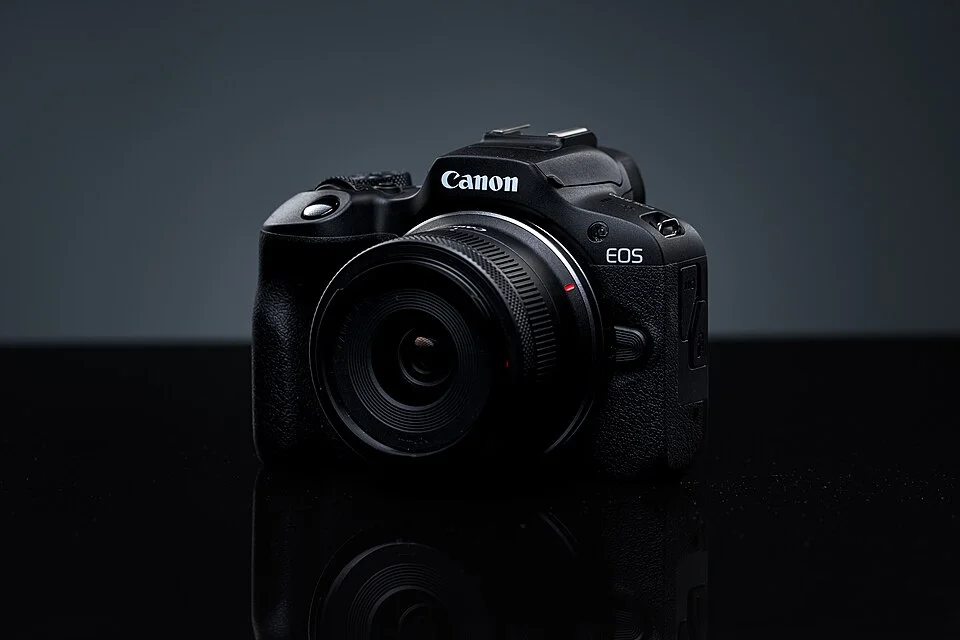
Canon EOS R100 Review (2026): Easy Entry, Easy to Outgrow
A small, light entry to Canon's RF mirrorless system with image quality that impresses beginners, but video, burst speed and handling show its age.
Published Oct 27, 2026Best Digital Camera for Beginners 2026: Compact & Easy
Five beginner-friendly cameras from Canon, Fujifilm, Nikon and Olympus, compared on sensor, weight, screen, autofocus and video, with expert recommendation counts.
Published Oct 11, 2026