Garmin eTrex SE vs Garmin eTrex Solar (2026): Solar or AAs?
Garmin eTrex SE vs Garmin eTrex Solar: one runs on swappable AA batteries and costs less, the other adds multi-band GPS and solar top-ups. Here is who should buy which.
Head-to-head comparison · Research-based · Affiliate links
We earn a commission from qualifying purchases made through our links, at no extra cost to you. It never decides our picks. As an Amazon Associate I earn from qualifying purchases. How we make money
Garmin eTrex Solar vs Garmin eTrex SE: which one should you buy?
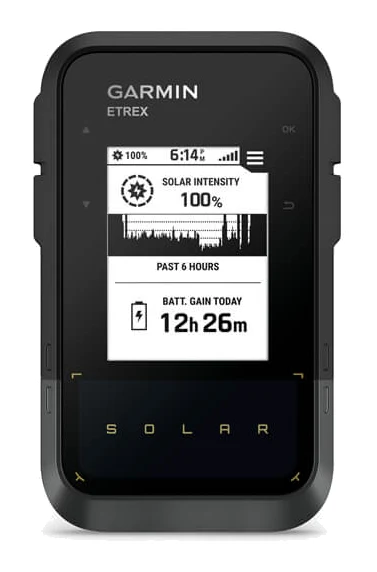
Best for: Long-trip hikers wanting multi-band accuracy and solar top-ups
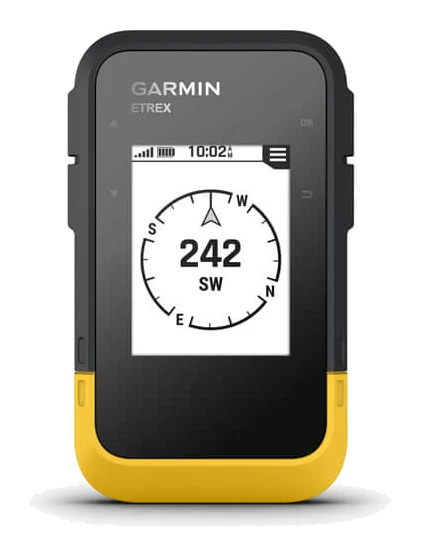
Best for: Budget buyers and geocachers wanting easy battery swaps
If you are weighing the Garmin eTrex SE vs Garmin eTrex Solar, most buyers who can stretch to the premium price should pick the eTrex Solar for its multi-band GPS and its ability to top up from sunlight. The eTrex SE is the better choice if you want the budget option and like the idea of swapping in spare AA batteries on the trail.
On paper these are close relatives. Both have a 2.2-inch transflective monochrome display at 240 x 320 pixels, 28 MB of storage, 1,000 waypoints, Bluetooth pairing with the Garmin Explore app, a USB-C port and an IPX7 water rating. The differences come down to power, satellite tracking and weight.
Power and battery: solar vs AA batteries
This is the biggest split between the two, and it comes down to how you hike.
The eTrex Solar has an internal rechargeable lithium-ion battery charged over USB-C. Garmin says solar charging gives unlimited battery life in sunny conditions of 75,000 lux. Without solar, Garmin quotes up to 200 hours of GPS-only tracking, up to 100 hours with GNSS and multi-band tracking, and up to 1,800 hours in Expedition mode. Reviewers note that the solar gains drop in shade, cloud, tree cover or cold, so treat the "unlimited" figure as a best case for open, sunny terrain.
The eTrex SE runs on two AA batteries, which are not included. Garmin lists 168 hours in standard mode and 1,800 hours in expedition mode. The two models share the 1,800-hour expedition figure. Garmin lists up to 200 hours of GPS-only tracking for the Solar and 168 hours in standard mode for the SE. The practical difference is how you recharge. With the SE you carry spares and swap them in anywhere, with no sun and no cable needed. With the Solar you rely on the built-in battery, a USB-C charger and the sun.
Who wins: the eTrex Solar suits long trips in open country where sunshine is reliable. The eTrex SE suits anyone who wants a simple, swappable power source, particularly in shaded or cold conditions where solar helps less.
GPS accuracy and satellite support
The eTrex Solar uses multi-band GPS, which Garmin lists as giving better accuracy in tough terrain. It also supports GPS, GLONASS, Galileo, QZSS, BeiDou and IRNSS.
The eTrex SE uses multi-GNSS tracking across GPS, GLONASS, Galileo, BeiDou and QZSS. Reviewers say this gives fast lock and solid accuracy. Garmin doesn't list multi-band tracking or IRNSS support for the SE.
The multi-band tracking is the main accuracy upgrade on the Solar. If you regularly hike in difficult terrain, it is a real reason to pay more. If your trips are mostly open trails or geocaching outings, the SE's multi-GNSS setup is described by reviewers as solid enough. Multi-band use also draws more power. Garmin's figure is up to 100 hours in GNSS and multi-band mode, versus up to 200 hours in GPS-only mode.
Who wins: the eTrex Solar, for anyone who prioritises positional accuracy in tough terrain.
Maps, storage and navigation tools
Here the two are almost level, and neither is a mapping device. Both have 28 MB of storage. The eTrex Solar has a basemap showing cities only, and Garmin says you cannot add maps. Reviewers list this, along with the small monochrome screen, as a limit on detailed navigation. The eTrex SE has only a basic basemap and a breadcrumb trail, with no real mapping and no microSD slot.
The SE's spec sheet also gives 50 courses and 200 activities, which the Solar's doesn't list. It also lists TracBack route-back and point-to-point navigation. Garmin's Solar listing doesn't mention TracBack or give course and activity counts. If those tools matter to you, the SE is the one where they are confirmed.
Both work with the Garmin Explore app for trip planning, weather and notifications, and both offer Geocaching Live updates.
Who wins: a draw on mapping. The eTrex SE has the clearer list of navigation tools. Both list a digital compass that gives a heading when standing still, and the Solar's spec sheet adds that it is a tilt-compensated 3-axis compass.
Weight, size and build
The eTrex Solar weighs 5.0 oz (141 g) and measures 2.5" x 4.1" x 1.2". The eTrex SE weighs 5.5 oz (156.5 g) with batteries and measures 2.4" x 4.0" x 1.3". The gap is small, about half an ounce. The SE's weight also includes its two AA batteries. If you carry spares, they add to it.
For the compass, both have a digital compass that gives a heading while you stand still, and the Solar's is listed as a tilt-compensated 3-axis unit. Both are IPX7 water-resistant and charge or connect over USB-C. Garmin lists an operating temperature of -4F to 140F for the Solar and doesn't give one for the SE. Reviewers add that the Solar doesn't come with a mount or carabiner.
Who wins: the eTrex Solar by a narrow margin, for weight and for the stated compass and temperature specs.
What experts say
The eTrex Solar has published scores from two reviews: GearJunkie gave it 7.9 out of 10 and Kit Authority gave it 7.9 out of 10, for an average of 7.9. It also appears in 6 expert buying guides. Reviewers praise the solar charging, the multi-band GPS, the 1,800-hour Expedition mode, the lighter body and the sunlight-readable display. Their common criticisms are the cities-only basemap that cannot be expanded, the small monochrome screen, solar gains dropping in shade, cloud or cold, and the premium price.
The eTrex SE has no published scores from the reviews we draw on, so there is no average to compare. It is recommended in 4 expert buying guides. Reviewers praise the swappable AA batteries, the budget price relative to the solar model, the 1,800-hour expedition mode, the fast lock from multi-GNSS tracking, and the inclusion of TracBack, Geocaching Live and Explore pairing. They criticise the basic mapping, the 28 MB of storage with no microSD slot, the extra weight with batteries, and the fact that AA batteries are not included.
Choose Garmin eTrex Solar if…
Best for: Long-trip hikers wanting multi-band accuracy and solar top-ups
Pick the eTrex Solar over the SE if you want multi-band GPS accuracy and the option to top up the battery from sunlight on long, open-terrain trips. It also suits those who prefer a lighter, rechargeable unit and will pay more for it.
Read our full Garmin eTrex Solar review →- Battery life
- GPS only tracking: up to 200 hours; GNSS and Multi Band Tracking: up to 100 hours; Expedition mode: up to 1,800 hours; Unlimited when used in 75,000 Lux conditions
- Water resistance
- IPX7
- Weight
- 5.0 oz (141 g)
- Dimensions
- 2.5" x 4.1" x 1.2" (6.4 cm x 10.5 cm x 3.1 cm)
- Display
- 2.2" transflective, monochrome, 240 x 320 pixels
- Storage
- 28 MB
Reasons to buy
- Solar charging can give unlimited battery life in strong sunlight
- Multi-band GPS for better accuracy in tough terrain
- Up to 1,800 hours in Expedition mode without solar
- Lighter at 5.0 oz, with rechargeable USB-C battery
- Sunlight-readable 2.2-inch display and tilt-compensated 3-axis compass
Reasons to avoid
- Basemap shows cities only and maps cannot be added
- Small monochrome screen limits detailed navigation
- Solar gains drop in shade, cloud, tree cover or cold
- Premium price tier, and no mount or carabiner included
- GearJunkie
- 7.9
- Elite AI Finds
- 9.0
- Kit Authority
- 7.9
Choose the eTrex Solar if you go on long trips in open, sunny terrain and want multi-band GPS accuracy plus the option to top up the battery from sunlight. It is also the lighter of the two at 5.0 oz and charges over USB-C, so you don't need to buy or carry batteries. Expect to pay the premium price tier and live with a cities-only basemap and a small monochrome screen.
Choose Garmin eTrex SE if…
Best for: Budget buyers and geocachers wanting easy battery swaps
Choose the eTrex SE over the Solar if you want to spend less and like the ease of swapping in spare AA batteries. It is a good starter handheld for geocaching or a phone-backup navigator where multi-band GPS and solar are not essential.
Read our full Garmin eTrex SE review →- Battery life
- 168 hours in standard mode; 1,800 hours in expedition mode
- Water resistance
- IPX7
- Weight
- 5.5 oz (156.5 g) with batteries
- Dimensions
- 2.4" x 4.0" x 1.3" (6.1 x 10.0 x 3.3 cm)
- Display
- 2.2" transflective, monochrome; 240 x 320 pixels
- Storage
- 28 MB
Reasons to buy
- Two swappable AA batteries can be replaced anywhere on the trail
- Budget price tier compared with the solar model
- Up to 1,800 hours in expedition mode
- Multi-GNSS tracking gives fast lock and solid accuracy
- TracBack, Geocaching Live and Garmin Explore pairing included
Reasons to avoid
- Only a basic basemap and breadcrumb trail, no real mapping
- 28 MB storage and no microSD slot
- Heavier at 5.5 oz with batteries
- AA batteries are not included
- GearJunkie
- 6.5
- Bikepacking Gear Reviews
- 8.0
- Outdoor Tech HQ
- 8.7
- Wilderness Experts
- 8.8
Choose the eTrex SE if you want the budget option and like the simplicity of swapping in two AA batteries wherever you are. It is a good fit for geocaching or as a phone-backup navigator, where multi-band GPS and solar charging are not essential. Remember to buy the batteries, since none are included, and accept the 5.5 oz weight with batteries and the basic mapping.
Compare our picks side by side
The specs most of our picks share, from each maker’s spec page (— = not published). Expert score = the average of published expert reviews, which rate each product for its price. Scroll sideways on small screens.
| Spec | Garmin eTrex Solar | Garmin eTrex SE |
|---|---|---|
| Best for | Our Pick | The Alternative |
| Expert score | 8.3 | 8.0 |
| Price vs. these picks | Higher | Lower |
| Battery life | GPS only tracking: up to 200 hours; GNSS and Multi Band Tracking: up to 100 hours; Expedition mode: up to 1,800 hours; Unlimited when used in 75,000 Lux conditions | 168 hours in standard mode; 1,800 hours in expedition mode |
| Water resistance | IPX7 | IPX7 |
| Weight | 5.0 oz (141 g) | 5.5 oz (156.5 g) with batteries |
| Dimensions | 2.5" x 4.1" x 1.2" (6.4 cm x 10.5 cm x 3.1 cm) | 2.4" x 4.0" x 1.3" (6.1 x 10.0 x 3.3 cm) |
| Display | 2.2" transflective, monochrome, 240 x 320 pixels | 2.2" transflective, monochrome; 240 x 320 pixels |
| Storage | 28 MB | 28 MB |
| GPS | Multi-band GPS, GLONASS, Galileo, QZSS, BeiDou, IRNSS | GPS, GLONASS, Galileo, BeiDou, QZSS (multi-GNSS) |
| Battery type | Rechargeable, internal lithium-ion | 2 AA batteries (not included) |
| Where to buy | View on Amazon | View on Amazon |
The verdict
For most buyers who can afford it, the eTrex Solar is the better handheld. It adds multi-band GPS, solar top-ups and a slightly lighter body, and it has the only published expert scores of the pair, averaging 7.9 out of 10. The eTrex SE wins on price and on easy battery swaps. It is the sensible pick for geocachers, casual hikers and anyone who just wants a dependable backup navigator.
Ready to buy?
 Our PickGarmin eTrex SolarView on Amazon
 The AlternativeGarmin eTrex SEView on Amazon
Frequently asked questions
Is the Garmin eTrex Solar better than the eTrex SE?
The Garmin eTrex Solar is better for most hikers who can pay the premium, because it adds multi-band GPS and solar charging. The eTrex SE is the better choice if you want the budget option and swappable AA batteries.
Does the eTrex SE or eTrex Solar have longer battery life?
Both list up to 1,800 hours in Expedition mode, but the eTrex Solar can last unlimited time in 75,000 lux sunlight. The eTrex SE lists 168 hours in standard mode, and you can extend its life by swapping in spare AA batteries.
Does the Garmin eTrex SE have multi-band GPS?
No, Garmin doesn't list multi-band GPS for the eTrex SE. It uses multi-GNSS tracking (GPS, GLONASS, Galileo, BeiDou and QZSS). The eTrex Solar is the model with multi-band GPS.
Which is lighter, the eTrex SE or the eTrex Solar?
The eTrex Solar is lighter at 5.0 oz (141 g). The eTrex SE weighs 5.5 oz (156.5 g) with its two AA batteries installed.
Can you add maps to the eTrex SE or eTrex Solar?
No, neither is built for added maps. The eTrex Solar has a cities-only basemap and Garmin says maps cannot be added. The eTrex SE has a basic basemap and breadcrumb trail, 28 MB of storage and no microSD slot.
Do the eTrex SE and eTrex Solar work with the Garmin Explore app?
Yes, both pair with the Garmin Explore app over Bluetooth for trip planning, weather and notifications. Both also offer Geocaching Live updates.
Sources
Specs are taken from the manufacturers' official pages; expert recommendations from the publications below.
- Garmin eTrex Solar: garmin.com, gearjunkie.com, treelinereview.com, thegpsstore.com
- Garmin eTrex SE: www8.garmin.com, static.garmin.com
More buying guides
Garmin eTrex SE Review (2026): Long-Life Backup GPS
A look at the Garmin eTrex SE: a rugged, button-operated handheld GPS on swappable AA batteries, with the trade-offs of a monochrome screen and a cities-only basemap.
Published Oct 22, 2026Garmin eTrex Solar Review (2026): Sun-Fed Simplicity
The Garmin eTrex Solar is a rugged, button-operated handheld GPS that can top itself up in sunlight. Here is what its specs and expert reviews say about who it suits.
Published Oct 30, 2026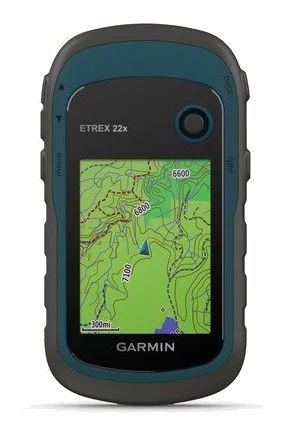
Garmin eTrex 22x Review (2026): Simple, Rugged, Dated?
The Garmin eTrex 22x is a rugged, no-frills handheld GPS with preloaded routable maps and swappable AA batteries. Here is who it suits and where it shows its age.
Published Oct 25, 2026