DJI Mini 4 Pro Review (2026): Tiny Drone, Big Video Specs
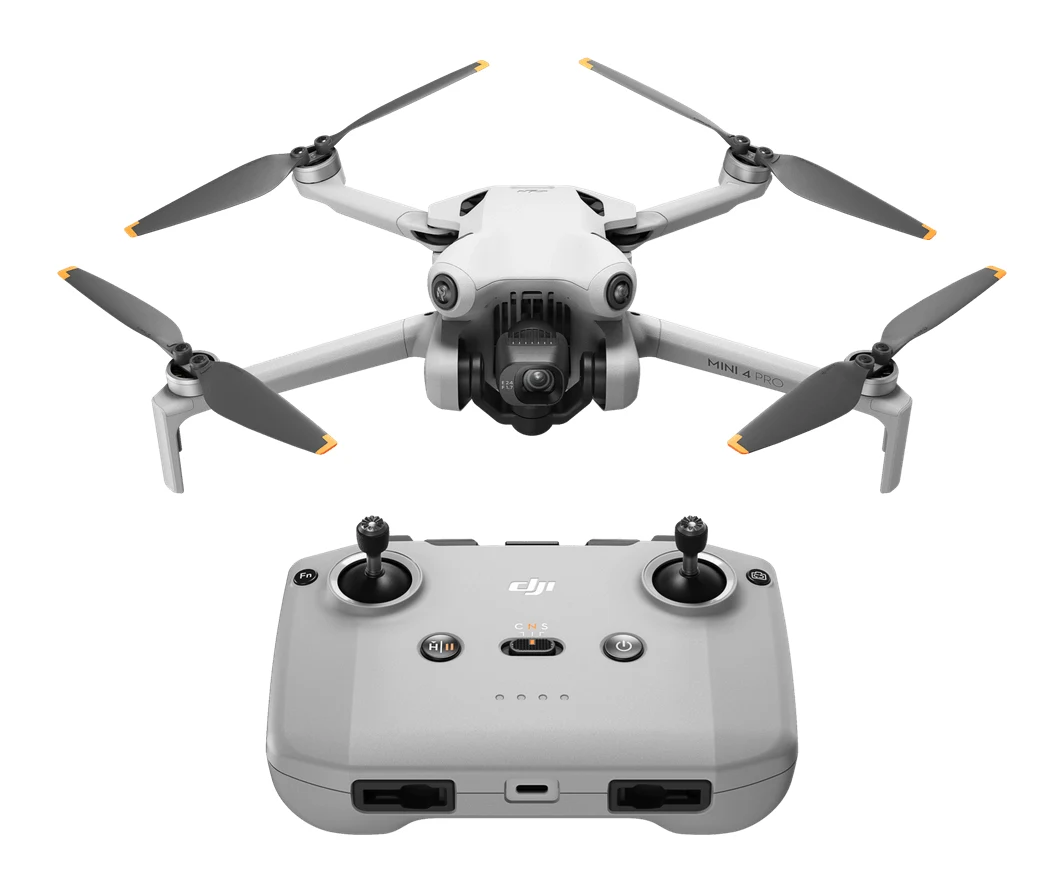
A look at the DJI Mini 4 Pro: a foldable sub-250 g drone with omnidirectional obstacle sensing and 4K at 100 fps. We cover who it suits and where wind, low light and battery life can disappoint.
Research-based · We earn from qualifying purchases
Our verdict
The DJI Mini 4 Pro is an excellent choice for beginners and travelers who want a pocketable, sub-250 g drone with strong video features and dependable obstacle avoidance. Skip it if you regularly fly in windy conditions or need top low-light image quality from a larger sensor.
The good
- Omnidirectional obstacle sensing makes flying in tight spaces safer
- Stays at 249 g with the standard battery
- 4K video up to 100 fps with 10-bit D-Log M and HLG
- 48 MP RAW stills from a 1/1.3"-type sensor
- O4 link reaches up to 12.4 miles and the video feed is reliable
+2 more
- 48 MP RAW stills from a 1/1.3"-type sensor
- O4 link reaches up to 12.4 miles and the video feed is reliable
The bad
- Small sensor shows noise in low light and at 100% crop
- Can get twitchy and unstable in wind
- Real-world flight time can fall short of the 34-minute rating
- Larger Plus battery pushes it over 250 g
+1 more
- Larger Plus battery pushes it over 250 g
This DJI Mini 4 Pro review is for anyone who wants a camera drone that disappears into a bag but still shoots serious video. DJI's pitch is a folding drone that stays at 249 g with the standard battery, yet carries a 48 MP sensor, 4K video up to 100 fps and obstacle sensing on every side. It sits in the mid-range part of the market, and it is aimed mainly at travelers and first-time pilots.
This article is based on DJI's published specifications and on what independent expert reviewers report. It is not hands-on testing. We focus on what the numbers mean in practice and where reviewers agree the drone falls short.
DJI Mini 4 Pro: specs at a glance
From the manufacturer- Lens
- 24 mm equivalent, f/1.7, 82.1° FoV
- Sensor
- 1/1.3"-type CMOS, 48 MP
- Max video
- 4K at 100 fps; 1080p at 200 fps
- Folded size
- 148 × 94 × 64 mm
- Unfolded size
- 298 × 373 × 101 mm
- Max hover time
- 30 min
- Takeoff weight
- 249 g (8.8 oz)
- Max flight time
- 34 min (standard battery)
- Battery capacity
- 2590 mAh
- Internal storage
- 2 GB (plus microSD slot, 512 GB max)
- Obstacle sensing
- Omnidirectional vision sensing with infrared enhancement
- Max wind resistance
- 23.9 mph / 10.7 m/s
- Max horizontal speed
- 35.8 mph / 16 m/s (Sport mode)
- Operating temperature
- 14 to 104°F / -10 to 40°C
- Max operating distance
- 12.4 miles / 20 km
Key features
- Omnidirectional obstacle sensing for safer flights in tight spaces
- 4K video up to 100 fps and 48MP RAW stills
- True vertical shooting for social media
- Up to 34 minutes of flight time on the standard battery
- O4 video link with up to 12.4-mile / 20 km range
- ActiveTrack 360° subject tracking
- 10-bit D-Log M and HLG color profiles
- Foldable design that stays under 249 g with the standard battery
DJI Mini 4 Pro review: design and build
The Mini 4 Pro folds down to 148 × 94 × 64 mm. That is small enough to slip into a jacket pocket or a corner of a camera bag, which is the point of the whole sub-250 g category. Unfolded it measures 298 × 373 × 101 mm, so it is still a compact aircraft in the air.
Weight is the headline design feature. With the standard battery, takeoff weight is 249 g (8.8 oz). That matters to a lot of buyers, because staying under 250 g is the reason many people choose this class of drone. There is a catch. A common criticism from reviewers is that the larger Plus battery pushes the drone over 250 g. If staying under that line matters to you, the standard battery is the one to plan around.
DJI lists an operating temperature of 14 to 104°F / -10 to 40°C. That covers most conditions people fly in on a trip, from cold mornings to hot afternoons. The spec sheet puts the maximum wind resistance at 23.9 mph / 10.7 m/s, but see the performance section below for how reviewers say it behaves in a breeze.
Camera and video quality
The camera is built around a 1/1.3"-type CMOS sensor with 48 MP. The lens is a 24 mm equivalent, f/1.7, with an 82.1° field of view. Together, the wide field of view and the f/1.7 aperture define what the camera can capture.
Video modes
Video tops out at 4K at 100 fps, and 1080p goes up to 200 fps. High frame rates are useful for slow motion. Slowing a drone shot of waves, a moving vehicle or a person running adds polish that standard-speed footage can't.
The Mini 4 Pro also offers 10-bit D-Log M and HLG color profiles. If you plan to color grade, these profiles give you more flexibility than a standard color profile. If you just want to shoot and share, you can ignore them. Reviewers single out the 4K/100 fps capability and the 10-bit profiles as highlights.
Stills and vertical shooting
Stills reach 48 MP and can be captured as RAW files, which suits photographers who like to edit. The drone also supports true vertical shooting. For anyone posting to social media, that means a vertical clip without cropping a horizontal frame.
The low-light caveat
This is a small sensor, and the main complaint from reviewers is that it shows noise in low light and at 100% crop. For daylight travel video and web-sized photos, that is unlikely to bother most buyers. If you regularly shoot at dusk, or you want to pixel-peep large prints, the sensor is a real limit.
Safety features and flying experience
The Mini 4 Pro has omnidirectional vision sensing with infrared enhancement. Reviewers consistently praise this, saying it makes flying in tight spaces safer. For a beginner, that is probably the most valuable feature on the drone, because it gives you some margin for error near trees, buildings and other obstacles. No sensing system replaces careful flying, but it lowers the stress of learning.
ActiveTrack 360° subject tracking is also on the feature list. It lets the drone follow a subject while you concentrate on framing the shot.
Speed tops out at 35.8 mph / 16 m/s in Sport mode. Most people will fly slower than that for video. Sport mode is there if you want to cover ground quickly or fly more aggressively.
Wind performance
The most common flying criticism is that the Mini 4 Pro can get twitchy and unstable in wind. The spec sheet gives a maximum wind resistance of 23.9 mph / 10.7 m/s, but a drone this light is easier to push around than a heavier one. If you regularly fly on coasts, on hilltops or in open country, expect this to be a recurring limitation.
Battery life, range and storage
DJI rates the standard battery at up to 34 minutes of flight time, with a maximum hover time of 30 min. The battery capacity is 2590 mAh. Reviewers warn, however, that real-world flight time can fall short of the 34-minute figure. Treat it as a best case under ideal conditions, and plan your shots with some margin. Spare batteries are worth considering if you want a full day of filming.
The O4 video link has a maximum operating distance of 12.4 miles / 20 km. Few people will fly anywhere near that far, and local rules and line-of-sight requirements will usually limit you well before the signal does. What matters day to day is that reviewers describe the video feed as reliable, which helps when you are framing shots from the controller screen.
For storage, the drone has 2 GB of internal memory plus a microSD slot that supports cards up to 512 GB. The internal memory is only a safety net. Plan on using a card, especially if you shoot 4K at high frame rates.
What experts like and what they criticise
Expert reviews are broadly positive. The DJI Mini 4 Pro averages 8.8/10 across 6 expert reviews. Individual scores are:
- Trusted Reviews: 5/5
- The Phoblographer: 5/5
- TechRadar: 4.5/5
- First Quadcopter: 4.3/5
- Tom's Guide: 4/5
- TechGearLab: 71/100
TechGearLab's 71/100 is the lowest of the published scores, but the group as a whole is favorable.
The praise follows a consistent pattern:
- Omnidirectional obstacle sensing for safer flights in tight spaces.
- The 249 g weight with the standard battery.
- 4K at up to 100 fps with 10-bit D-Log M and HLG.
- 48 MP RAW stills from the 1/1.3"-type sensor.
- A long-range O4 link with a dependable video feed.
The criticisms are just as consistent:
- The small sensor shows noise in low light and at 100% crop.
- It can get twitchy and unstable in wind.
- Real-world flight time can fall short of the rated 34 minutes.
- The larger Plus battery pushes it over 250 g.
These are real trade-offs, not footnotes. Wind stability and low-light image quality are the two that could affect your buying decision most.
Who should buy the DJI Mini 4 Pro
The Mini 4 Pro suits travelers and beginners who want a compact, capable sub-250 g drone. It is a good match if you:
- Want a drone that packs away easily and goes with you everywhere.
- Are learning to fly and want strong obstacle sensing as a safety net.
- Shoot mostly in daylight and want 4K video with room for slow motion.
- Post to social media and want true vertical video without cropping.
- Like to grade footage and want 10-bit D-Log M or HLG.
Who should skip it
Look elsewhere if you:
- Fly often in windy places, since reviewers say the drone can feel twitchy and unstable in a breeze.
- Need top low-light image quality, which a larger sensor would give you.
- Plan to use the larger Plus battery and still need to stay under 250 g.
- Expect to get the full 34 minutes from every battery.
If you are weighing DJI's other small drones, our DJI Mini 5 Pro vs DJI Neo comparison covers a different pair from the lineup.
How it fits in its category
Among compact camera drones, the Mini 4 Pro is built around a specific compromise: it gives up some sensor size and wind stability in return for a very light, pocketable airframe. It has omnidirectional sensing, high frame rates, vertical shooting, subject tracking and a long-range video link, all at 249 g with the standard battery. If your priorities are portability and ease of use, that trade is a good one. If image quality in difficult light is your top concern, you will want to look at larger drones with bigger sensors.
Verdict
The DJI Mini 4 Pro is easy to recommend to its target audience. It gives beginners and travelers a pocketable drone with dependable obstacle sensing, flexible video options and a reliable video link. Expert reviewers agree, with a strong 8.8/10 average. Its weak points are clear and consistent: noise from the small sensor in low light, a twitchy feel in wind and flight times that can fall short of the rating. If those do not match how you fly, the Mini 4 Pro is a very capable small drone.
Related buying guides
- DJI Mini 5 Pro Review (2026): Big Sensor, Tiny Body
- DJI Flip Review (2026): A Safer Drone for Vloggers
- Best Drone for Beginners 2026: Five DJI and Potensic Picks
- DJI Neo 2 Review (2026): A Palm-Launch Drone for Beginners
- DJI Neo Review (2026): Palm-Launch Drone for Beginners
- Best 65-Inch TV 2026: OLED and Mini LED for Gaming
- Best High-End Cameras 2026: Resolution, Speed & Video
Not sure about the DJI Mini 4 Pro? Consider these
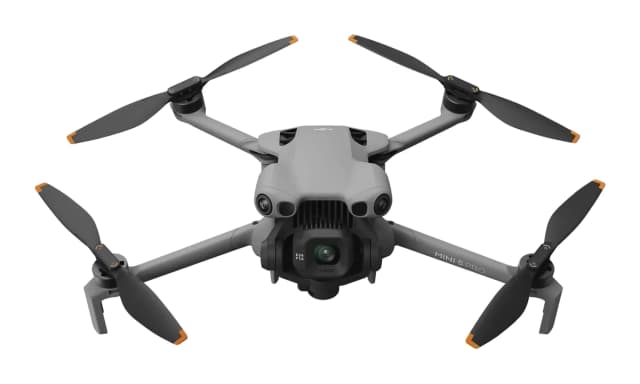
- Best OverallDJI Mini 5 ProWhy we picked it →
- Best ValueDJI NeoWhy we picked it →
- Also GreatDJI FlipWhy we picked it →
Frequently asked questions
Is the DJI Mini 4 Pro worth it?
For travelers and beginners, reviewers say yes. It averages 8.8/10 across 6 expert reviews and combines a 249 g takeoff weight with omnidirectional obstacle sensing and 4K video up to 100 fps. It is less suited to windy conditions or low-light work.
How long does the DJI Mini 4 Pro battery last?
DJI rates the standard battery at up to 34 minutes of flight time, with a maximum hover time of 30 min. Reviewers note that real-world flight time can fall short of that rating, so plan for less.
Does the DJI Mini 4 Pro stay under 250 g?
Yes, with the standard battery it has a takeoff weight of 249 g (8.8 oz). Reviewers point out that the larger Plus battery pushes it over 250 g.
What video quality does the DJI Mini 4 Pro shoot?
It shoots 4K at up to 100 fps and 1080p at up to 200 fps. It also offers 10-bit D-Log M and HLG color profiles, and true vertical shooting for social media.
Does the DJI Mini 4 Pro have obstacle avoidance?
Yes. It uses omnidirectional vision sensing with infrared enhancement. Reviewers praise it for making flights in tight spaces safer.
How far can the DJI Mini 4 Pro fly?
The O4 video link has a maximum operating distance of 12.4 miles / 20 km. Reviewers describe the video feed as reliable.
Is the DJI Mini 4 Pro good in wind?
It is rated for a maximum wind resistance of 23.9 mph / 10.7 m/s, but a common criticism is that it can get twitchy and unstable in wind. If you often fly in exposed places, that is worth weighing.
Sources
Specs are taken from the manufacturers' official pages; expert recommendations from the publications below.
- DJI Mini 4 Pro: store.dji.com, bhphotovideo.com, pickdrones.com, dronesgator.com
Related reviews & guides
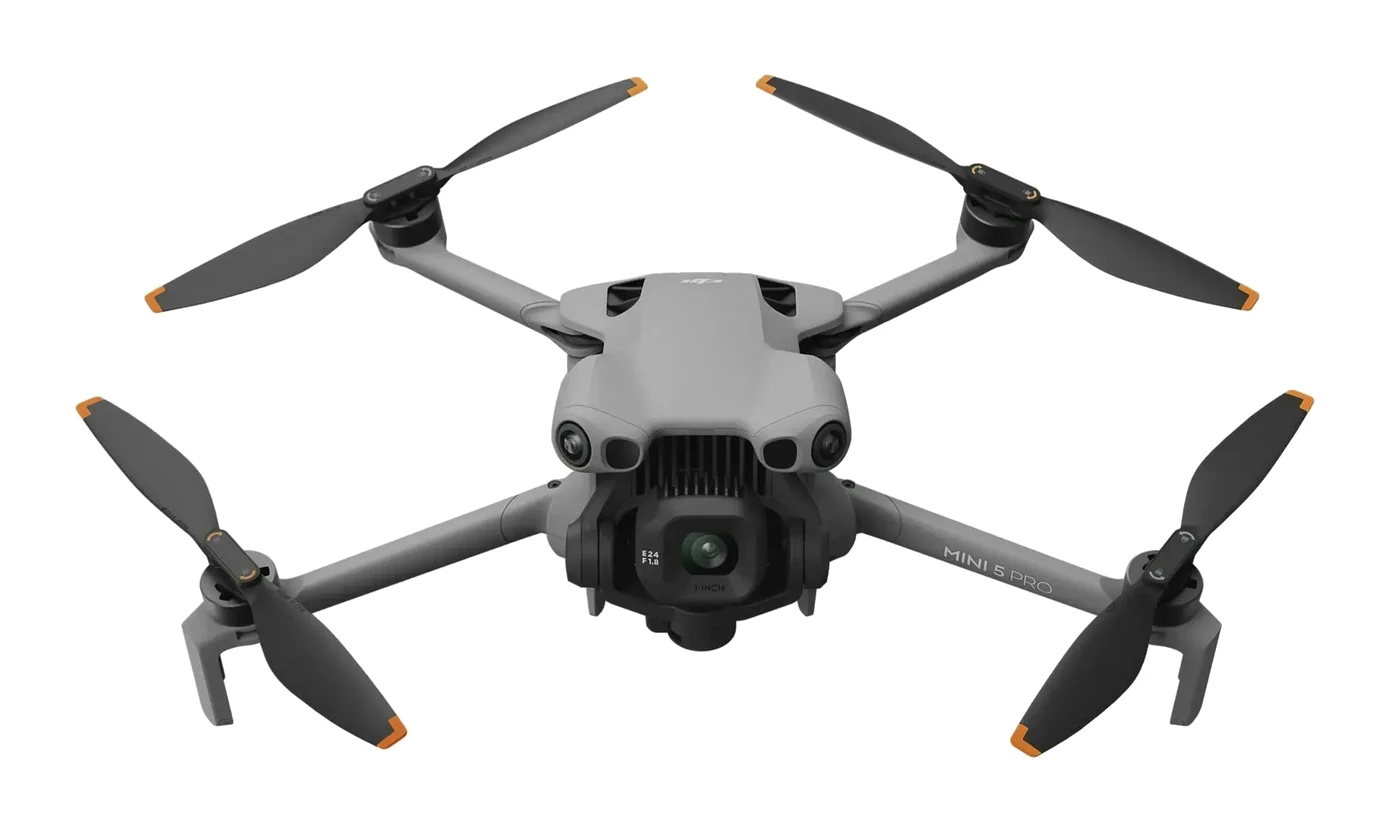
DJI Mini 5 Pro Review (2026): Big Sensor, Tiny Body
A 1-inch 50MP sensor, forward LiDAR and a 225° gimbal in a drone that folds down small. Here is what the DJI Mini 5 Pro offers, where reviewers see limits, and who it suits.
Published Oct 22, 2026DJI Mini 5 Pro vs DJI Neo (2026): Camera vs Simplicity
The DJI Mini 5 Pro is the better drone for image quality, safety sensing and flight time. The DJI Neo wins on price, weight and ease of use.
Published Nov 4, 2026Best Drone for Beginners 2026: Five DJI and Potensic Picks
Five beginner-friendly drones compared on manufacturer specs and expert recommendations, from the palm-launch DJI Neo to the camera-focused DJI Mini 5 Pro.
Published Oct 9, 2026