GPD WIN 5 vs Valve Steam Deck OLED (2026): Power vs Polish
GPD WIN 5 vs Valve Steam Deck OLED compared on performance, screen, battery, software and docking, with a clear pick for each type of buyer.
Head-to-head comparison · Research-based · Affiliate links
We earn a commission from qualifying purchases made through our links, at no extra cost to you. It never decides our picks. As an Amazon Associate I earn from qualifying purchases. How we make money
Valve Steam Deck OLED vs GPD WIN 5: which one should you buy?
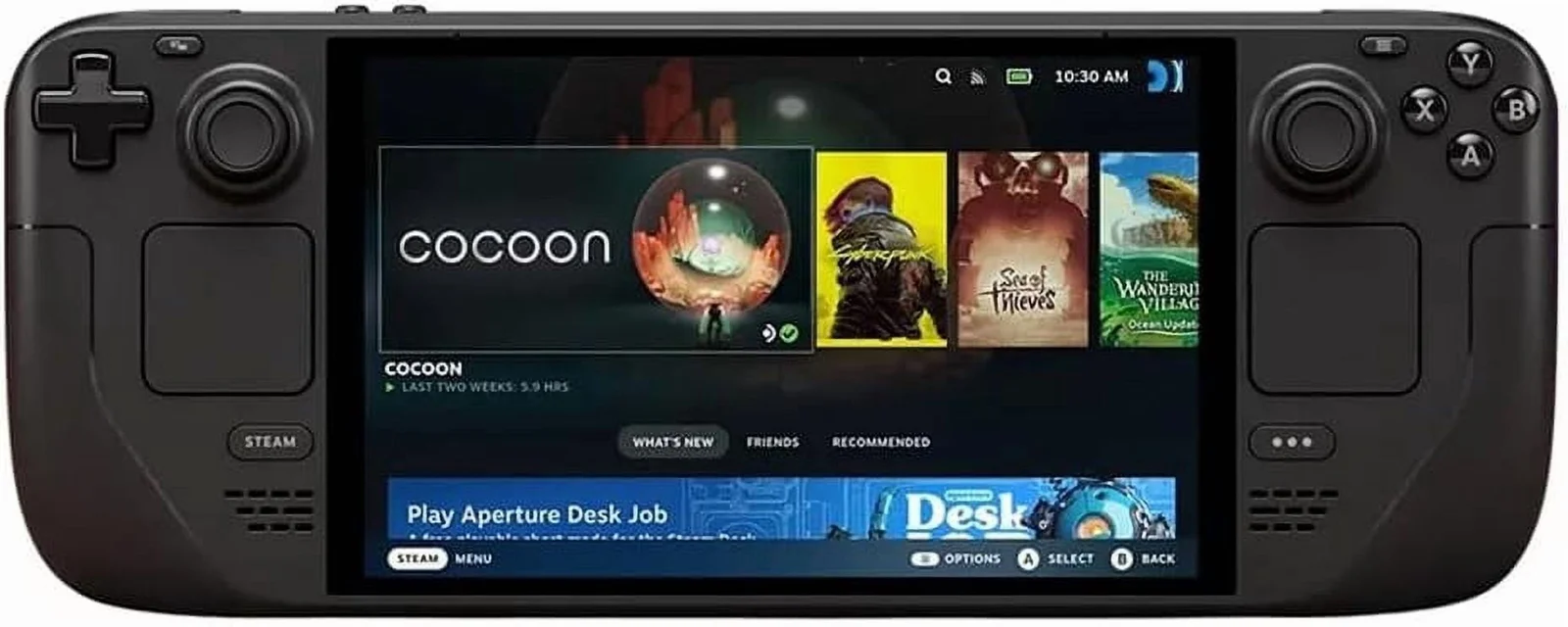
Best for: Handheld gamers wanting a polished OLED console-like experience
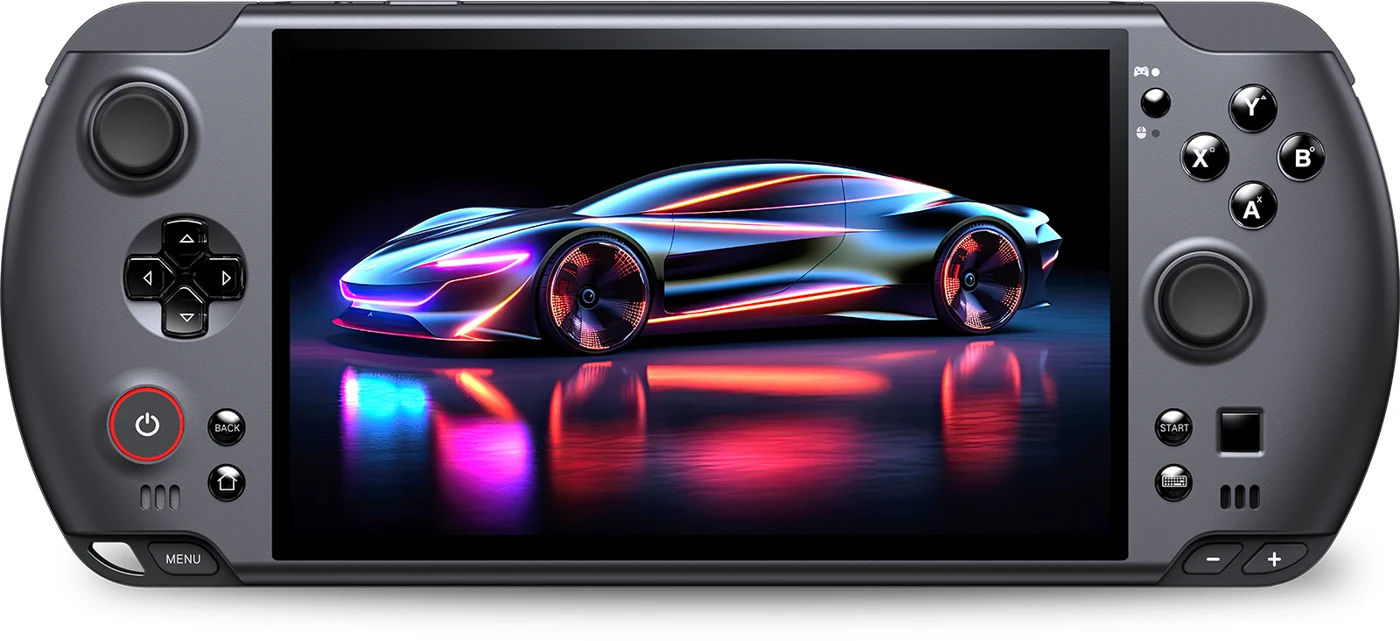
Best for: Enthusiasts wanting a powerful Windows handheld that doubles as a desktop
Most buyers should pick the Valve Steam Deck OLED: it is the polished, console-like handheld with a vivid HDR OLED screen, and it sits in the budget tier. The GPD WIN 5 is the better choice only if you want maximum handheld power for demanding games at 1080p, or a Windows handheld that doubles as a docked desktop, and you accept a premium price, heat and fan noise. That is the short version of GPD WIN 5 vs Valve Steam Deck OLED. The details below show where each one pulls ahead.
GPD WIN 5 vs Valve Steam Deck OLED: performance
This is the round where the two handhelds are furthest apart. The Steam Deck OLED uses a 6 nm AMD APU with a Zen 2 4c/8t CPU at 2.4-3.5GHz and a GPU with 8 RDNA 2 CUs at 1.6GHz (1.6 TFlops FP32). The APU runs at 4-15W, and it comes with 16 GB of LPDDR5 on-board RAM. Reviewers say that modest power means new AAA games struggle.
The GPD WIN 5 is a different class of machine. It offers the AMD Ryzen AI Max+ 395 (16C/32T, up to 5.1GHz) with Radeon 8060S graphics and 40 CUs, or the Ryzen AI Max 385 (8C/16T, up to 5.0GHz) with Radeon 8050S and 32 CUs. Memory goes up to 128GB of LPDDR5X-8000, quad channel. A dual-fan cooling system supports an adjustable 45–75W TDP. Reviewers report roughly PS5-level performance in tested games with the Max+ 395.
The cost of that power is thermals. Reviewers note the GPD WIN 5 runs hot and loud at full load. The Steam Deck OLED, by contrast, gets a bigger fan and updated thermals that keep it cooler than the original.
Winner: GPD WIN 5 for raw power and demanding AAA games. The Steam Deck OLED is the better fit if your library leans toward indie and older games.
Screen: HDR OLED or 1080p 120Hz
The two take different routes. The Steam Deck OLED has a 7.4" HDR OLED panel with up to 90Hz refresh, 1,000 nits peak (HDR) and 600 nits (SDR). Reviewers praise it as vivid. The weak points are that the resolution stays at 1280 x 800 and there is no VRR.
The GPD WIN 5 has a 7-inch 1920 × 1080 LTPS touchscreen at 120Hz with FreeSync Premium, 500 nits and 100% sRGB, plus 10-point touch. Reviewers call it smooth. GPD doesn't list HDR support or peak HDR brightness.
Winner: it depends on what you value. The Steam Deck OLED wins for contrast, HDR and brightness. The GPD WIN 5 wins for sharpness, a higher refresh rate and variable refresh. If you want the extra frame rate that stronger hardware can use, the GPD screen suits it better.
Battery life and portability
The Steam Deck OLED has a 50Wh battery, up from 40Wh in the earlier model, and Valve quotes 3-12 hours of gameplay depending on content. Reviewers say it lasts longer than the LCD model's battery, though it is still short in demanding games. It weighs approx. 640 grams and measures 298mm x 117mm x 49mm. Reviewers still describe it as large and bulky for a handheld.
The GPD WIN 5 takes a different approach: an 80Wh removable external battery (180W) that can be worn on the back or tethered by cable. Even so, one test by Noobfeed measured about 1 hour 10 minutes at 45W TDP, and reviewers flag short battery life at higher TDPs without the external battery. The handheld alone is approx. 590g, lighter than the Steam Deck OLED, but with the battery attached it becomes bulky. GPD doesn't list dimensions for the handheld.
Winner: Steam Deck OLED, with a quoted 3-12 hours of gameplay against about 1 hour 10 minutes measured on the GPD WIN 5 at 45W TDP (the figures come from different conditions). The GPD WIN 5's removable battery is flexible, but it doesn't change the fact that high-power gaming drains it quickly.
Software, controls and docking
The Steam Deck OLED runs SteamOS 3 (Arch-based) with a KDE Plasma desktop mode. Reviewers praise the console-like feel and quick suspend and resume. Controls include two 32.5mm haptic trackpads, 4 assignable back grip buttons and gyro. Reviewers call the build comfortable. It also has microSD expansion, DisplayPort over USB-C for external displays, a carrying case and a 45W power supply.
The GPD WIN 5 runs Windows 11 Home 64-bit, so it behaves as a full PC. It has capacitive joysticks and Hall effect triggers, though reviewers say the triggers can be finicky. Ports include one USB4 40Gbps with DisplayPort 2.1, one USB-C 3.2 Gen2 10Gbps, one USB-A 3.2 Gen2 and a 3.5mm combo jack. The optional Smart Dock outputs up to 4K 144Hz over HDMI 2.1. Reviewers say it docks as a desktop-style Windows PC.
Winner: Steam Deck OLED for a plug-and-play handheld experience. GPD WIN 5 for anyone who wants a Windows machine that also works at a desk.
Storage and expansion
The Steam Deck OLED comes with a 512GB or 1TB NVMe SSD plus a microSD slot. The GPD WIN 5 offers 1TB, 2TB or 4TB of M.2 2280 PCIe 4.0 NVMe storage, plus a Mini SSD slot and a microSD slot. Both have Wi-Fi 6E and Bluetooth 5.3.
Winner: GPD WIN 5 for capacity and flexibility; the Steam Deck OLED offers 512GB or 1TB plus a microSD slot.
What experts say
The Steam Deck OLED has an expert average of 8.4/10. TechRadar gave it 4/5, Trusted Reviews 4.5/5, Stuff 4/5 and CGMagazine 8.5/10. Reviewers praise the HDR OLED screen, the 50Wh battery, polished SteamOS, the comfortable build and the lighter, cooler-running design. Their common criticisms are modest performance, short battery life in demanding games, the 1280 x 800 resolution with no VRR, and its bulk.
For the GPD WIN 5, reviewers praise the roughly PS5-level performance, the smooth 1080p 120Hz touchscreen, the RAM and storage options, the removable 80Wh battery and the docked-PC ability. They criticise the very high price (firmly enthusiast territory), short battery life at higher TDPs, heat and noise at full load, and the bulk with the battery attached. For a deeper look at the GPD, see our GPD WIN 5 review.
Choose Valve Steam Deck OLED if…
Best for: Handheld gamers wanting a polished OLED console-like experience
Pick the Steam Deck OLED over the GPD WIN 5 if you want a polished, console-like handheld with a great OLED screen and a huge Steam library, especially for indie and older games. It is the more sensible, portable choice if you don't need desktop-class power.
Read our full Valve Steam Deck OLED review →- Battery life
- 3-12 hours of gameplay (content-dependent), 50Whr battery
- Weight
- Approx. 640 grams
- Display
- 7.4" diagonal HDR OLED, 1,000 nits peak (HDR), 600 nits (SDR)
- Resolution
- 1280 x 800
- Refresh rate
- up to 90Hz
- Processor
- 6 nm AMD APU, CPU: Zen 2 4c/8t, 2.4-3.5GHz; GPU: 8 RDNA 2 CUs, 1.6GHz (1.6 TFlops FP32); APU power 4-15W
Reasons to buy
- Vivid 7.4" HDR OLED screen with up to 90Hz refresh
- 50Wh battery lasts longer than the LCD model's
- Polished SteamOS with console-like feel and quick suspend and resume
- Comfortable build with haptic trackpads, back grip buttons and gyro
- Lighter and cooler-running than the original, with microSD expansion
Reasons to avoid
- Performance is modest, so new AAA games struggle
- Battery life is still short in demanding games
- Resolution stays at 1280 x 800 with no VRR
- Large and bulky for a handheld
- Trusted Reviews
- 9.0
- PCGamesN
- 9.0
- Stuff
- 8.0
- CGMagazine
- 8.5
- MMORPG.com
- 9.0
- The Inspect Aspect
- 8.8
- TechRadar
- 8.0
You want a polished, console-like handheld with a great HDR OLED screen and a big Steam library, particularly for indie and older games. It is the budget option here, runs cooler than the original, lasts longer on a charge than the LCD model and has quick suspend and resume. Accept that new AAA games struggle and that the screen stays at 1280 x 800 with no VRR.
Choose GPD WIN 5 if…
Best for: Enthusiasts wanting a powerful Windows handheld that doubles as a desktop
Pick the GPD WIN 5 over the Steam Deck OLED if you want maximum handheld power for demanding AAA games at 1080p, or a Windows handheld that doubles as a docked PC. Be ready for a much higher price, heat and fan noise, and a bulkier setup.
Read our full GPD WIN 5 review →- Battery life
- 180W 80Wh removable external battery
- Weight
- Approx. 590g (handheld without external battery)
- Display
- 7-inch LTPS, 500 nits, 100% sRGB, 10-point touch, FreeSync Premium
- Resolution
- 1920 × 1080
- Refresh rate
- 120Hz
- Processor
- AMD Ryzen AI Max+ 395 (16C/32T, up to 5.1GHz) or Ryzen AI Max 385 (8C/16T, up to 5.0GHz)
Reasons to buy
- Ryzen AI Max+ 395 delivers roughly PS5-level performance in tested games
- Smooth 1080p 120Hz FreeSync Premium touchscreen
- Up to 128GB RAM and 4TB SSD, plus Mini SSD and microSD slots
- Removable 80Wh external battery can be worn or tethered
- Docks as a desktop-style Windows PC with USB4 and DisplayPort 2.1
Reasons to avoid
- Very expensive, firmly in enthusiast territory
- Battery life is short at higher TDPs without the external battery
- Runs hot and loud at full load
- Bulky with the battery attached, and the triggers can be finicky
- FinalBoss.io
- 7.0
- GPD Store
- 9.8
- DROIX
- 9.8
You want maximum handheld power for demanding games at 1080p, or a Windows handheld that docks as a desktop PC with USB4 and DisplayPort 2.1. It is the premium choice, with up to 128GB of RAM, up to 4TB of storage and a 120Hz FreeSync Premium screen. Be ready for the heat, fan noise, short battery life at high TDPs and a bulkier setup.
Compare our picks side by side
The specs most of our picks share, from each maker’s spec page (— = not published). Expert score = the average of published expert reviews, which rate each product for its price. Scroll sideways on small screens.
| Spec | Valve Steam Deck OLED | GPD WIN 5 |
|---|---|---|
| Best for | Our Pick | The Alternative |
| Expert score | 8.6 | 8.9 |
| Price vs. these picks | Lower | Higher |
| Battery life | 3-12 hours of gameplay (content-dependent), 50Whr battery | 180W 80Wh removable external battery |
| Weight | Approx. 640 grams | Approx. 590g (handheld without external battery) |
| Display | 7.4" diagonal HDR OLED, 1,000 nits peak (HDR), 600 nits (SDR) | 7-inch LTPS, 500 nits, 100% sRGB, 10-point touch, FreeSync Premium |
| Resolution | 1280 x 800 | 1920 × 1080 |
| Refresh rate | up to 90Hz | 120Hz |
| Processor | 6 nm AMD APU, CPU: Zen 2 4c/8t, 2.4-3.5GHz; GPU: 8 RDNA 2 CUs, 1.6GHz (1.6 TFlops FP32); APU power 4-15W | AMD Ryzen AI Max+ 395 (16C/32T, up to 5.1GHz) or Ryzen AI Max 385 (8C/16T, up to 5.0GHz) |
| RAM | 16 GB LPDDR5 on-board (6400 MT/s) | 32GB / 64GB / 128GB LPDDR5X-8000, quad channel |
| Storage | 512GB NVMe SSD or 1TB NVMe SSD, plus microSD slot | M.2 2280 PCIe 4.0 NVMe SSD, 1TB / 2TB / 4TB, plus Mini SSD and microSD slots |
| Where to buy | View on Amazon | View on Amazon |
The verdict
For most people the Valve Steam Deck OLED is the more sensible pick: cheaper, more portable and easier to live with, with an excellent screen and a polished interface. The GPD WIN 5 is the one to buy only if you want maximum handheld power and are prepared to pay for it in money, heat and bulk.
Ready to buy?
 Our PickValve Steam Deck OLEDView on Amazon
 The AlternativeGPD WIN 5View on Amazon
Related buying guides
- Best Handheld Gaming PCs 2026: Power, Screens & Battery
- ASUS ROG Xbox Ally X Review (2026): Power With Heft
- Best Gaming Laptops 2026: Light, OLED & RTX 50 Power
- Best Gaming Monitor 2026: OLED and Mini LED Picks Compared
- Best Prebuilt Gaming PCs 2026: Ready to Play or Upgrade
- Best Gaming Consoles 2026: TV, Handheld and Hybrid Play
Frequently asked questions
Is the GPD WIN 5 better than the Steam Deck OLED?
The GPD WIN 5 is more powerful, but not better for everyone. Reviewers report roughly PS5-level performance from its Ryzen AI Max+ 395, while the Steam Deck OLED is more modest. The Steam Deck OLED is the budget option, with a polished SteamOS experience, an HDR OLED screen and longer battery life, so most buyers will be happier with it.
Which has longer battery life, the GPD WIN 5 or the Steam Deck OLED?
Valve quotes 3-12 hours of gameplay from the Steam Deck OLED's 50Wh battery, depending on content, while the GPD WIN 5 managed about 1 hour 10 minutes at 45W TDP in a Noobfeed test; the conditions differ. The GPD WIN 5 also has an 80Wh removable external battery as part of its design.
Does the GPD WIN 5 or the Steam Deck OLED have the better screen?
It depends on what you want. The Steam Deck OLED has a 7.4" HDR OLED panel with 1,000 nits peak (HDR) and up to 90Hz, but a 1280 x 800 resolution. The GPD WIN 5 has a sharper 7-inch 1920 × 1080 screen at 120Hz with FreeSync Premium, but 500 nits and no listed HDR.
Which runs Windows, the GPD WIN 5 or the Steam Deck OLED?
The GPD WIN 5 runs Windows 11 Home 64-bit. The Steam Deck OLED runs SteamOS 3, which is Arch-based and includes a KDE Plasma desktop mode.
Can the GPD WIN 5 or the Steam Deck OLED be used as a desktop PC?
Both can output to an external display, but the GPD WIN 5 is built more for it. It has a USB4 40Gbps port with DisplayPort 2.1, and the optional Smart Dock outputs up to 4K 144Hz over HDMI 2.1. The Steam Deck OLED supports DisplayPort over USB-C for external displays.
Is the GPD WIN 5 lighter than the Steam Deck OLED?
The GPD WIN 5 handheld is lighter at approx. 590g without its external battery, against approx. 640 grams for the Steam Deck OLED. With the battery attached, reviewers describe the GPD as bulky.
Sources
Specs are taken from the manufacturers' official pages; expert recommendations from the publications below.
- Valve Steam Deck OLED: store.steampowered.com, steamdeck.com, steamhardware.io, consolealley.com
- GPD WIN 5: gpd-minipc.com, gpdstore.net, videocardz.com
More buying guides
Valve Steam Deck OLED Review (2026): The Screen Is the Star
Our Valve Steam Deck OLED review looks at the HDR screen, battery, thermals and controls, and who should buy this handheld.
Published Oct 20, 2026GPD WIN 5 Review (2026): Strix Halo in a Handheld
The GPD WIN 5 puts AMD's Ryzen AI Max+ 395 into a Windows handheld with a detachable 80Wh battery and up to 128GB of memory. Here is who it suits and where it asks for compromises.
Published Nov 15, 2026Best Handheld Gaming PCs 2026: Power, Screens & Battery
Five of the best handheld gaming PCs compared on screen, processor, weight and battery, from the near-desktop GPD WIN 5 to the Steam Deck OLED.
Published Oct 16, 2026