Kawai ES60 vs Yamaha Arius YDP-145 (2026): Gig or Home?
The Kawai ES60 is the portable, budget-friendly pick for gigging and recording. The Yamaha Arius YDP-145 is the furniture-style home piano with pedals and a bench.
Head-to-head comparison · Research-based · Affiliate links
We earn a commission from qualifying purchases made through our links, at no extra cost to you. It never decides our picks. As an Amazon Associate I earn from qualifying purchases. How we make money
Yamaha Arius YDP-145 vs Kawai ES60: which one should you buy?
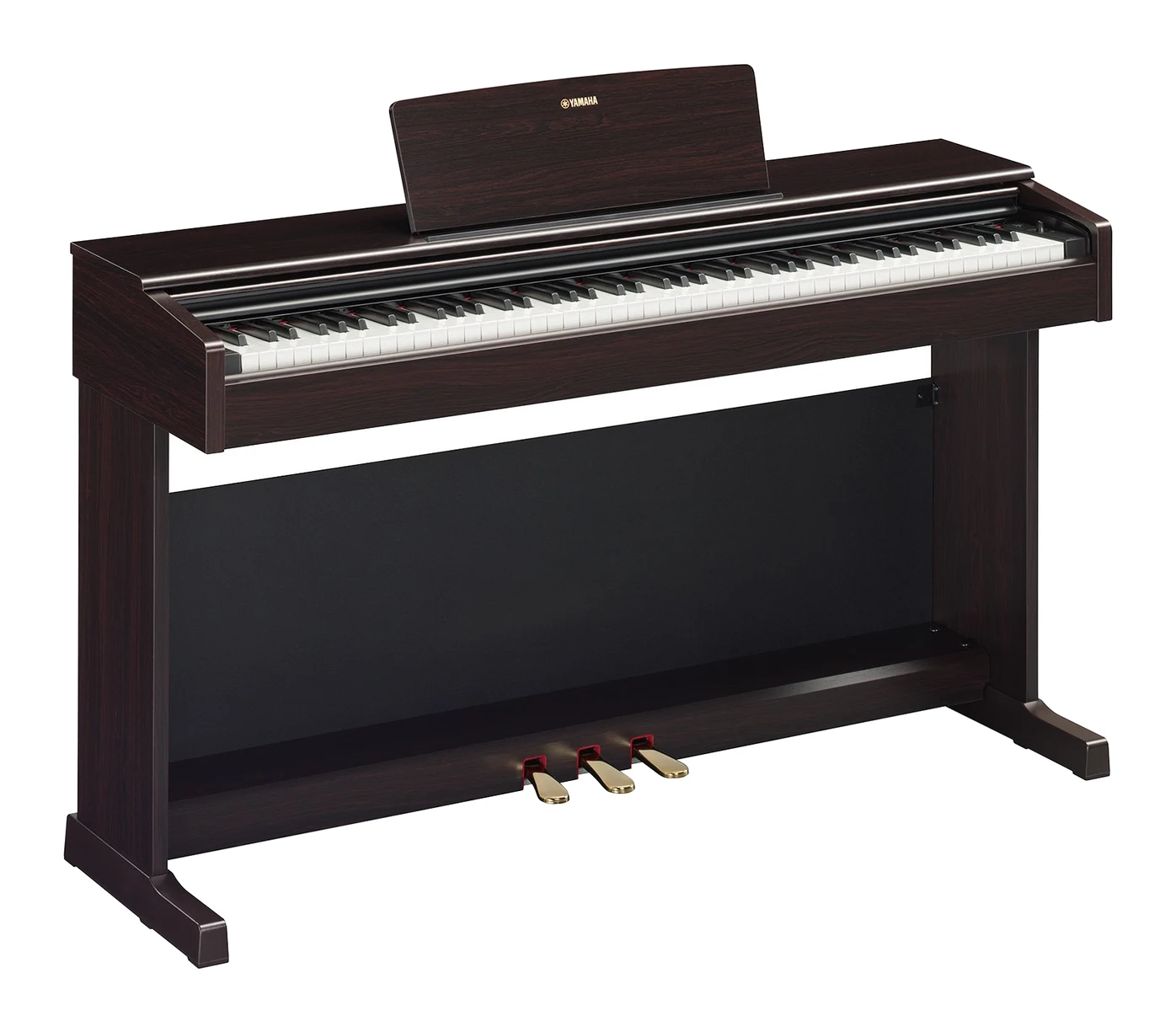
Best for: Home learners wanting a furniture-style piano with built-in pedals
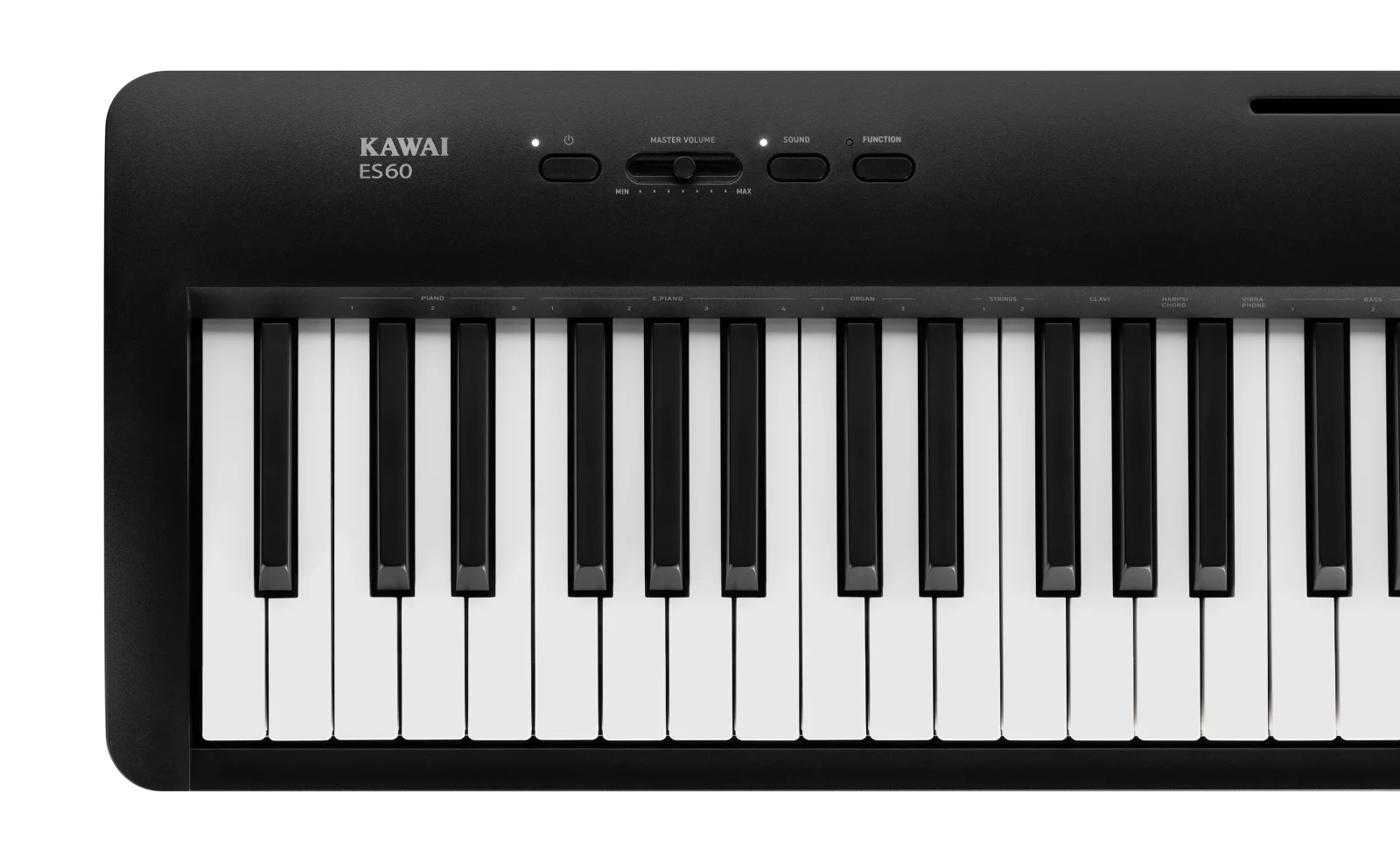
Best for: Players needing a portable, versatile piano for gigs and recording
The Kawai ES60 vs Yamaha Arius YDP-145 decision comes down to where the piano will live. Most buyers who want a permanent home instrument for learning should pick the Yamaha YDP-145, which comes with a three-pedal unit, bench and cabinet. If you need to carry the piano, play gigs or record, or you want the cheaper way into a concert-grand sound, the Kawai ES60 is the better choice.
These two pianos are less direct rivals than they look. Both have 88 weighted keys and 192-note polyphony, and neither has Bluetooth. After that, they are built for different lives: the ES60 is a light 11 kg portable with line outs and Split mode, and the YDP-145 is a 38.0 kg console.
Kawai ES60 vs Yamaha Arius YDP-145: Sound and Speakers
Both pianos lean on a famous concert grand. The Yamaha samples its piano sound from the company's CFX concert grand and adds VRM Lite, which models string and damper resonance. The Kawai uses Harmonic Imaging stereo sampling of the Shigeru Kawai SK-EX, and it offers three SK-EX concert grand variations. Reviewers praise the ES60's tone as among the best at its price, and they praise the YDP-145's CFX-sampled sound too.
The speakers differ in power rather than size, since both list 12 cm x 2 drivers. The Kawai's system is 20W in total (2 x 10W), and reviewers call it strong for a portable. The Yamaha runs 8 W x 2 amplifiers, and a common criticism is that this may lack projection in larger rooms. If you need to fill a bigger space without external amplification, the Kawai's speakers are the stronger case, though you would more likely plug it into a PA through its line outs.
If you want resonance modelling built into the piano voice, the Yamaha is the one that lists it. For a stage-ready grand tone at the lower price tier, the ES60 holds up.
Keyboard Action and Pedals
The Yamaha uses GHS (Graded Hammer Standard) action across 88 keys, with matte black keytops. The Kawai uses Responsive Hammer Lite (RHL), also a graded hammer action across 88 keys with a matte surface. Both are weighted, graded hammer actions. Reviewers do flag that the ES60's lighter Responsive Hammer Lite action may not suit everyone.
Pedals are where the two part ways clearly. The YDP-145 has three built in: damper with half-pedal function, sostenuto and soft. Reviewers praise this. The ES60 ships with an F-1SP switch pedal, which reviewers call basic. Half-pedal support needs the optional F-10H damper pedal, which is sold separately. If you are working toward classical repertoire where pedal control matters, the Yamaha is ahead out of the box. A buyer who plans to add the F-10H should factor that extra purchase into the Kawai's lower price tier.
Portability and Connections
This round is the most one-sided. The ES60 weighs 11 kg and measures 1295 (W) x 260 (D) x 150 (H) mm with the music rest detached. Reviewers describe it as easy to carry. The YDP-145 weighs 38.0 kg and stands 815 mm tall as a full console, and reviewers list its weight as a downside if you ever want to move it.
Connectivity favours the Kawai for working musicians. It has left/right 1/4" line outs plus a front 1/4" headphone jack, so you can plug straight into a mixer or amp for gigging and recording. The Yamaha offers USB TO HOST and two standard stereo headphone jacks, with no line outs listed.
App support is similar. Neither has Bluetooth. The YDP-145 works with Smart Pianist over a USB cable. The ES60 supports PianoRemote and PiaBookPlayer through USB-MIDI. Reviewers also note the ES60 has no USB audio and no built-in recorder, so recording is only via the app.
For gigging, rehearsal rooms or anyone with limited space, the Kawai wins this round easily.
Sounds, Features and Learning Tools
The ES60 is the more versatile instrument. It has 17 sounds, including electric pianos, organs, strings, harpsichord and bass, and it offers Dual and Split modes. It also has three reverb types (Room, Small Hall, Concert Hall), a metronome with 7 beats and 30 drum rhythms. The YDP-145 offers 10 voices and no Split mode, which reviewers list as a limitation.
The Yamaha is built around learning instead. It has 353 built-in songs: 50 classics and 303 lesson exercises, plus 10 voice demo songs. It also has two headphone jacks, a Stereophonic Optimizer and Duo mode, so a teacher and student can both play or listen at the same time. Reviewers praise the lesson content and the dual-headphone setup. The Kawai doesn't list an equivalent lesson library or a second headphone jack.
If you are a beginner or a parent buying for a child taking lessons, the Yamaha is ahead here. If you want to layer or split sounds, or play more than just piano, go for the Kawai.
What Experts Say
The Yamaha Arius YDP-145 has an expert average of 9.3 out of 10. MusicRadar gave it 4.5 out of 5, and Best Piano Keyboards scored it 9.5 out of 10. Reviewers praise the CFX-sampled sound, the three pedals including half-pedal on the damper, the furniture-style console with bench and sliding key cover, the dual headphone jacks and the 303 lesson exercises. Their complaints are the lack of Bluetooth, speakers that may lack projection in larger rooms, only 10 voices with no Split mode, and a weight of 38 kg.
The Kawai ES60 has an expert average of 8.5 out of 10. Pianist's Compass gave it 4.7 out of 5, and Pianoo gave it 3.8 out of 5. It is recommended in 5 expert guides. Reviewers praise its SK-EX concert grand tone, its light 11 kg body, its line outs, its 17 sounds with Dual and Split modes, and its 20 W speaker system. They criticise the basic included footswitch, the lack of Bluetooth or USB audio, the lack of a built-in recorder, and an action that may not suit everyone.
The Yamaha scores higher on average. The two pianos are also judged on different strengths, so the gap should not decide it on its own.
Choose Kawai ES60 if…
Best for: Players needing a portable, versatile piano for gigs and recording
Choose the ES60 over the Yamaha if you need a portable piano to move, gig or record with, thanks to line outs, Split mode and more sounds. It also fits buyers who want a lower-priced entry to a concert grand tone and don't need a cabinet.
Read our full Kawai ES60 review →- Weight
- 11 kg / 24 1/4 lbs
- Dimensions
- 1295 (W) x 260 (D) x 150 (H) mm / 51" x 10 1/4" x 6" (music rest detached)
- Ports
- 1/4" stereo line out (L/MONO, R), USB-MIDI, 1/4" headphone jack
- Keys
- 88 weighted with Responsive Hammer Lite action
- Pedals
- F-1SP switch pedal included; compatible with optional F-10H damper pedal (half-pedal support)
- Speakers
- 12 cm x 2, 10 W + 10 W
Reasons to buy
- Shigeru Kawai SK-EX concert grand tone, among the best at its price
- Light 11 kg body is easy to carry
- Left/right 1/4" line outs for gigging and recording
- 17 sounds plus Dual and Split modes
- 20 W speaker system is strong for a portable
Reasons to avoid
- Included footswitch is basic; half-pedal F-10H is sold separately
- No Bluetooth or USB audio
- No built-in recorder; recording only via the app
- Lighter Responsive Hammer Lite action may not suit everyone
- Pianist's Compass
- 9.4
- 1st Note
- 6.4
- Pianoo
- 7.6
Pick the ES60 if you need a piano you can carry, gig with or record from. At 11 kg with line outs, Split mode and 17 sounds, it covers jobs the Yamaha can't. It is also the budget option, which suits anyone who wants an SK-EX concert grand tone without paying for a cabinet. Plan to buy the F-10H if you need half-pedalling, and try the lighter action if you can.
Choose Yamaha Arius YDP-145 if…
Best for: Home learners wanting a furniture-style piano with built-in pedals
Choose the YDP-145 over the Kawai if you want a permanent home piano with a built-in three-pedal unit, bench and cabinet. It also suits learners who benefit from lesson songs and a dual headphone setup for lessons.
Read our full Yamaha Arius YDP-145 review →- Weight
- 38.0 kg (83 lbs., 12 oz.)
- Dimensions
- W 1,357 mm [53-7/16"] x H 815 mm [32-1/16"] (969 mm [38-1/8"] with music rest raised) x D 422 mm [16-5/8"]
- Ports
- Standard stereo phone jack (x 2)
- Keys
- 88
- Pedals
- 3: Damper (with half-pedal function), Sostenuto, Soft
- Speakers
- 12 cm x 2
Reasons to buy
- Piano sound sampled from Yamaha's CFX concert grand
- Three pedals included, with half-pedal on the damper
- Solid furniture-style console with bench and sliding key cover
- Two headphone jacks and Duo mode for teacher/student practice
- 353 built-in songs, including 303 lesson exercises
Reasons to avoid
- No Bluetooth, so Smart Pianist needs a USB cable
- 8 W x 2 speakers may lack projection in larger rooms
- Only 10 voices and no Split mode
- Weighs 38 kg, so it is not portable
- Pianoo
- 7.8
- Best Piano Keyboards
- 9.5
- MusicRadar
- 9.0
Pick the YDP-145 if the piano will stay in one room and you want it to feel like furniture. You get a three-pedal unit with half-pedal on the damper, a bench and a sliding key cover. It also suits learners, thanks to 303 lesson exercises and two headphone jacks with Duo mode for lessons. It is the premium option, and you accept the 38.0 kg weight and USB-only app connection.
Compare our picks side by side
The specs most of our picks share, from each maker’s spec page (— = not published). Expert score = the average of published expert reviews, which rate each product for its price. Scroll sideways on small screens.
| Spec | Yamaha Arius YDP-145 | Kawai ES60 |
|---|---|---|
| Best for | Our Pick | The Alternative |
| Expert score | 8.8 | 7.8 |
| Price vs. these picks | Higher | Lower |
| Weight | 38.0 kg (83 lbs., 12 oz.) | 11 kg / 24 1/4 lbs |
| Dimensions | W 1,357 mm [53-7/16"] x H 815 mm [32-1/16"] (969 mm [38-1/8"] with music rest raised) x D 422 mm [16-5/8"] | 1295 (W) x 260 (D) x 150 (H) mm / 51" x 10 1/4" x 6" (music rest detached) |
| Ports | Standard stereo phone jack (x 2) | 1/4" stereo line out (L/MONO, R), USB-MIDI, 1/4" headphone jack |
| Keys | 88 | 88 weighted with Responsive Hammer Lite action |
| Pedals | 3: Damper (with half-pedal function), Sostenuto, Soft | F-1SP switch pedal included; compatible with optional F-10H damper pedal (half-pedal support) |
| Speakers | 12 cm x 2 | 12 cm x 2, 10 W + 10 W |
| Polyphony | 192 (max.) | max. 192 notes |
| Connectivity | USB TO HOST; 2 x standard stereo phone jack (headphones); no Bluetooth | USB to Host (USB-MIDI), LINE OUT 1/4" L/MONO and R, front 1/4" headphone jack, damper pedal jack; no Bluetooth |
| Where to buy | View on Amazon | View on Amazon |
The Verdict
For most people buying a first or second home piano, the Yamaha Arius YDP-145 is the better choice. It has the higher expert average, built-in pedals with half-pedal, a bench and a strong lesson setup. The Kawai ES60 is the smarter buy if you need portability, line outs and a wider range of sounds, or if you want a lower-priced entry into a concert grand tone.
Ready to buy?
 Our PickYamaha Arius YDP-145View on Amazon
 The AlternativeKawai ES60View on Amazon
Frequently asked questions
Is the Yamaha YDP-145 better than the Kawai ES60?
For a permanent home piano, yes: the Yamaha YDP-145 has the higher expert average (9.3 vs 8.5 out of 10) and comes with three pedals, a bench and a cabinet. The Kawai ES60 is better for gigging, recording and portability.
Which is more portable, the Kawai ES60 or the Yamaha YDP-145?
The Kawai ES60 is far more portable at 11 kg, and reviewers call it easy to carry. The Yamaha YDP-145 weighs 38.0 kg as a furniture-style console and is not meant to be moved.
Does the Kawai ES60 or Yamaha YDP-145 have Bluetooth?
Neither has Bluetooth. The Yamaha YDP-145 uses a USB cable for the Smart Pianist app, and the Kawai ES60 uses USB-MIDI for its PianoRemote and PiaBookPlayer app support.
Does the Kawai ES60 come with a proper sustain pedal?
The Kawai ES60 includes an F-1SP switch pedal, which reviewers call basic. Half-pedal support needs the optional F-10H damper pedal, sold separately. The Yamaha YDP-145 has a three-pedal unit built in, with half-pedal on the damper.
Which is better for a beginner, the Kawai ES60 or the Yamaha YDP-145?
The Yamaha YDP-145 suits most beginners better. It has 303 lesson exercises, 353 built-in songs in total, and two headphone jacks with Duo mode for teacher and student practice. The Kawai ES60 lists no comparable lesson library.
Which has more sounds, the Kawai ES60 or the Yamaha YDP-145?
The Kawai ES60 has more, with 17 sounds plus Dual and Split modes. The Yamaha YDP-145 has 10 voices and no Split mode.
Sources
Specs are taken from the manufacturers' official pages; expert recommendations from the publications below.
- Yamaha Arius YDP-145: usa.yamaha.com, europe.yamaha.com, my.yamaha.com, falcettipianos.com
- Kawai ES60: kawai.co.uk, kawai-global.com, pianoandsynth.com, kawaius.com
More buying guides
Yamaha Arius YDP-145 Review (2026): CFX Sound, Basic Keys
Our Yamaha Arius YDP-145 review looks at a mid-range home digital piano built around CFX concert grand sound and weighted keys, and who it suits.
Published Oct 25, 2026Kawai ES60 Review (2026): Grand Tone in a Portable Body
A look at the Kawai ES60 portable digital piano: its Shigeru Kawai SK-EX sound, Responsive Hammer Lite keys, line outs, and where reviewers say it falls short.
Published Oct 25, 2026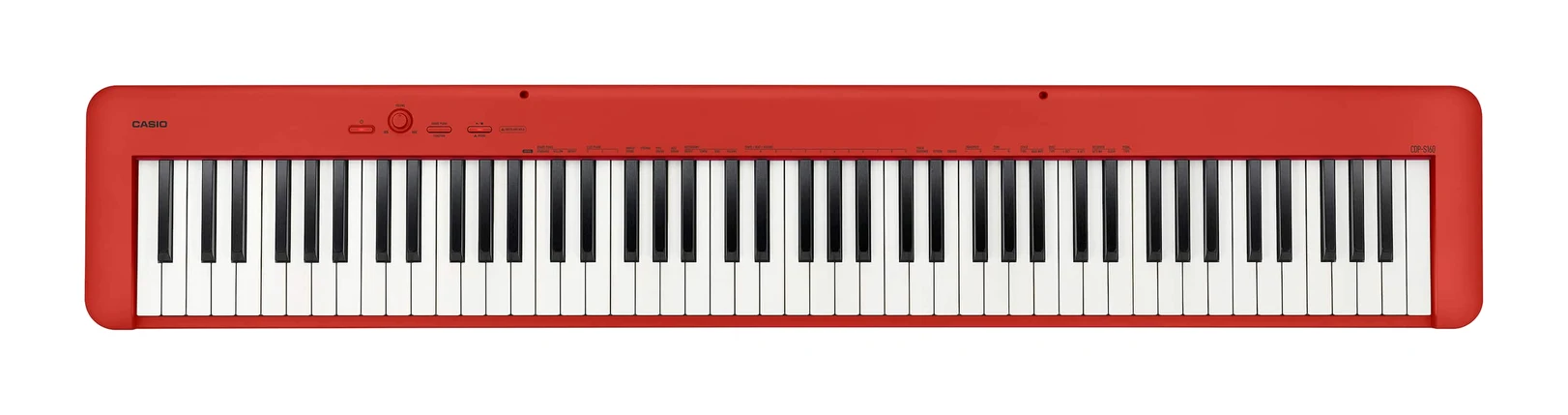
Kawai ES60 vs Casio CDP-S160 (2026): Tone vs Portability
Kawai ES60 vs Casio CDP-S160 compared on sound, polyphony, speakers, portability and connections, with what reviewers say about each.
Published Nov 4, 2026