Fujifilm Instax Mini Evo Review (2026): Only Print Keepers
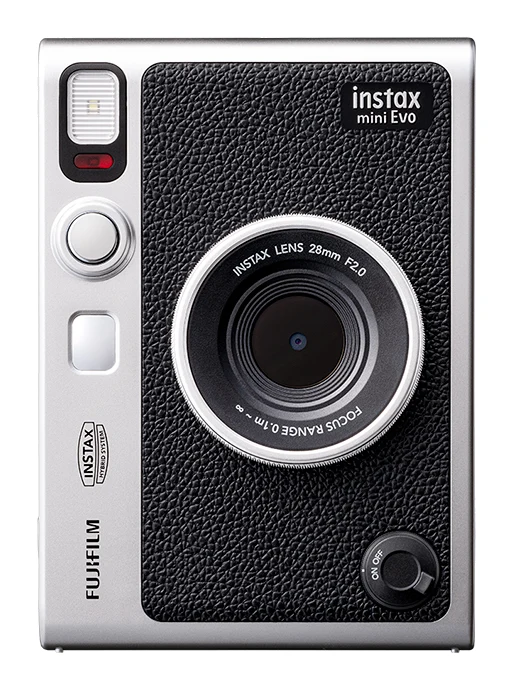
The Instax Mini Evo is a retro-styled hybrid that lets you preview shots, add effects and print only the keepers, and it doubles as a Bluetooth phone printer.
Research-based · We earn from qualifying purchases
Our verdict
The Instax Mini Evo suits anyone who wants stylish, creative instant prints without wasting film, plus a handy phone printer in the same body. Skip it if you care about sharp digital image quality or want the cheapest way into Instax.
The good
- Preview shots on the 3.0-inch LCD and print only the keepers
- 100 combinations from 10 lens and 10 film effects
- Doubles as a Bluetooth smartphone printer via the Instax app
- Retro rangefinder styling with selfie mirror and macro mode
- About 100 prints per charge from the built-in battery
+2 more
- Retro rangefinder styling with selfie mirror and macro mode
- About 100 prints per charge from the built-in battery
The bad
- Digital image quality is low-res and lacks detail, similar to a basic smartphone
- Internal memory holds only about 45 images, though a microSD slot helps
- Mostly plastic construction feels less premium than the design suggests
- Pricier than standard analogue Instax cameras, and film is an ongoing cost
+1 more
- Pricier than standard analogue Instax cameras, and film is an ongoing cost
This Fujifilm Instax Mini Evo review looks at a camera that tries to fix the biggest frustration of instant photography: wasting film on shots that didn't work. Instead of firing a print every time you press the shutter, the Evo is a hybrid. It captures a digital image, shows it on a rear screen, and prints only when you decide it's worth it. It also works as a smartphone printer. It suits creative shooters who want stylish instant prints and the option of printing from their phone.
This review is based on Fujifilm's manufacturer specs and on what independent expert reviews report. It is not based on hands-on testing.
Fujifilm Instax Mini Evo: specs at a glance
From the manufacturer- ISO
- ISO100 to 1600 (automatic switching)
- Lens
- f = 28 mm (35-mm film equivalent), F2.0
- Weight
- Approximately 285 g
- Battery
- Built-in lithium-ion, approximately 100 prints per full charge
- Storage
- Approximately 45 images in internal memory; microSD / microSDHC slot
- Dimensions
- 87 mm x 122.9 mm x 36 mm
- LCD screen
- 3.0-inch TFT color LCD, approximately 460,000 dots
- Connectivity
- Bluetooth Ver. 4.2 (BLE)
- Image sensor
- 1/5-inch CMOS with primary color filter
- Charging time
- Approximately 2 to 3 hours
- Shutter speed
- 1/4 second to 1/8000 second (automatic switching)
- Recorded pixels
- 2560 x 1920
- Print output time
- Approximately 16 seconds
- Shooting distance
- 10 cm to ∞
- Exposure compensation
- −2.0 EV to +2.0 EV (1/3 EV step)
Key features
- Preview shots on the 3.0-inch LCD and print only the ones you like
- 10 lens effects and 10 film effects give 100 effect combinations
- Also works as a smartphone printer over Bluetooth through the Instax app
- Remote shutter and printed-image transfer from the phone app
- Retro rangefinder-style body with selfie mirror and macro mode
- Internal memory plus a microSD slot for storing digital files
- Built-in rechargeable battery, about 100 prints per charge
- Accessory shoe and 1/4"-20 tripod mount
Why people consider the Instax Mini Evo
The appeal is a mix of nostalgia and control. A traditional instant camera commits you to a print the moment you shoot. The Mini Evo separates capture from printing, so you can review a shot on the 3.0-inch LCD and print only the ones you like. Film is an ongoing cost, so that preview step matters.
The Evo also layers creative options on top. It offers 10 lens effects and 10 film effects, which gives 100 effect combinations. It connects to the Instax app over Bluetooth, so it can print images from your phone as well as its own photos.
Experts rate it highly. It averages 9/10 across 3 expert reviews: Tom's Guide, Trusted Reviews and Photography Blog each score it 4.5/5. That is a strong showing for a product with clear trade-offs, and we cover those below.
Fujifilm Instax Mini Evo review: design and build
The Evo uses a retro rangefinder-style body. It is meant to look like a small classic camera rather than a toy, and reviewers praise the styling. It also has a selfie mirror and a macro mode, practical touches for a camera aimed at casual, social shooting.
The body measures 87 mm x 122.9 mm x 36 mm and weighs approximately 285 g. That is compact enough for a bag or large pocket, though not the lightest option you could carry.
A common criticism is that the construction is mostly plastic and feels less premium than the design suggests. It is a styling-first camera, and the build is more functional than luxurious.
It does include two expansion points that serious tinkerers will notice: an accessory shoe and a 1/4"-20 tripod mount. They add flexibility for mounting the camera on a stand or adding an accessory.
Features and what they mean day to day
Preview and print only what you like
This is the headline feature. You frame the shot, capture it, look it over on the 3.0-inch TFT color LCD (approximately 460,000 dots), and send only the good ones to print. Prints take approximately 16 seconds to output. For anyone who has thrown away blurry or badly framed instant shots, this is the main reason to choose the Evo.
100 effect combinations
The 10 lens effects and 10 film effects can be mixed, which gives 100 effect combinations. For a creative user it turns the camera into a playground. You can try a look, check it on screen and decide whether it deserves a print. Reviewers consistently praise this flexibility.
Phone printer and remote control
The Evo works as a smartphone printer over Bluetooth through the Instax app. The same app offers a remote shutter and printed-image transfer from the phone. That makes the camera more than a single-purpose gadget. If your best photos are already on your phone, you can print them without needing the Evo to take them.
The connection is Bluetooth Ver. 4.2 (BLE). The spec sheet doesn't list Wi-Fi.
Storage
The camera stores approximately 45 images in internal memory and has a microSD / microSDHC slot. Reviewers point out that the internal memory is limited, though the microSD slot helps. If you plan to shoot regularly, a microSD card is useful.
Performance, image quality and battery
Digital image quality
This is where the Evo needs honest expectations. The image sensor is a 1/5-inch CMOS with a primary color filter, and recorded images are 2560 x 1920. The lens is f = 28 mm (35-mm film equivalent) at F2.0. Reviewers describe the digital quality as low-res and lacking detail, similar to a basic smartphone. That matters if you plan to use the digital files. For an instant print, which is a small, stylised object, the digital limits are less critical, and the effects are part of the charm.
Exposure and shooting range
The camera switches ISO automatically between ISO100 and 1600. Shutter speed also switches automatically, from 1/4 second to 1/8000 second. You do get exposure compensation from −2.0 EV to +2.0 EV in 1/3 EV steps, a useful nudge when the automatic exposure isn't quite right. The shooting distance runs from 10 cm to ∞, which works with the macro mode for close-up subjects.
Battery and charging
The built-in lithium-ion battery is rated for about 100 prints per charge, and charging takes approximately 2 to 3 hours. The battery is built in, so you can't swap in a spare when it runs low. Fujifilm rates the battery at about 100 prints per charge. The real limit on how much you print will be your film supply, not the battery.
What experts like and what they criticise
Reviewers praise the concept first: previewing and printing only the keepers. They also like the 100 effect combinations, the dual role as a Bluetooth phone printer, the retro rangefinder styling with selfie mirror and macro mode, and the roughly 100 prints per charge.
The criticisms are consistent and fair:
- Digital image quality is low-res and lacks detail, similar to a basic smartphone.
- Internal memory holds only about 45 images, though the microSD slot helps.
- The mostly plastic construction feels less premium than the design suggests.
- It is pricier than standard analogue Instax cameras, and film is an ongoing cost.
None of these undermines the core idea, but together they define who the Evo is for. It rewards people who value the experience and the creative control, and it is less satisfying for anyone judging it purely as a camera.
Who should buy it, and who should skip it
Buy it if:
- You want to see a shot before committing film to it.
- You enjoy trying effects and styles, and want 100 combinations to play with.
- You'd like a phone printer and an instant camera in one body.
- The retro look matters to you as much as the specs.
Skip it if:
- You care about sharp digital image quality. If that is your priority, you are probably shopping for a different kind of camera.
- You want the cheapest way into instant photography, since the Evo sits in the mid-range part of the market and costs more than standard analogue Instax cameras.
- You expect a premium build to match the vintage styling.
How it fits in its category
In general terms, instant cameras fall into two groups: simple point-and-shoot models that print every shot, and hybrids that add a screen and digital capture. The Evo is firmly in the second group. Its trade-off is straightforward. You pay more up front and accept modest digital quality, and in return you get control over what gets printed and a phone printer as a second job. Film remains a running cost either way, but the preview step helps you spend it more deliberately.
Verdict
The Fujifilm Instax Mini Evo is an appealing, creative take on instant photography, and expert reviewers rate it accordingly at an average of 9/10. It does its main job well: it lets you shoot, review, add effects and print only what you want, while also working as a Bluetooth phone printer. Its limits are just as clear: low-res digital images, small internal memory, a mostly plastic body and a higher price than basic Instax cameras. If you buy it for the fun of the prints rather than the quality of the files, it is easy to recommend.
Related buying guides
- Fujifilm Instax Mini 12 Review (2026): Simple Instant Fun
- Fujifilm X-M5 Review (2026): Pocket Camera, Big Video Specs
- Fujifilm X100VI Review: Is the Fixed Lens Worth It?
- FUJIFILM X-T30 III Review (2026): Small Body, Big Colour
- Best Digital Camera for Beginners 2026: Compact & Easy
- Best High-End Cameras 2026: Resolution, Speed & Video
- Nikon Z f Review (2026): Is Retro Worth the Quirks?
Not sure about the Fujifilm Instax Mini Evo? Consider these
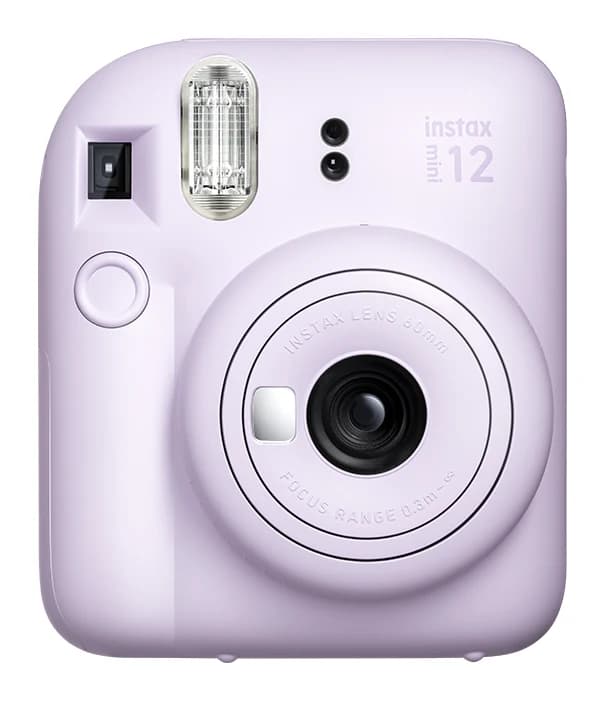
- Best OverallFujifilm Instax Mini 12Why we picked it →
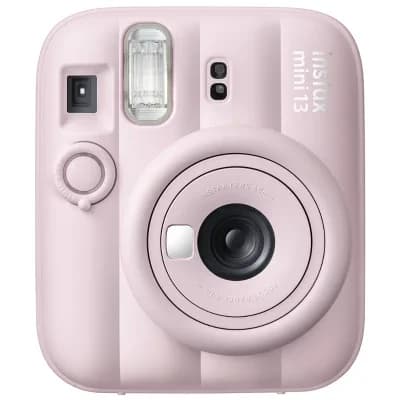
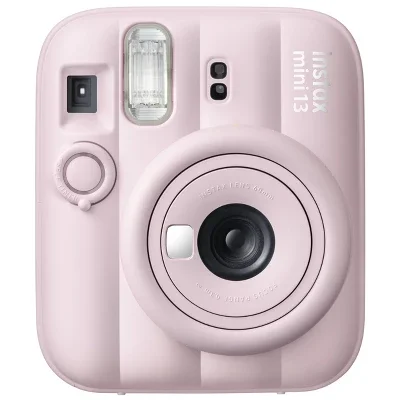
- Best ValueFujifilm Instax Mini 13Why we picked it →
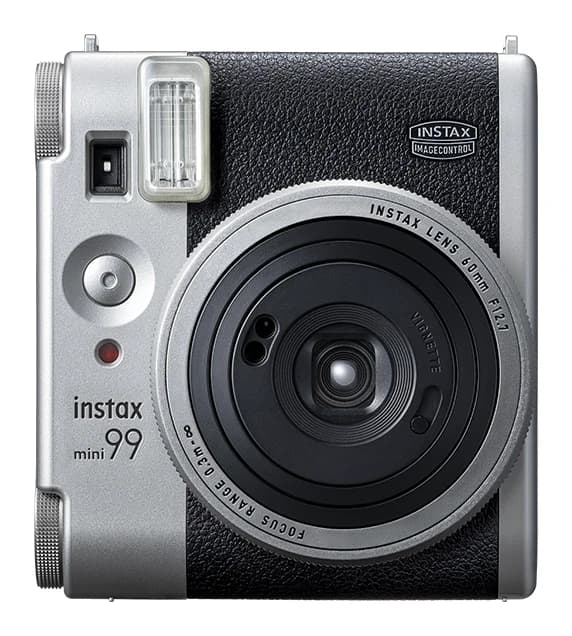
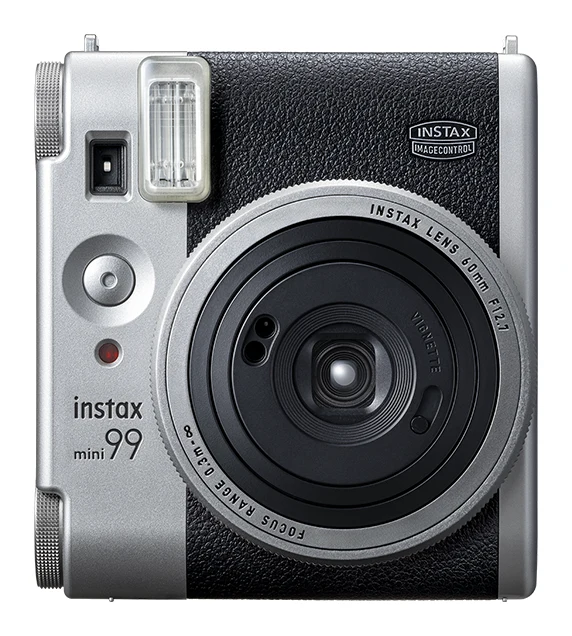
- Premium PickFujifilm Instax Mini 99Why we picked it →
Frequently asked questions
Is the Fujifilm Instax Mini Evo worth it?
It is worth it if you want to preview shots, add creative effects and print only the ones you like, and you also want a phone printer. Expert reviewers average 9/10. It is less compelling if you care about sharp digital image quality or want the cheapest instant camera.
Can the Instax Mini Evo print from a smartphone?
Yes. It works as a smartphone printer over Bluetooth through the Instax app. The app also offers a remote shutter and printed-image transfer from the phone.
How many prints can the Instax Mini Evo make per charge?
Fujifilm rates the built-in lithium-ion battery at approximately 100 prints per full charge. Charging takes approximately 2 to 3 hours.
Does the Instax Mini Evo have a memory card slot?
Yes. It has a microSD / microSDHC slot. The internal memory holds approximately 45 images, so a card is useful if you shoot often.
How long does the Instax Mini Evo take to print a photo?
The print output time is approximately 16 seconds.
Can you preview photos before printing on the Instax Mini Evo?
Yes. Shots appear on the 3.0-inch LCD, so you can print only the ones you like rather than wasting film on every capture.
Sources
Specs are taken from the manufacturers' official pages; expert recommendations from the publications below.
- Fujifilm Instax Mini Evo: fujifilm.com, bhphotovideo.com, casualphotophile.com
Related reviews & guides
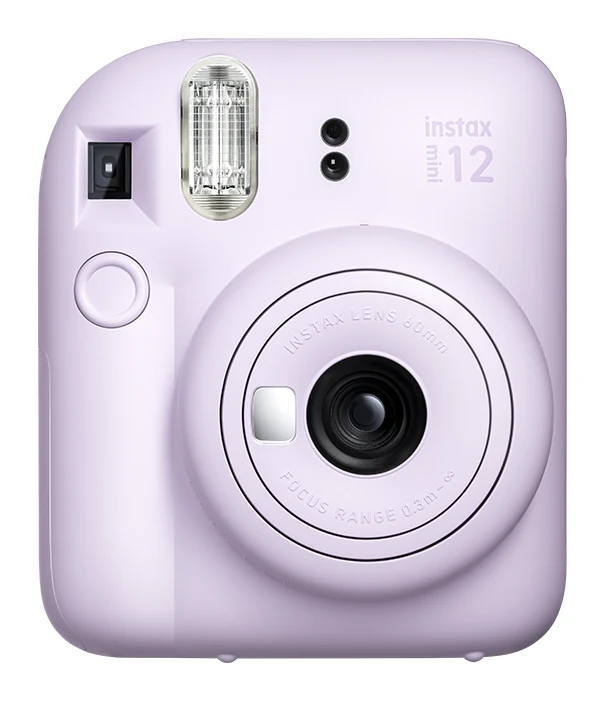
Fujifilm Instax Mini 12 Review (2026): Simple Instant Fun
The Fujifilm Instax Mini 12 is a pastel, point-and-shoot instant camera built for people who want fun prints without settings. Here is what it does well, where it falls short and who should buy it.
Published Oct 30, 2026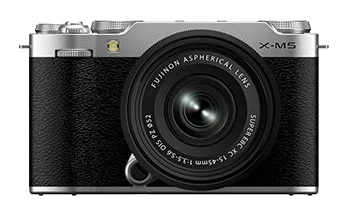
Fujifilm X-M5 Review (2026): Pocket Camera, Big Video Specs
The Fujifilm X-M5 is the smallest, lightest X Series body, with a 26.1MP APS-C sensor and 6.2K video. Here is who it suits and what you give up.
Published Oct 30, 2026
Fujifilm X100VI Review: Is the Fixed Lens Worth It?
The Fujifilm X100VI pairs a 40.2MP APS-C sensor, in-body stabilization and a hybrid viewfinder with a fixed 35mm-equivalent lens. Here is who it suits and who should skip it.
Published Nov 4, 2026